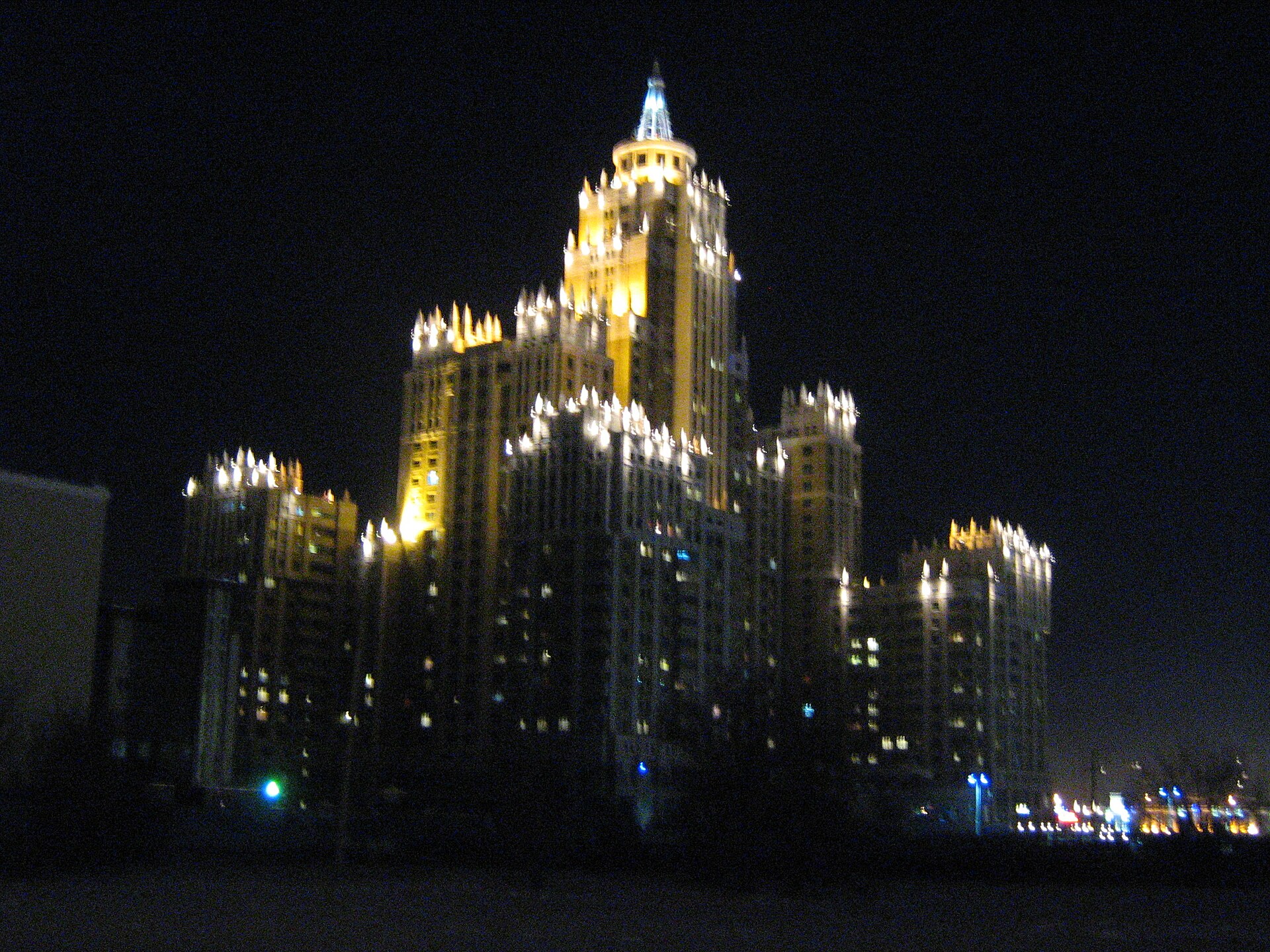
Triumph of Astana Park is one of those places in Kazakhstan’s capital where the city’s bold vision for the future meets its deep-rooted symbols. Built in the early 2000s, when Nur-Sultan was rapidly transforming from a modest provincial town into a modern metropolis, the park became part of a grand urban plan. It wasn’t designed just as a green space but as a monumental landmark—a place where leisure blends with the ideals of national progress and unity.
At the heart of the park stands a massive arch, its shape reminiscent of classical triumphal arches but reimagined in a sleek, contemporary style. Rising high above the surroundings, it feels like a gateway to the future that the city’s architects once envisioned. The structure is made of steel and glass, crowned with a golden sphere that symbolizes the sun, a central element in nomadic culture and mythology. When night falls, the arch is illuminated, and its reflection in the nearby ponds creates the illusion of a floating monument, shimmering against the dark sky.
The park itself is a vast, open space with wide pathways, manicured lawns, and fountains. Unlike the bustling streets of the city center, it offers a sense of calm and spaciousness, as if time moves a little slower here. In summer, the greenery is lush, while in winter, when temperatures drop below minus twenty, the park takes on a different kind of beauty. Snow blankets the ground, the air is crisp, and the illuminated arch stands even more majestically against the frosty landscape.
Throughout the year, the park serves as a venue for city events. Festivals, concerts, and even sports competitions take place here, but the most memorable moments come during the New Year celebrations. The arch becomes the centerpiece of a dazzling light display, surrounded by festive markets and ice rinks. Yet even on ordinary days, the park is far from empty. Families with children, groups of friends, tourists, and those seeking a quiet moment all find their way here, each drawn by something different.
The park is deeply tied to Nur-Sultan’s history as a capital. In the 1990s, the city—then still called Akmola—was little more than a small, unremarkable town. After the capital was moved from Almaty in 1997, a massive reconstruction began, and Triumph of Astana Park became one of its symbols. The arch doesn’t just represent architectural ambition; it embodies the country’s push toward modernization while staying connected to its cultural roots.
The park is designed for both movement and rest. Benches, pavilions, and small cafés offer places to sit, sip tea, or simply watch the world go by. In winter, ice skate rentals appear, while summer brings bicycle stands. It’s not just a tourist attraction but a living space where people come for different reasons—some to take photos against the arch, others to enjoy a quiet moment on a bench.
The architecture here reflects Nur-Sultan’s broader style—a fusion of futurism and national motifs. There are no direct copies of traditional Kazakh designs, but the symbolism is unmistakable. The golden sphere atop the arch echoes the domes of ancient mausoleums, while the structure itself, despite its modernity, evokes the grandeur of historical monuments. It’s a place where the past and future don’t clash but coexist.
For visitors, the park is a great starting point for exploring the city. From here, it’s easy to stroll along the Ishim River embankment, visit nearby museums, or wander through the streets, watching how the capital’s architectural landscape shifts around you. Unlike the crowded historic centers of other cities, this place feels less like a tourist hotspot and more like a space where history is still being written. And in some small way, everyone who visits becomes part of that story.