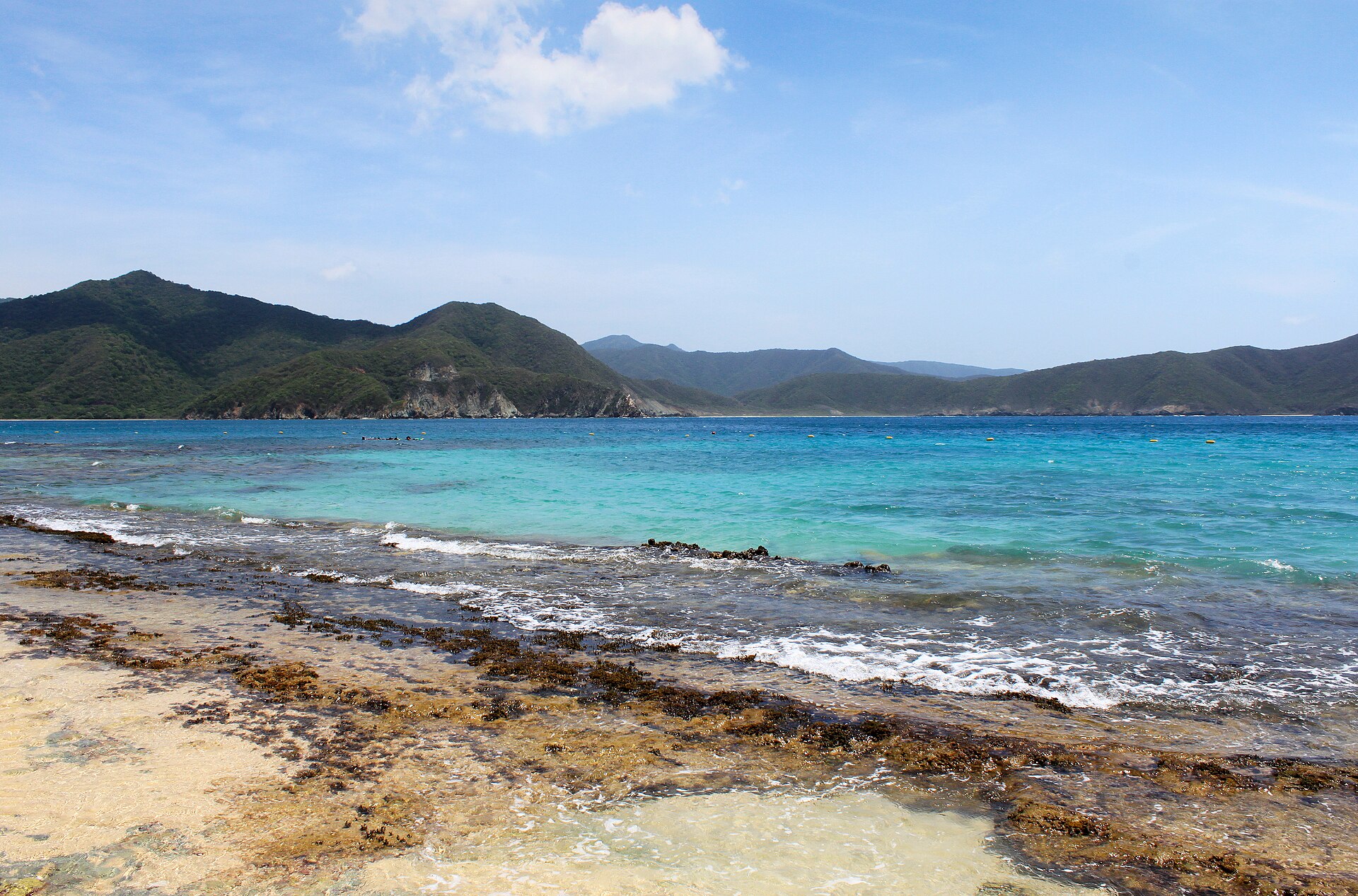
Nestled along Colombia’s Caribbean coast, Tayrona National Park feels like a place where the jungle and the sea have been negotiating their borders for centuries. The dense tropical forest spills right down to the shoreline, where waves crash against boulders and golden sand curves into quiet coves. It’s a landscape that shifts with the light—morning mist clinging to the hills, the midday sun bleaching the rocks white, and the evening glow turning the water into liquid copper. The park isn’t just a stretch of coastline; it’s a meeting point of ecosystems, where howler monkeys swing through the canopy, iguanas bask on sun-warmed stones, and the occasional toucan flashes through the trees like a living brushstroke.
The history of Tayrona is layered into the land itself. Long before it became a national park, this was the territory of the Tayrona people, an indigenous group whose descendants still live in the region. Their presence lingers in the terraced hillsides and the stone paths that wind through the forest, remnants of a civilization that once thrived here. Some of these paths lead to Pueblito, an archaeological site where the foundations of ancient structures peek through the undergrowth. It’s not as grand as other pre-Columbian ruins in Latin America, but there’s something intimate about walking among these stones, imagining the lives that unfolded in this same green silence centuries ago.
The park’s beaches are the main draw, though they’re not all created equal. Cabo San Juan is the most famous, a crescent of sand bookended by massive rocks and crowned with a thatched hut where travelers can rent hammocks for the night. The water here is a startling turquoise, but the currents can be strong, and swimming isn’t always safe. Nearby, La Piscina offers a gentler option—a natural pool sheltered by rocks where the waves lose their bite. For those willing to hike deeper, Playa Brava and Playa Nudista (yes, it’s clothing-optional) reward the effort with seclusion, though the trails can be steep and muddy after rain. The beaches aren’t pristine in the way of postcards; seaweed washes ashore, and the sand is often speckled with driftwood. But that’s part of their charm—they feel wild, not manicured.
Getting to Tayrona requires some planning. The park’s main entrance is near the town of Santa Marta, about an hour’s drive along a winding road that hugs the coast. From there, it’s a 45-minute hike or a bumpy ride in a jeep to the first beaches. Most visitors stay in basic accommodations—hammocks, tents, or simple cabins—though there are a few eco-lodges tucked into the forest for those who want a bit more comfort. The park has a way of slowing you down; without reliable electricity or Wi-Fi, the rhythm of the day follows the sun. Mornings start early, with the sound of howler monkeys and the scent of coffee brewing over a campfire. Evenings are for watching the sunset from the rocks, the sky streaked with pink and orange, the air thick with the hum of insects.
The wildlife is impossible to ignore. Capuchin monkeys chatter in the trees, their faces peering down with curiosity. If you’re lucky, you might spot a sloth moving at its own unhurried pace or a caiman lurking in the mangroves. The birdlife is prolific—herons stalking the shallows, kingfishers diving for fish, and the occasional condor soaring overhead. At night, the forest comes alive with different sounds: the chirp of crickets, the croak of frogs, and the distant crash of waves. It’s not a place for those who prefer silence, but for those who don’t mind the constant soundtrack of nature, it’s mesmerizing.
Tayrona isn’t a park for luxury or convenience. The trails can be slippery, the heat oppressive, and the bugs relentless. But that’s part of what makes it special. There’s a sense of adventure here, a reminder that nature isn’t always tame or predictable. The park has faced its share of challenges—deforestation, erosion, and the pressures of tourism—but efforts to preserve it have kept much of its wild character intact. Visitors are asked to respect the land, to stick to marked paths, and to avoid leaving anything behind. It’s a place that demands a little more from you, but gives back in equal measure.
For many, Tayrona is more than just a stop on a Colombian itinerary. It’s a place where the boundaries between traveler and landscape blur. You might arrive expecting a beach getaway and leave with a deeper appreciation for the way the earth shifts and changes, for the quiet persistence of the forest reclaiming its space. The park doesn’t offer grand monuments or polished attractions, but it does offer something rarer: a chance to step into a world that feels both ancient and immediate, where every rustle in the leaves and every wave breaking on the shore is part of a story much older than your own.