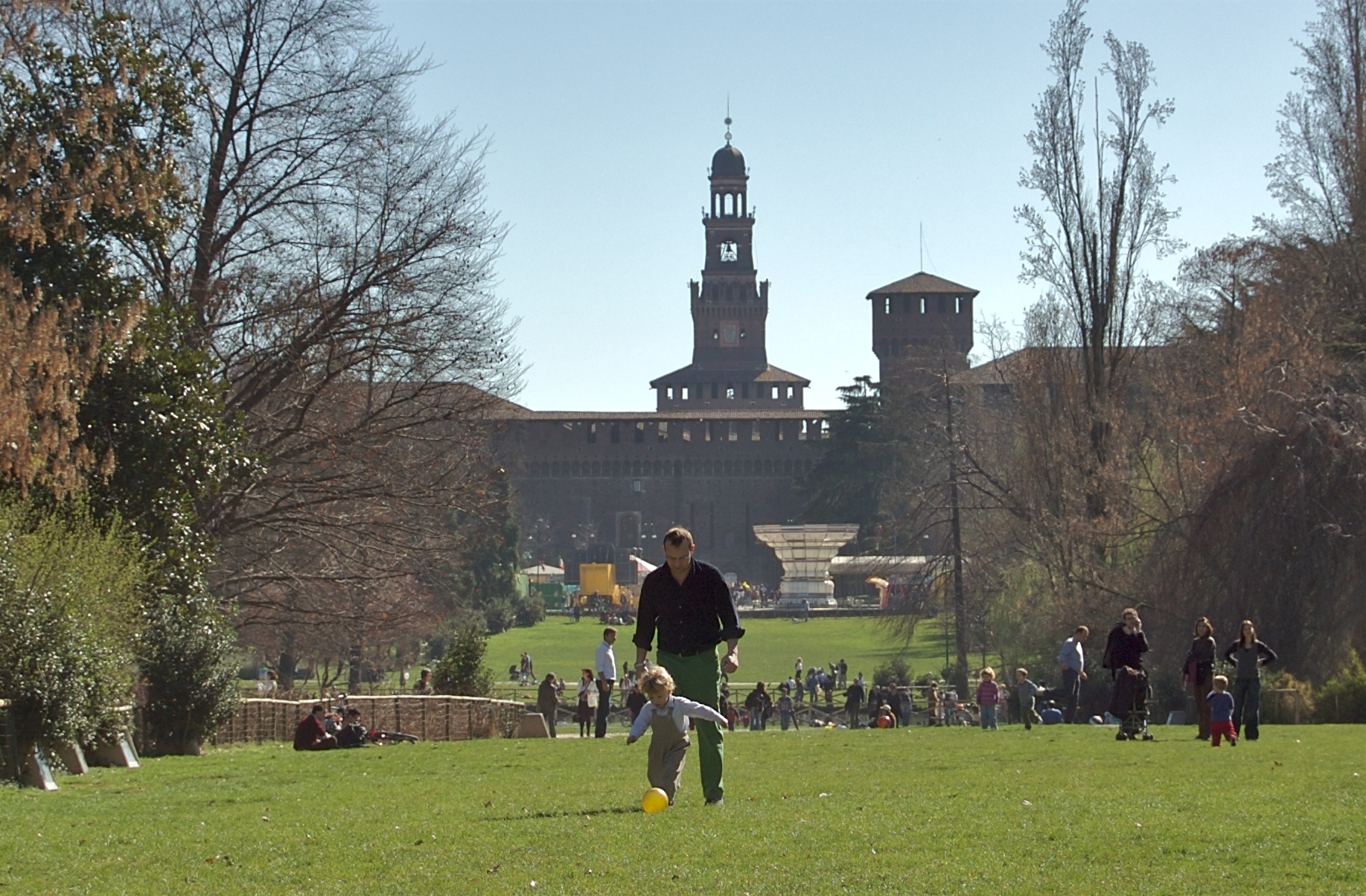
Sempione Park is one of those rare places in Milan where the city seems to pause, taking a deep breath away from the relentless pace of urban life. Tucked behind the imposing Castello Sforzesco, this sprawling forty-hectare expanse of greenery offers a quiet retreat in the heart of the city. There are no flashy attractions or crowded tourist spots here—just winding paths, tranquil ponds, and open meadows where locals and visitors alike come to unwind. The park doesn’t demand attention; it simply exists, inviting you to slow down, whether that means a leisurely stroll, a moment on a bench with a book, or a picnic spread out on the grass.
The history of Sempione is as layered as the city itself. In the Middle Ages, this land was part of the vast hunting grounds of the Visconti and later the Sforza dukes, dense forests where deer and wild boar roamed freely. The Castello Sforzesco, which now stands as a silent guardian at the park’s edge, was once both a fortress and a residence for Milan’s rulers. By the 19th century, as Milan transformed into a modern metropolis, the area was repurposed from military fortifications into a public park. Designed by architect Emilio Alemagna, Sempione was modeled after the romantic English landscape gardens, with meandering paths, gentle hills, and artificial lakes. It opened in 1893 and has since become an inseparable part of Milan’s identity.
While nature dominates the park, a few architectural landmarks give it character. The most striking is the Arco della Pace, a triumphal arch commissioned by Napoleon in the early 1800s. Intended as a grand entrance to the city and a symbol of his power, it was left unfinished after his fall. Today, its white marble stands in stark contrast to the surrounding greenery, a quiet reminder of Milan’s imperial past. Nearby, the Acquario Civico, built in 1906 in the Art Nouveau style, is one of Europe’s oldest aquariums, offering a glimpse into Italy’s freshwater and marine ecosystems. Another notable structure is the Palazzo dell’Arte, a functionalist exhibition hall constructed in 1933 for the Milan Triennale, reflecting the architectural trends of its time.
Sempione is a place where different eras coexist. You might stumble upon remnants of ancient Roman walls, once part of Mediolanum, the precursor to modern Milan. Or walk past a fountain adorned with bronze figures, dedicated to the poet Giosuè Carducci. Climb a small hill, and the view opens up to the Castello Sforzesco and the city’s rooftops, especially striking at sunset when the castle’s brick walls glow golden. The park feels like a living archive, preserving traces of medieval hunts, Napoleonic ambitions, and 20th-century industrial growth.
For Milanese residents, Sempione is more than just a park—it’s a shared space where the city’s rhythms unfold. Mornings bring joggers and cyclists, afternoons see retirees reading newspapers on benches, and evenings gather groups of friends with guitars and wine. In summer, open-air concerts fill the air, while winter brings small fairs and Christmas markets. Families come on weekends, children ride bikes or feed ducks by the pond, and the atmosphere is one of effortless coexistence. There are no strict rules here, just an unspoken respect for the quiet and the natural world.
The park transforms with the seasons. Spring brings blooming magnolias and cherry trees, their petals carpeting the paths. Summer offers shade from the heat, with the ponds providing a cool respite where fish and frogs dart beneath the surface. Autumn turns the trees into a blaze of gold and crimson, leaves crunching underfoot. Winter, when snow falls, lends the park a fairy-tale quality, hushed and mysterious. Even on rainy days, there’s a certain magic—the wet leaves glistening, the air crisp and clean.
Sempione also reveals a different side of Milan. The city known for fashion, business, and relentless energy slows down here. You can wander for hours without seeing a familiar face, yet still feel connected to something larger. The park bridges different neighborhoods, from the business districts near Cadorna to the bohemian streets of Brera. It serves as a natural boundary between the historic center and the more modern parts of the city, a reminder that Milan isn’t just skyscrapers and boutiques—it’s also these quiet corners where time seems to stand still.
In recent years, Sempione has become a testing ground for urban innovation. Bike-sharing stations, yoga zones, and small community gardens have sprung up, while environmental initiatives and open-air art exhibitions add new layers to its identity. The park isn’t just a green space; it’s a living organism, evolving alongside the city.
What makes Sempione special isn’t any single attraction, but the way it makes you feel. It’s a place that invites you to return, not because of something extraordinary, but because it offers a sense of belonging. Here, you can forget about time, about obligations, about the need to rush. You can sit on the grass, listen to the birds, and think—or not think at all. In a world that moves too fast, places like this are rare, and that’s what makes them invaluable.