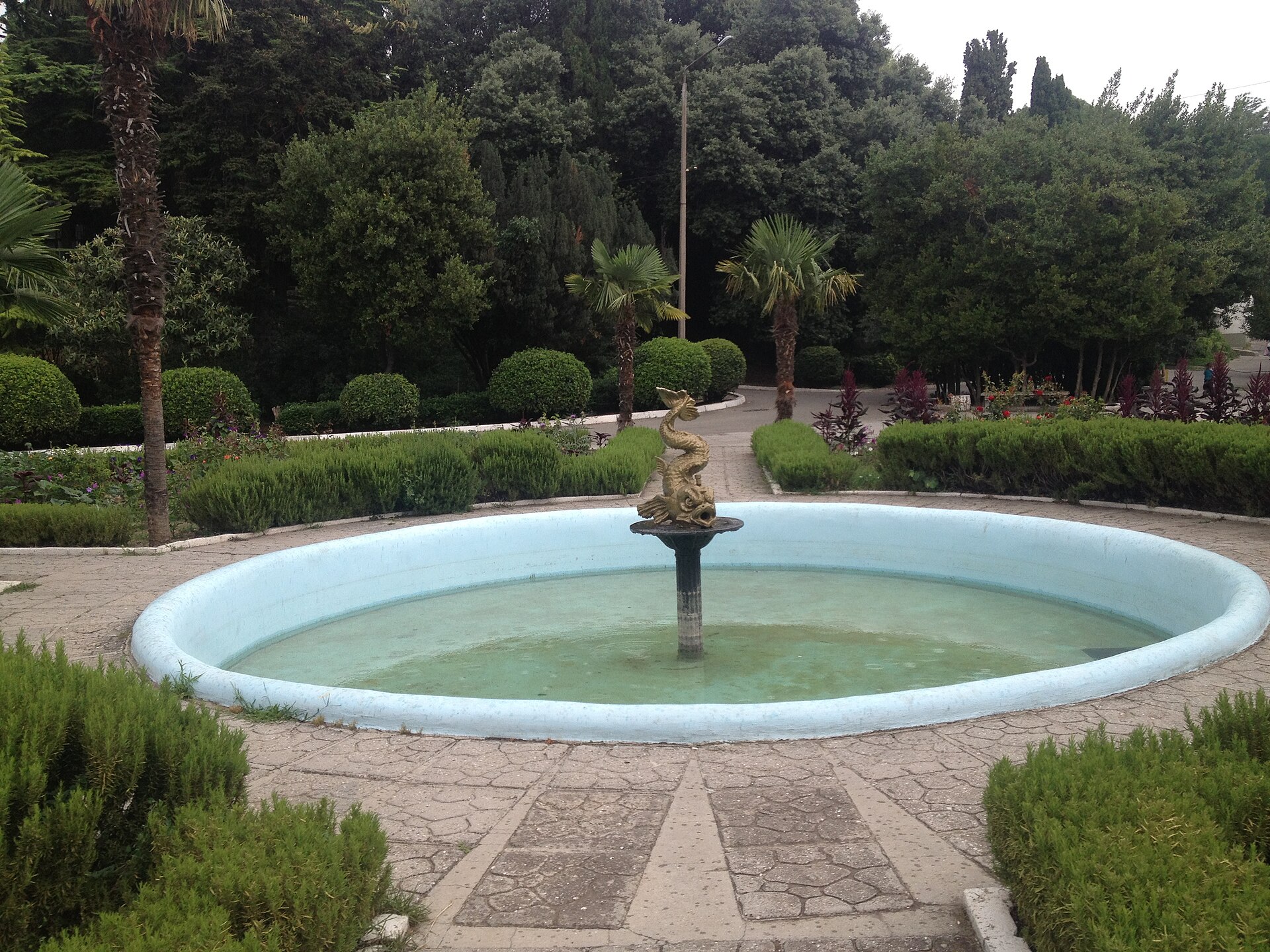
Photo: Kot barmaglot, CC BY-SA 3.0
Yasnaya Polyana Sanatorium Park
out of 5 0 ratingsThe park surrounding the Yasenaya Polyana sanatorium in Gaspra is one of those rare places where time seems to move at its own unhurried pace. Nestled along the southern coast of Crimea, it occupies land that once belonged to the Tolstoy family before becoming part of one of the peninsula’s oldest health resorts. Unlike the polished, manicured gardens of more famous Crimean retreats, this park feels alive in a way that resists the passage of decades. There are no crowds here, just the quiet rustle of leaves and the distant cry of gulls over the sea. It’s a place where nature and history intertwine so naturally that you almost forget you’re standing in the present.
The sanatorium itself dates back to the early 20th century, a time when Crimea was just beginning to establish itself as a fashionable destination for Russia’s aristocracy and creative elite. The name Yasenaya Polyana—meaning "Clear Glade"—echoes the famous estate of Leo Tolstoy, though the connection is more poetic than literal. Like Tolstoy’s home in Tula, this place was built on the belief that nature itself could heal. Back then, the idea that sea air, pine-scented breezes, and mild coastal weather could restore even the most exhausted bodies was still novel. The sanatorium was designed as a refuge, a place where people could recover not just through medicine but through long, unhurried walks beneath the trees. The park became its heart, a space where visitors could wander for hours without encountering anything but rocks, sea, and sky.
The architecture of the sanatorium’s buildings reflects the understated elegance of early 20th-century Crimean coastal design. There are no grand palaces here, just modest villas with wide verandas, stone staircases, and delicate ironwork balconies that seem to grow out of the landscape rather than impose upon it. The structures don’t dominate the scenery; they blend into it, as if they’ve always been part of the terrain. Old photographs of the park show that little has changed over the past century. The same paths wind through the trees, the same cliffs rise from the shore, and the same pines stand tall—only the people passing through are different.
The park unfolds in layers, descending toward the sea in a series of terraces. The upper section is a dense forest of ancient pines, oaks, and juniper, where the shade is so thick that even in the midday heat, the air remains cool. Further down, the trees give way to open meadows where guests once gathered for picnics and concerts. At the very bottom, a small beach waits at the end of a flight of stone steps carved directly into the cliffside. The sea here is calmer than in other parts of Crimea, its shoreline jagged with tiny coves and outcroppings that offer shelter from the wind.
What makes the park truly special is its vegetation. Some of the trees and plants here were introduced in the early 1900s and are rare for this part of Crimea. Towering magnolias bloom in May, filling the air with their sweet fragrance, while umbrella pines stretch their wide canopies over the paths. Native species like Crimean pine, strawberry tree, and rockrose grow alongside them, creating a landscape that feels both cultivated and wild. Despite the human touch, the park doesn’t feel artificial. Instead, it gives the impression that nature simply chose this place to settle and never left.
Today, the park is open to the public, though the sanatorium still operates. Visitors come to stroll along the paths, sit on benches overlooking the sea, or spread out a picnic on one of the meadows. In summer, it’s busier, but never as crowded as the beaches of Yalta or Alushta. Most of the people here are locals or those who’ve come not for entertainment but for quiet. In winter, the park empties out, but the bare branches dusted with frost and the gray, restless sea create a different kind of beauty—one that feels even more peaceful.
The park also has a quiet connection to Soviet cinema. In the mid-20th century, it served as a filming location for several well-known movies, including *The Amphibian Man*. The cliffs and coves became backdrops for underwater scenes, while the sanatorium’s old buildings provided the perfect setting for dramatic moments. Today, there’s little to remind visitors of this cinematic past, though those familiar with the films might recognize the spots where iconic scenes were shot.
Walking through Yasenaya Polyana is more than just a chance to enjoy nature—it’s an opportunity to reflect on how ideas of rest and recovery have evolved over the past hundred years. In the early 1900s, people came here for healing. During the Soviet era, it was a place to regain strength after hard work. Now, visitors arrive simply for the quiet and the beauty. The park doesn’t try to be trendy or modern. It remains true to itself, and that, perhaps, is its greatest charm. There are no amusement rides, souvenir shops, or noisy bars—just the chance to pause, breathe, and feel time slow down.
Day around this place
Where else to go on the same day
Building the day…
Where it is
44.43528, 34.09833