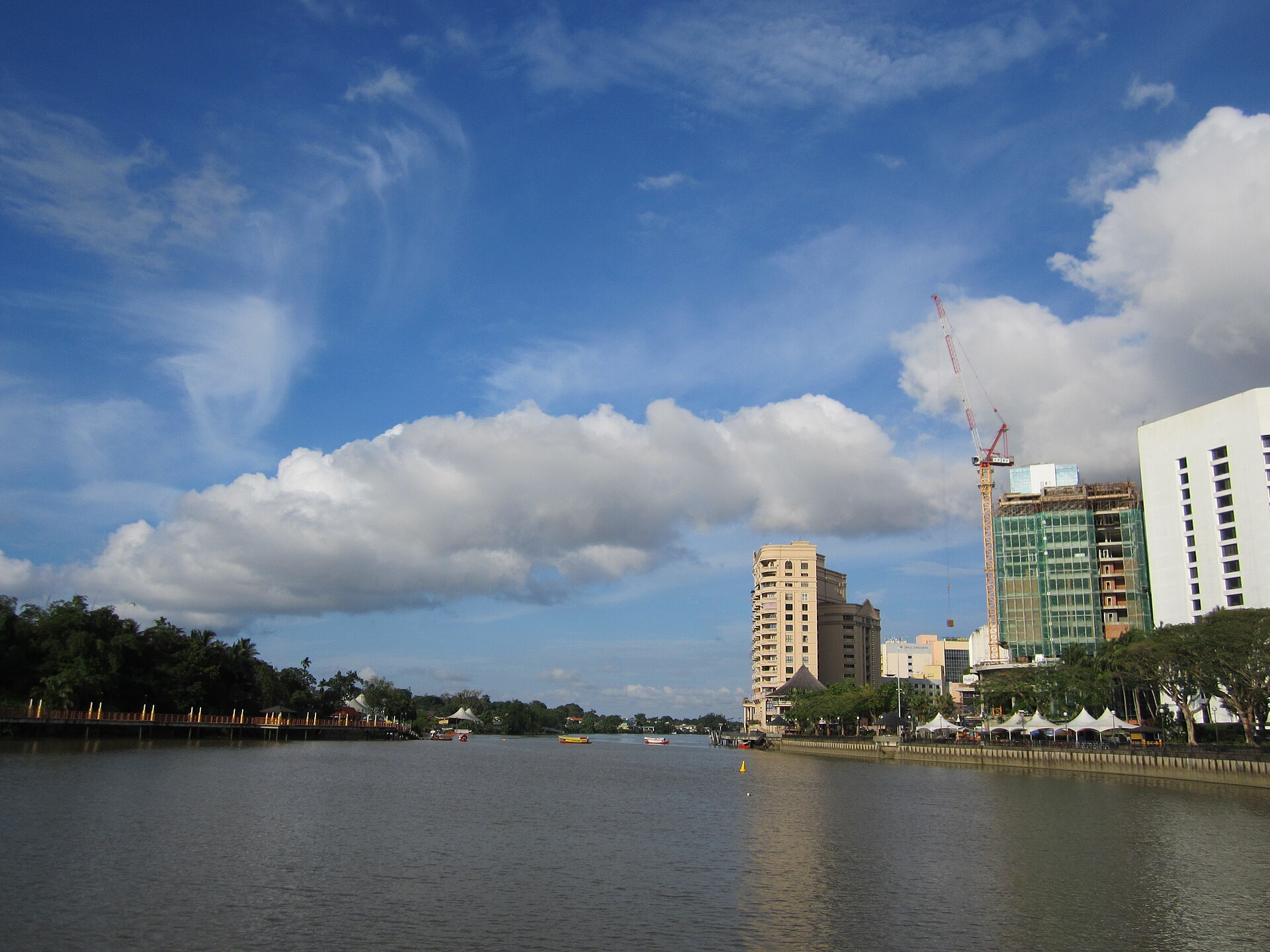
Kuching’s waterfront park is where the city gently spills into the Sarawak River, a place where the past lingers without effort and the present moves at its own unhurried pace. Unlike the crowded promenades of bigger cities, this stretch of riverbank has kept its quiet, almost small-town rhythm, even though it sits at the heart of the state capital. By day, you’ll see locals strolling with their children, sitting on benches with coffee, or simply watching the water drift by. As evening falls, the park softens under the glow of streetlights, their reflections dancing on the river’s surface, turning the scene into something almost dreamlike.
The waterfront’s story is woven into Kuching’s history as a trading hub. For centuries, the Sarawak River was the city’s lifeline, carrying goods, people, and news. During colonial times, the riverbank bustled with steamships and warehouses, a place where commerce and daily life intersected. When the port eventually shifted to other parts of the city, the waterfront lost its commercial role but never its charm. By the late 20th century, the area was transformed into a public space, carefully redesigned to preserve the spirit of old Kuching while making it welcoming for everyone.
There’s nothing grand about the park’s architecture, and that’s part of its appeal. You won’t find towering monuments or flashy modern structures here—just well-kept paths, open lawns, and a few historic buildings that hint at the past. One of them is the old customs pavilion, now occasionally used for small exhibitions or performances. Nearby, information boards tell the story of the waterfront’s evolution and its place in the city’s life. The low bridge connecting the promenade to the opposite bank is another quiet highlight, offering a simple but lovely view of the river and the city skyline.
As night falls, the waterfront becomes one of Kuching’s most atmospheric spots. The soft lighting along the paths, the gentle lapping of water, and the cool evening air make it a favorite gathering place for locals. Friends and families come to sit by the river, listen to the sounds of the water, or just unwind after a hot day. Sometimes, you might stumble upon a street musician or a small impromptu performance, adding a touch of spontaneity to the scene. On weekends, the park comes alive with markets selling local crafts, food, and souvenirs, drawing crowds that spill across the promenade.
For visitors, the waterfront is more than just a place to walk—it’s a natural starting point for exploring Kuching. From here, it’s easy to venture into the historic center, where colonial buildings, museums, and old Chinese shophouses tell the city’s story. Nearby, the bustling market offers a taste of local flavors, while riverside cafes and restaurants provide a relaxed setting to watch the world go by. The promenade also serves as a handy reference point for those wanting to explore further, with landmarks like Fort Margherita and the Sarawak Museum just a short distance away.
What makes the waterfront special is its authenticity. Unlike more tourist-heavy spots, it hasn’t lost its connection to the people who call Kuching home. For many locals, this place holds memories—childhood walks, meetups with friends, or quiet moments of reflection. It doesn’t try to be perfect or overly polished; it simply exists as a living part of the city, where life unfolds at its own pace. That unpretentiousness is what gives the park its warmth and makes it feel like a true reflection of Kuching.
In recent years, the waterfront has also become a stage for cultural events. Festivals celebrating Sarawak’s diverse traditions, local music performances, and even small-scale sports competitions now take place here. The city has made efforts to keep the space vibrant without disrupting its historic character. New additions like bike paths and picnic areas have been introduced, blending modern amenities with the park’s timeless appeal.
More than just a scenic spot, Kuching’s waterfront is a bridge between the city’s past and present. It reminds visitors of the river’s enduring role in Kuching’s life, how its purpose has shifted over time, and how carefully the city preserves its history. There’s nothing forced or overly dramatic about it—just a quiet harmony between nature and urban life, a place where the rhythm of the river and the city move in sync. For those visiting Kuching for the first time, the waterfront offers a gentle introduction to a city where tradition and modernity coexist so naturally.