Walk into Mladost Park, and you’ll find no grand gates or tourist signs—just a dirt path leading under trees. The branches overhead don’t form a perfect canopy; they lean where the wind took them. This isn’t a place you visit for a checklist. It’s where you sit on a bench because the shade feels right, or where you let your kid run ahead while you watch from a distance.
The park opened in the 1950s, part of a wave of green spaces built after the war. Its name means “youth,” but today, the people who use it most are the ones who’ve known it longest. In the mornings, retirees walk the paved paths. By afternoon, families arrive with strollers and snacks. Teenagers come after school, sprawling on the grass with headphones in, half-listening to their friends.
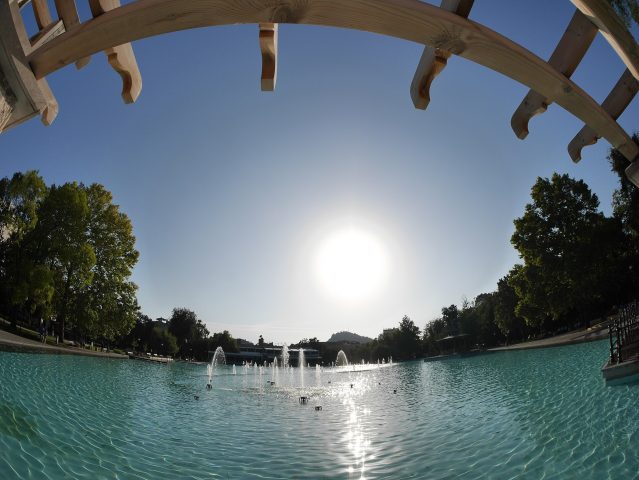
The fountain in the center is small, its basin chipped at the edges. Water spills over in a thin sheet, catching sunlight in the summer. Around it, benches face every direction—some toward the fountain, others toward the playground or the street. The trees, mostly planes and lindens, weren’t planted in straight lines. Their roots have spread where the soil allowed, lifting the pavement in places. In one corner, a cluster of shrubs grows untrimmed, and in spring, birds nest there.
The playground has wooden swings, a sandbox, and a slide with a gentle slope. On weekends, parents sit on benches while their kids take turns on the equipment. No one’s in a hurry. The slide is low enough that a five-year-old can climb it alone, and the sandbox is deep enough to keep a toddler digging for a while.
In summer, the park is where you go when the apartment gets too hot. People bring blankets, spread them under the trees, and stay until the light fades. In autumn, the paths are covered in leaves—first gold, then brown. If it snows, children sled down the small hill near the entrance. Even on rainy days, a few people walk the paths, stepping over puddles or pausing to watch the water collect.
Mladost Park doesn’t have plaques or guided tours. Its value is in the things that happen without announcement: a couple sitting close on a bench, an old man tossing bread to pigeons, a child’s first wobbly steps on the grass. The park has changed a little over the years—new paving, modern lampposts, a small stage for occasional concerts—but it hasn’t lost what makes it work. It’s still the place where Uzundzhovo slows down.
If you’re passing through, you might not notice it at first. There’s no grand entrance, no map to tell you where to go. But if you stay a while, you’ll see the way the light falls through the leaves in the afternoon, or the sound of footsteps on gravel, or the way the fountain’s spray drifts in the breeze. It’s not a place that asks for your attention. It’s one that gives you a reason to stay.