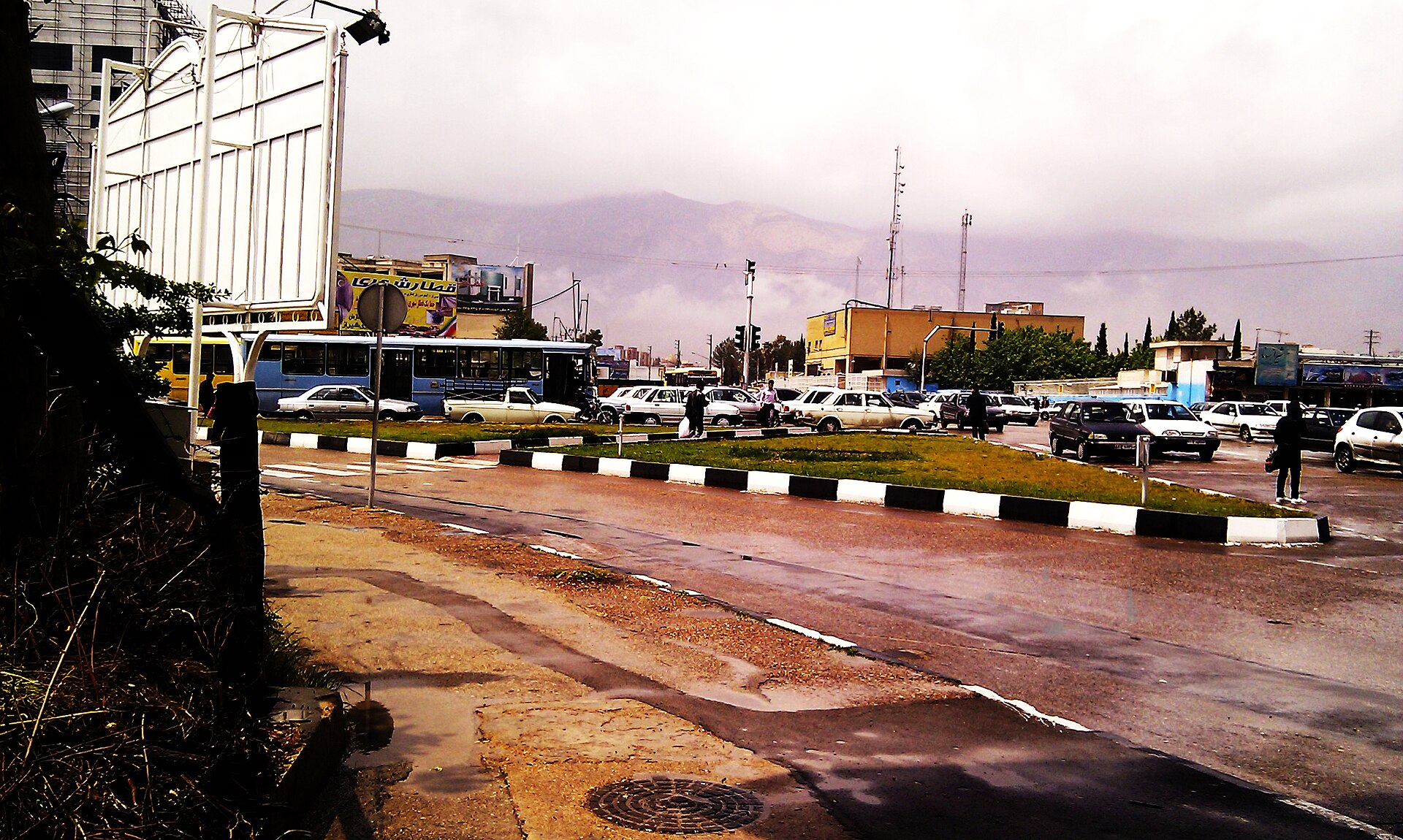
Marvdasht’s Mellat Park is one of those quiet, unassuming places that doesn’t announce itself with grand monuments or tourist crowds, yet somehow manages to feel like the heart of the city. Tucked away in the northern part of Marvdasht, it stretches across a generous patch of land where locals come to escape the rhythm of daily life. There’s no single defining feature here—no towering fountains or manicured gardens designed for postcard photos. Instead, the park unfolds as a series of open spaces, shaded pathways, and small clearings where families spread out picnics, children chase each other around, and elderly men gather on benches to play backgammon or sip tea from thermoses.
The park’s origins aren’t the stuff of legend, but its existence reflects the way public spaces in Iran often grow organically, shaped by the needs of the people rather than grand urban planning. It wasn’t built as a showcase for visitors but as a place for the community—a green lung in a region where the landscape is otherwise dominated by the stark beauty of the surrounding mountains and the vast, open plains. Over the years, it has become a fixture in the lives of Marvdasht’s residents, a place where generations have come to mark the passage of time, whether through weekend outings, impromptu gatherings, or the quiet moments of solitude that parks so often provide.
What makes Mellat Park feel distinct is its lack of pretension. There are no carefully curated flowerbeds or geometric designs that demand admiration. Instead, the trees—mostly plane trees and pines—grow in loose clusters, their branches casting dappled shade over the paths. The grass is patchy in places, worn down by years of use, and the benches are simple, unadorned concrete or metal. Yet this unpolished quality is part of its charm. It feels lived-in, like a well-worn jacket that’s been shaped by the people who use it. On any given afternoon, you might see a group of teenagers practicing skateboard tricks on the paved areas, their laughter mixing with the sound of birdsong, or a young couple strolling hand in hand, pausing to watch the sunset over the distant hills.
The park’s layout is informal, almost haphazard, with winding paths that lead nowhere in particular but invite exploration. One section might open up to a small playground with swings and slides, while another leads to a quiet corner where someone has set up a makeshift tea stall, serving steaming glasses of chai to passersby. There’s no grand entrance or exit, no obvious center—just a sense of gradual discovery as you wander. In the warmer months, the air is filled with the scent of grilled corn and the occasional whiff of hookah smoke from a group of friends gathered under a tree. In winter, the park takes on a different character, its bare branches stark against the pale sky, and the paths quieter, save for the occasional jogger or dog walker.
For all its simplicity, Mellat Park holds a certain significance in Marvdasht. It’s one of the few places in the city where people from different walks of life intersect without pretense. Office workers in crisp shirts share the same benches as laborers in dusty clothes, and students from the nearby university mix with families from the surrounding neighborhoods. There’s no admission fee, no dress code, no rules beyond the unspoken ones of mutual respect. It’s a place where the social hierarchies that often define Iranian life seem to soften, if only for a few hours. On Fridays, the park is especially lively, as families take advantage of the weekend to spend time together, spreading out blankets and unpacking homemade meals of bread, cheese, and fresh herbs.
The park’s connection to the land around Marvdasht is impossible to ignore. The city sits in a valley surrounded by some of Iran’s most historically significant sites, including the ancient ruins of Persepolis and the towering rock reliefs of Naqsh-e Rustam. Yet while those places draw visitors from around the world, Mellat Park remains firmly rooted in the everyday. It’s a reminder that history isn’t just found in grand monuments but in the quiet, persistent life of a community. The mountains that loom in the distance, their slopes dotted with the remnants of empires past, serve as a backdrop to the park’s modest existence, a silent witness to the way life in Marvdasht has unfolded over centuries.
There’s something almost poetic about the way the park reflects the rhythm of the city. In the early morning, it’s a place for solitude—joggers making their rounds, elderly men performing their prayers on small rugs laid out on the grass. By midday, it transforms into a social hub, with groups of women chatting as they push strollers, and vendors setting up small carts selling everything from fresh fruit to ice cream. As evening falls, the park takes on a more subdued atmosphere, the golden light filtering through the trees as families begin to pack up their picnics. The last to leave are often the young people, lingering on the benches long after dark, their voices carrying softly through the cool night air.
Mellat Park isn’t the kind of place that makes it onto must-see lists or travel brochures, and that’s precisely why it feels authentic. It doesn’t exist to impress outsiders but to serve the people who call Marvdasht home. There’s no need for grand narratives or dramatic backstories here—just the quiet, steady pulse of life unfolding in a space that has been shaped by the people who use it. For visitors willing to slow down and observe, it offers a glimpse into the everyday beauty of Iranian life, where the simplest pleasures—a shared meal, a game of backgammon, the rustle of leaves in the wind—are often the most meaningful.