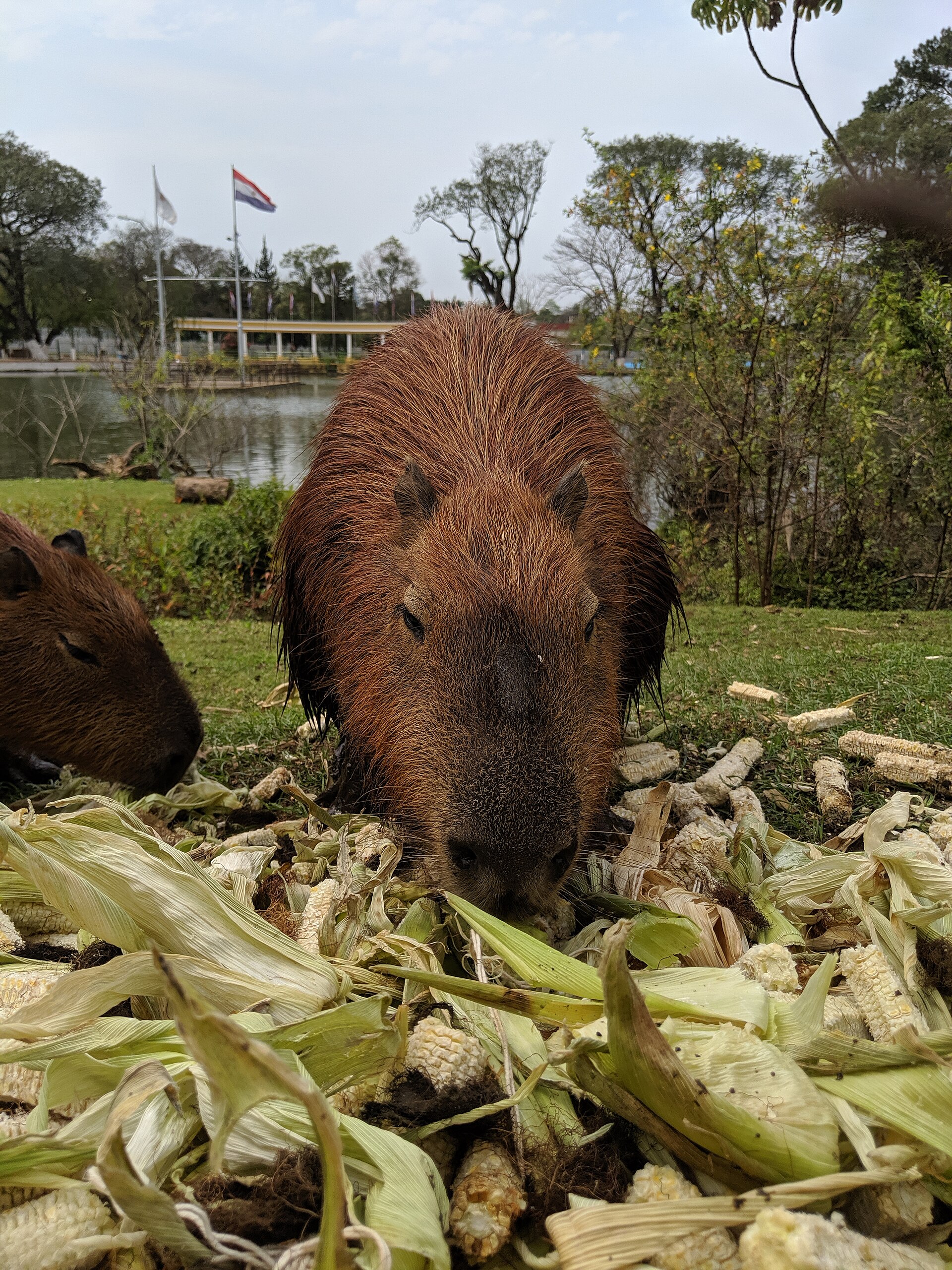
Manuel Ortiz Guerrero Park is one of those quiet corners in Villarrica where the city’s usual hum fades into the background, giving way to greenery and stillness. Named after a poet whose work is woven into Paraguay’s cultural fabric, the park isn’t just a patch of trees—it’s a place where history and nature feel inseparable. There are no crowds or flashy attractions here, just winding paths, old trees, and an atmosphere that carries you back to a slower, earlier time.
Villarrica itself has always been a city with its own rhythm. Founded by Spanish settlers in the 16th century, it grew into a key trading and cultural hub in the region. The park reflects that history—not in grand monuments or formal gardens, but in its unhurried, organic layout. The paths curve naturally, the trees grow where they please, and the grass isn’t trimmed into perfect lines. It feels less like a designed space and more like a piece of the countryside that happened to settle in the middle of town.
The poet Manuel Ortiz Guerrero, who lends his name to the park, was a defining figure in Paraguayan literature. Born in the late 1800s, he wrote in Guaraní, the indigenous language that many at the time dismissed as unrefined. His work bridged the gap between Paraguay’s Spanish and indigenous roots, making him a symbol of national identity. There’s no grand statue of him in the park, but his presence lingers in the rustling leaves and the way the light filters through the branches, as if the place itself is a quiet tribute.
The park’s architecture is simple, and that’s part of its charm. Instead of ornate fountains or marble sculptures, you’ll find wooden benches, small gazebos, and a modest pond where ducks drift lazily. It doesn’t feel like a public park so much as someone’s backyard—a place where locals come to read, picnic, or just watch the sunset. On weekends, it fills with life: children playing soccer, teenagers chatting in groups, and elderly men feeding pigeons. The mood is relaxed, unforced, as if everyone here knows they don’t need to rush.
The trees are one of the park’s greatest attractions. Native species mix with imported ones—tall palms stand beside sprawling fig trees, while flowering shrubs add splashes of color beneath them. During the rainy season, from October to April, the park becomes a lush, vibrant oasis. Everything blooms, and the air is thick with the scent of damp earth and flowers. In the dry months, the foliage thins out, but the bare branches reveal the intricate shapes of the trees, their trunks and limbs twisting against the sky like living sculptures.
Beyond being a place to walk, the park serves as an informal cultural hub. Small concerts, poetry readings, and local art exhibitions often take place here, blending seamlessly into the surroundings. You might stumble upon a guitar lesson under a tree or a group of schoolchildren listening to stories about the city’s past. There’s no fanfare—just the sense that art and daily life belong together, especially in a place like this.
For visitors, the park can be an unexpected highlight of Villarrica. Unlike the bustling attractions of Asunción, it offers a glimpse of Paraguay’s quieter, provincial side. There’s no pressure to hurry, no need to snap photos for the sake of it. Just a quiet spot where you can sit on a bench, listen to birdsong, and understand why locals see the park not just as a green space, but as a part of their lives.
Villarrica isn’t a city that chases tourists. It exists on its own terms, and that’s what makes it special. Manuel Ortiz Guerrero Park embodies that spirit—unpretentious, unhurried, and deeply rooted in the place it calls home. There’s nothing staged here, nothing forced. Just trees, benches, people, and time moving at the pace of the Paraguay River in the distance.