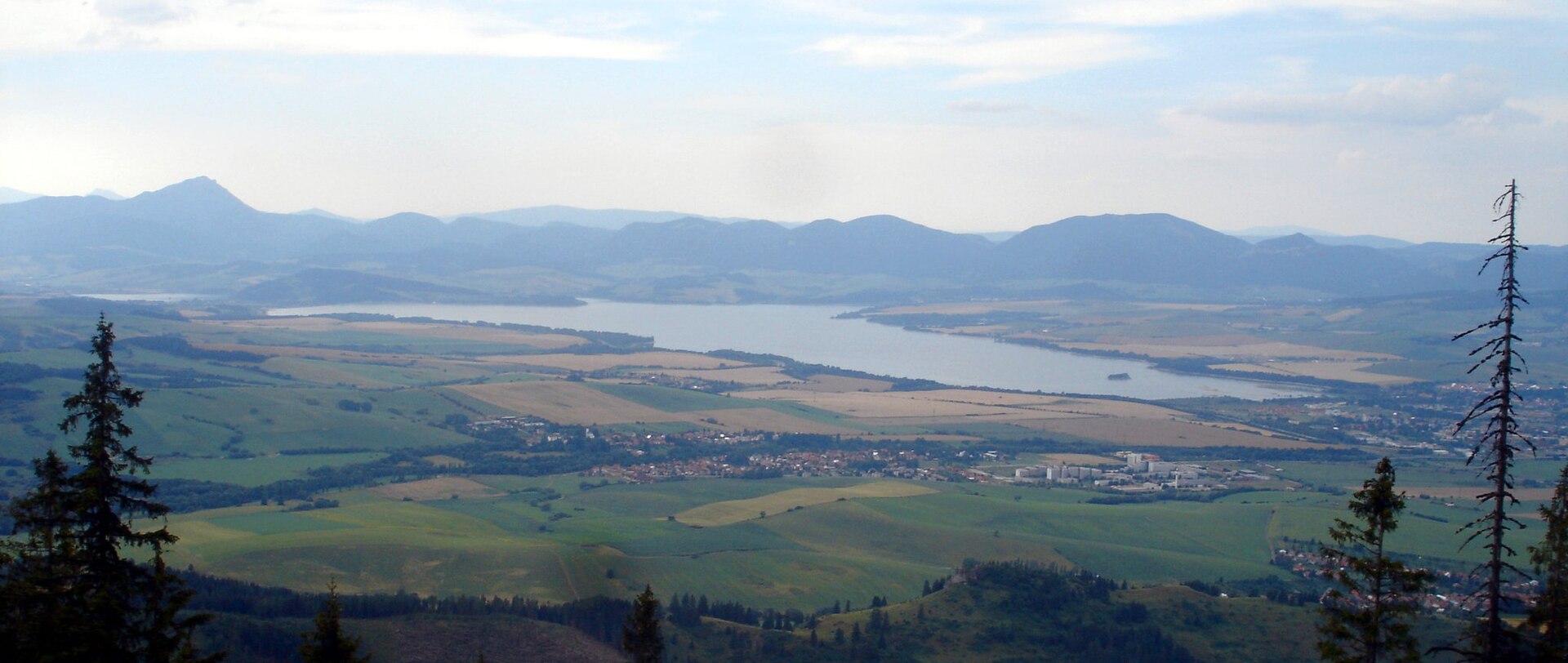
Liptovská Mara is one of those quiet corners of Slovakia where time seems to move at its own unhurried pace. Tucked just outside Liptovský Mikuláš, it doesn’t feel like a typical tourist spot with marked trails and crowds. Instead, it’s a place where nature and history blend so seamlessly that the past doesn’t feel distant at all. The air carries the scent of pine and damp earth, and the only sounds are the rustling of leaves and the occasional call of a bird. There’s no rush here, no guided tours or souvenir stands—just the quiet persistence of the landscape, slowly reclaiming what was once built upon it.
The park sits on the grounds of a former spa resort that flourished in the 19th century, when people traveled from across the Austro-Hungarian Empire to take the waters. The mineral springs were believed to have healing properties, and the resort itself was known for its relaxed, almost intimate atmosphere. Today, little remains of those days except for the ruins of old buildings—crumbling stone walls, half-collapsed fountains, and the skeletal remains of pools. They don’t feel abandoned so much as absorbed, as if the forest has simply grown around them, softening their edges with moss and ivy. Walking among them, it’s easy to imagine the resort as it once was, full of visitors strolling in their finery, though now the only witnesses are the trees.
The heart of the park is the cave that gives it its name, Liptovská Mara. Unlike the more famous caves in Slovakia, this one is small and unassuming, which only adds to its charm. Inside, the air is cool and damp, the walls glistening with calcite formations. Sunlight filters through narrow cracks, casting shifting patterns on the uneven floor. Local legends once spoke of spirits or even dragons dwelling here, but today the cave feels more like a reminder of nature’s quiet power. There’s no artificial lighting, so a flashlight is useful, and the footing can be tricky—part of the experience is moving carefully, letting your eyes adjust to the dimness.
The forest surrounding the cave feels wild, though it’s been shaped by human hands for centuries. Beech, spruce, and pine trees rise tall, their branches forming a canopy that keeps the summer heat at bay. Narrow paths wind through the undergrowth, leading up gentle slopes or down to a small stream. In autumn, the air is thick with the scent of fallen leaves and mushrooms, while winter transforms the landscape into something almost otherworldly—frosted branches, snow-dusted stones, and a silence so deep you can hear the creak of ice underfoot. Locals sometimes come here to gather firewood or take a quiet walk, but visitors are rare, leaving the trails feeling like a private discovery.
Not far from the cave, a small lake fills what was once a quarry. The water is clear but biting cold, even in summer, so swimming is a brave choice. Instead, the lake is better suited for slow, thoughtful walks along its reed-lined shores. Ducks glide across the surface, and if you’re lucky, you might spot a heron standing motionless in the shallows. A few benches are scattered along the edge, offering a place to sit and listen to the water lapping against the rocks. There are no signs, no rules—just the lake, the sky, and the occasional ripple of a fish breaking the surface.
This isn’t a place for those seeking grand adventures or Instagram-worthy moments. There are no guided tours, no cafes, no neatly packaged experiences. What Liptovská Mara offers instead is something far more subtle: the chance to step away from the noise and simply be. You could spend an hour here or an entire afternoon—it doesn’t matter. The park doesn’t demand your attention; it simply exists, indifferent to whether you notice it or not. The ruins, the cave, the lake, the forest—they all carry the quiet weight of time, and that’s what makes them worth visiting.
If you find yourself in Liptovský Mikuláš, it’s worth taking a detour here. Pack a thermos of tea, a sandwich, and come without expectations. Walk the forest paths, duck into the cave, sit by the lake. You might not leave with any grand stories or perfect photos, but that’s the point. This is a place for those who appreciate the unremarkable, who find beauty in the slow, steady work of nature reclaiming its space. It’s not for everyone—but for those who understand, it’s exactly enough.