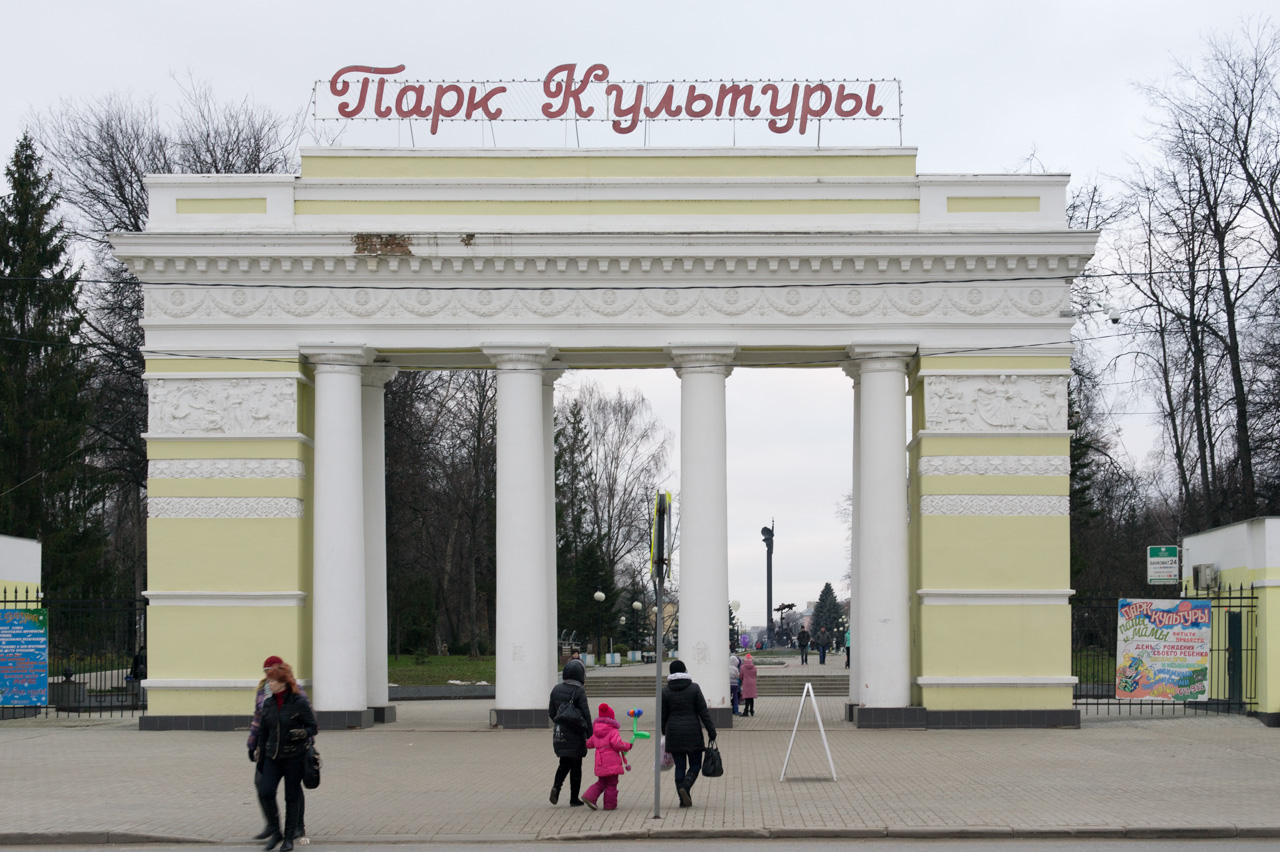
Victory Park, named in honor of the 25th anniversary of the end of the Second World War, is one of those rare urban spaces where the city’s usual hum fades into the background. Established in the mid-1970s as a quiet tribute to those who lived through the war, it has since become a familiar part of Yoshkar-Ola’s landscape. Unlike grand memorials or imposing monuments, the park exists at its own unhurried pace, offering something simple yet invaluable: a chance to walk among trees, breathe in the fresh air, and momentarily step away from the rush of daily life.
The park’s design is unassuming, and that’s precisely what makes it special. Winding paths, paved with smooth tiles, curve gently around an artificial pond that serves as the heart of the space. The water is still, almost glass-like, especially in the early morning when a light mist rises from its surface. Weeping willows line the banks, their branches dipping toward the water, creating secluded spots perfect for reading a book or watching the pond’s quiet life unfold. In summer, the water comes alive—ducks glide across its surface, and occasionally, swans appear, drawn by the kindness of locals who leave them food.
From the beginning, the park was meant to be a place for families, and that purpose has endured. There are small playgrounds with swings and slides, open lawns for picnics or games, and wide paths that invite leisurely strolls. On warm days, you’ll see parents pushing strollers, teenagers riding bikes, and elderly couples walking arm in arm. Winter doesn’t empty the park; instead, it transforms. The pond becomes an ice rink, and the paths around it are cleared for walks, decorated with strings of lights and festive figures that add a touch of warmth to the cold season.
What sets this park apart is its natural, almost wild greenery. There are no rigid flowerbeds or manicured lawns here—trees and shrubs grow freely, giving the space the feel of a small forest tucked within the city. Among the birches, pines, and spruces, you’ll find a mix of native and introduced plants, some added over the years. Spring brings bursts of color as bird cherry and lilac bloom, filling the air with their sweet scent. In autumn, the park is especially striking, with leaves turning gold and crimson, carpeting the paths in a rustling layer of red and orange.
Though the park bears a name tied to victory, it doesn’t feature a traditional war memorial. Instead, the memory of the war is woven into small details—the names of the paths, plaques on certain trees, and a modest eternal flame lit on Victory Day. This understated monument doesn’t demand attention, but its simplicity makes it all the more moving. Veterans often visit to pay their respects, and schoolchildren leave flowers here during ceremonies, a quiet reminder of the past that shaped the present.
Time moves differently in Victory Park. There’s no rush, no need to prove anything or hurry anywhere. You can simply sit on a bench by the pond, listen to the rustle of leaves and the gentle lap of water, and feel the city’s noise fade into the distance. Summer evenings are particularly magical, with the trees casting cool shade and the lamplight turning the park into something almost fairy-tale-like. In winter, it becomes a snowy retreat, a place to unwind after work or meet friends for tea in one of the nearby cafés.
Over the years, the park has grown beyond its role as just a place to relax—it’s become part of the city’s cultural fabric. Small festivals, open-air concerts, and local art exhibitions take place here, blending seamlessly with the park’s peaceful atmosphere. In summer, an improvised stage by the pond hosts live music, from classical performances to contemporary acts. Occasionally, there are craft fairs where artisans sell handmade goods, or workshops for children. These events never disrupt the park’s calm; they only add to its charm.
Yoshkar-Ola is a city where it’s easy to get lost in the rhythm of modern life, but Victory Park serves as a gentle reminder to pause. It doesn’t claim to be the city’s main attraction, and that’s part of its appeal. There are no crowds of tourists, no pressure to pose for photos—just quiet, greenery, and the chance to feel connected to something real. Perhaps that’s why locals love it so much. For them, it’s not just a park; it’s a small sanctuary, a place where the pace of life slows down, if only for a little while.