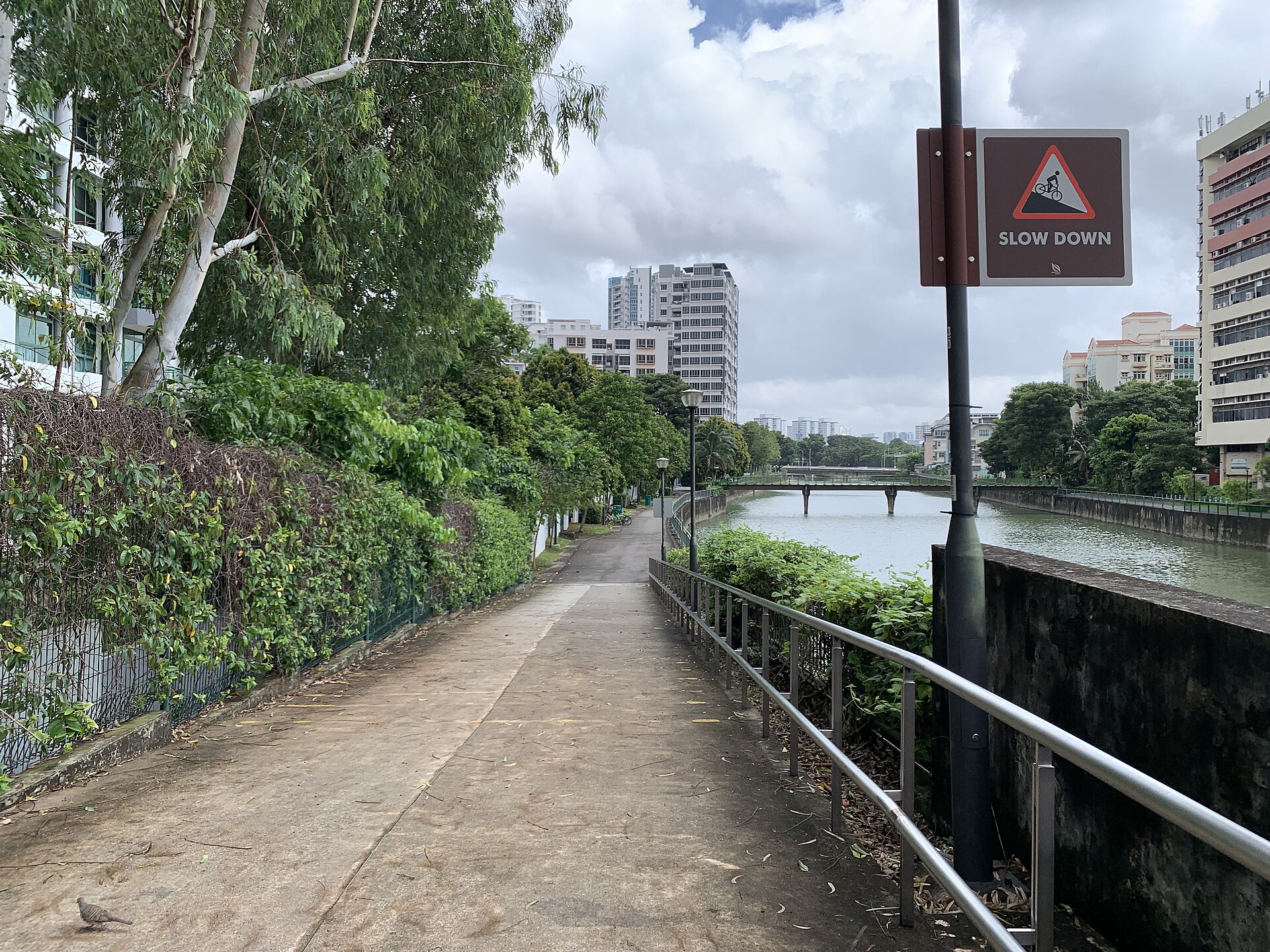
Kallang Park is one of those quiet corners in Singapore where the city’s relentless energy gives way to something softer—the rustle of leaves, the slow drift of the river, the kind of stillness that feels almost out of place in a metropolis. Tucked away in Boon Keng, it stretches along the banks of the Kallang River, a place where nature, history, and everyday life overlap without fanfare. There are no tourist crowds here, no grand attractions, just a sense of calm that lingers even though the city’s bustling districts are just a short distance away.
The river itself has always been the heart of this area. Decades ago, it was a vital lifeline, a waterway where goods were transported and small wooden houses on stilts lined the shores. The riverbanks were once dotted with boatyards and makeshift docks, a far cry from the neatly landscaped paths of today. Now, only fragments of that past remain—old bridges with their weathered railings, the occasional fishing boat drifting by, the way the water catches the light at dusk. The river still shapes the park’s character, its surface reflecting the sky, the trees, and the glow of the city, offering a quiet counterpoint to the heat and noise beyond its banks.
The park as it exists now is a relatively recent addition, but it has quickly become a local favorite. It isn’t large, but its design is thoughtful—wide, well-paved paths for walkers and cyclists, open lawns for picnics, shaded spots where the air feels cooler. Mornings here are particularly peaceful, when the sun hasn’t yet turned the pavement hot and the only sounds are the chirping of birds and the distant hum of traffic. By evening, the park comes alive in a different way: lights flicker on, families gather for dinner on the grass, and groups of friends linger after work, the riverbank serving as an impromptu meeting place.
There’s nothing ornate about the park’s architecture, but that’s part of its charm. The bridges spanning the river are sleek and modern, their metal frames curving gently over the water. They’re not just functional—they double as viewpoints, offering glimpses of the river’s slow current and the low skyline beyond. Along the promenade, benches face the water, inviting visitors to sit and watch the world go by. Some people come with fishing rods, casting lines into the river with the patience of those who know the water well. Others simply sit, letting the rhythm of the place settle over them.
Kallang Park is more than just a green space; it’s part of a larger effort to reclaim Singapore’s waterways for public use. Over the years, the city has transformed many of its rivers and canals into accessible, welcoming areas, and this park is a quiet example of that shift. There are no grand fountains or towering sculptures here, no carefully curated Instagram moments. Instead, there’s a sense of authenticity, a place that feels lived-in rather than staged. It’s not the kind of park you visit for a quick photo op—it’s the kind you return to, again and again, because it feels like a small piece of the city that’s still holding onto something real.
Weekends bring a different energy to the park. Families arrive with bicycles and picnic blankets, spreading out on the grass while children chase each other along the paths. Groups of teenagers gather in clusters, sharing snacks and laughter. Occasionally, a street musician sets up near the riverbank, or an artist sketches the view, adding a touch of spontaneity to the scene. In the summer, small festivals and markets pop up, though they’re nothing like the large-scale events in the city center. Instead, they feel intimate, like something put together by and for the people who call this neighborhood home.
For all its unassuming nature, Kallang Park plays an important role in the area. It’s a green refuge in a densely built-up part of the city, a reminder that even in a place as fast-paced as Singapore, there are still pockets of calm. There are no strict rules here—people walk their dogs, take photos, lie on the grass, or just sit and watch the river flow. Maybe that’s why locals love it so much. It doesn’t dictate how you should spend your time; it simply offers a space where you can slow down and do as you please.
The Kallang River, which runs through the park, was once a symbol of Singapore’s industrial growth. In the past, it was a busy waterway, its banks lined with factories and warehouses. Today, it stands as a testament to change. Once polluted and neglected, it has been cleaned up and reimagined as a vibrant part of the city’s landscape. Mangrove trees now grow along its edges, not just for beauty but to help filter the water. Birds—herons, kingfishers, even the occasional duck—have returned, drawn by the cleaner environment. It’s a small but meaningful transformation, one that reflects the city’s broader efforts to balance progress with sustainability.
What makes Kallang Park special isn’t any single feature, but the way it holds onto the past while fitting seamlessly into the present. There are no grand monuments here, no ancient ruins, just the quiet persistence of a place that has seen change and adapted to it. Walking along its paths, you can almost picture what this area must have looked like a century ago—when the river was crowded with boats, when the air smelled of salt and trade, when the rhythm of life was set by the tides. Today, the river is quieter, the banks more orderly, but the connection to that history hasn’t disappeared. It lingers in the details—the way the water laps against the shore, the old trees that have stood for decades, the sense that this place has always been, and always will be, a part of the city’s story.