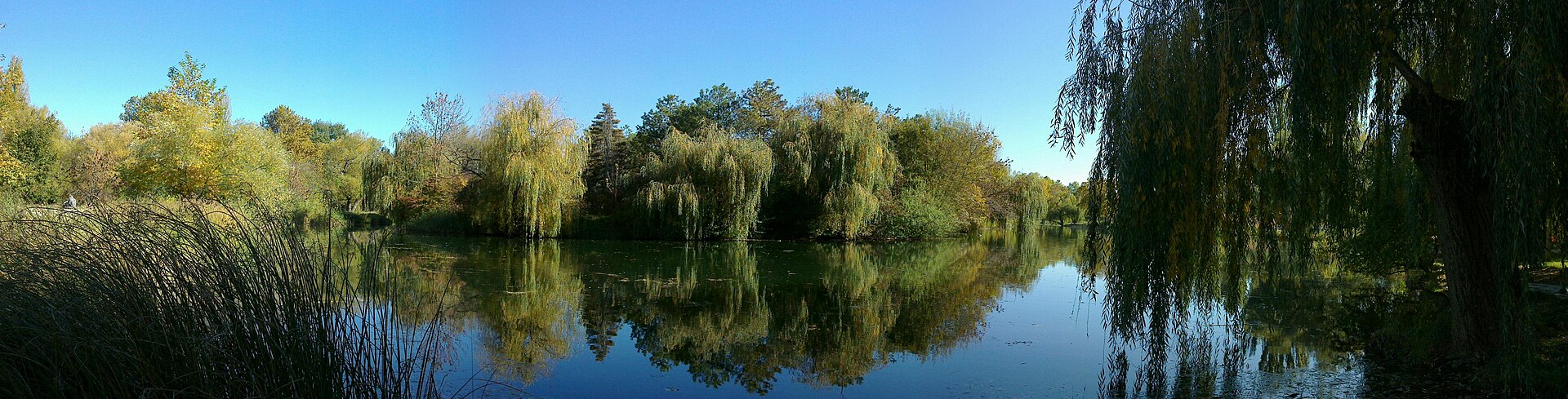
Gagarin Park in Simferopol is one of those quiet corners of the city where people come not for excitement, but for a moment of stillness. Perched on a gentle hill in the northern part of town, it offers a view of rooftops, patches of greenery, and the distant outline of mountains. There are no flashy attractions or crowded promenades here—just winding paths, old trees, and benches where you can sit with a book or watch the world go by.
The park took shape in the mid-20th century, when Simferopol was expanding and city planners were looking for ways to create new public spaces. Back then, this area was on the outskirts, little more than an empty lot. Over time, trees were planted, paths laid down, and lampposts installed, gradually shaping the park into what it is today. It was named after Yuri Gagarin, a nod to the era’s fascination with space exploration, which left its mark on many Soviet cities.
The park’s design is simple and unassuming, much like other urban spaces from that time. The main alley leads to a small square with a modest monument to Gagarin, a focal point for visitors. The statue itself isn’t grand, but it holds meaning for locals. Schoolchildren and tourists often take photos beside it, and in winter, a festive tree stands nearby. The rest of the year, the square serves as a gathering spot for casual strolls and small community events.
What makes the park special is its greenery. Mature oaks, maples, and lindens provide dense shade, offering relief from the summer heat. Along the paths, shrubs and occasional rare plants—some dating back to the park’s early days—add to the natural charm. In spring, magnolias and chestnuts bloom, filling the air with a sweet fragrance, while autumn turns the leaves into a warm palette of reds and golds.
The park is woven into the fabric of daily life in Simferopol. Families walk here with children, retirees feed pigeons, and young people spread out blankets for picnics. On weekends, you might find artists sketching the scenery or musicians playing near the fountain. In summer, open-air concerts take place, and in winter, the park hosts fairs and holiday celebrations. Though small, it holds many different moods and stories, a place where people come to unwind or simply pass the time.
There’s something quietly nostalgic about Gagarin Park. It preserves traces of Soviet-era design—the modernist lampposts, the wrought-iron benches, even the old trash bins that no longer serve their purpose but remain part of the landscape. These details hint at how the city has evolved, how ideas about public spaces have changed, and how those ideas became part of the city’s collective memory.
For tourists, the park might not be the first place that comes to mind when visiting Simferopol. There are more famous landmarks nearby, after all. But this is where you can experience the city’s everyday rhythm, away from crowds and tourist hustle. There’s no rush here, just the slow pace of life and the unhurried footsteps of locals. That’s probably why it’s so cherished—it doesn’t try to be anything more than what it is.
If you find yourself in Simferopol, it’s worth stopping by, even for just half an hour. Walk down the main alley, sit on a bench near the monument, and listen to the rustling leaves and distant sounds of the city. Maybe then you’ll understand why this park isn’t just a place to rest, but a piece of the city’s soul.