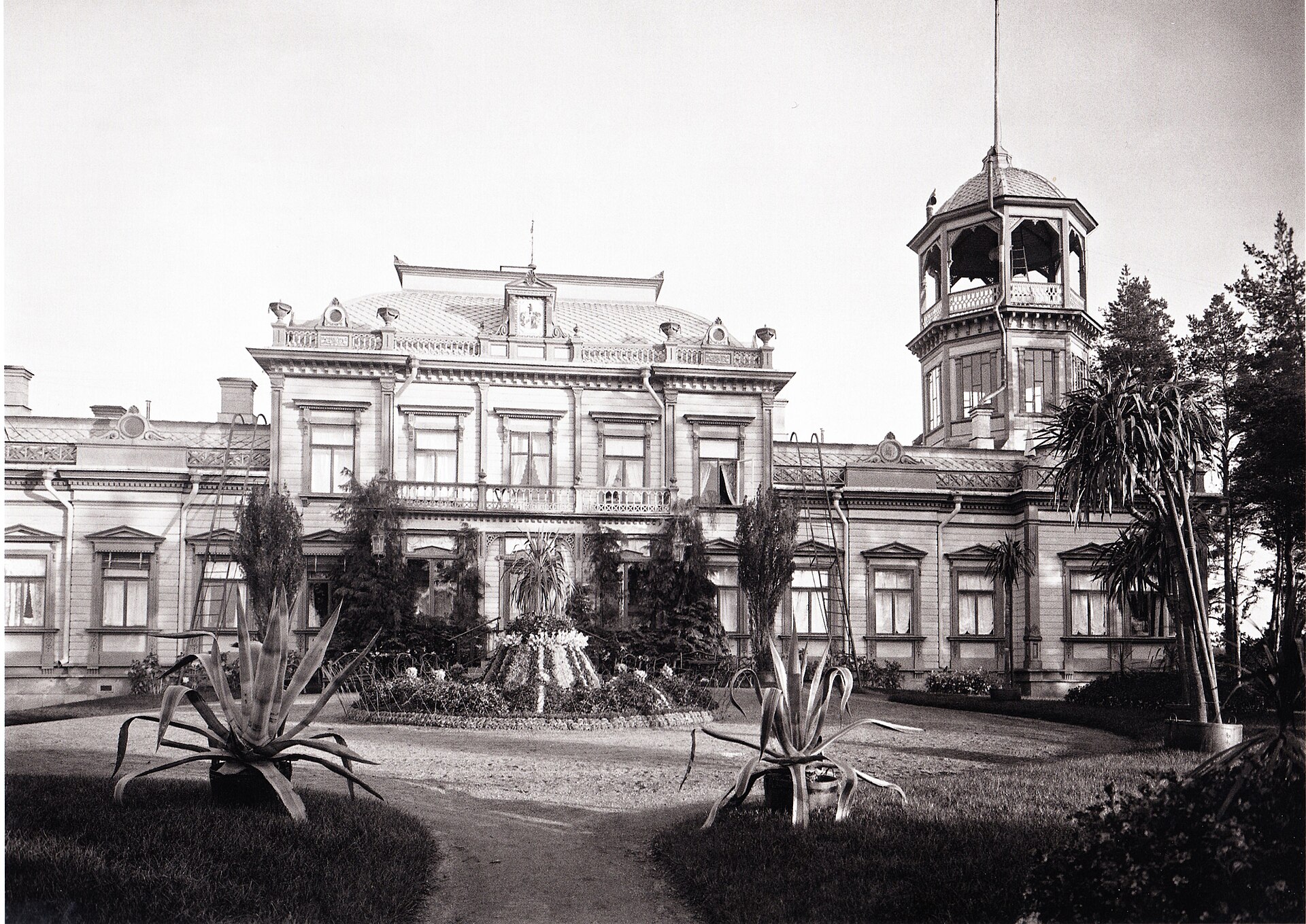
Hämeenlinna’s Aulanko Park is one of those places where nature and history seem to have settled into an easy, unhurried conversation. Tucked just a few kilometers from the city center, it feels like a world apart—a quiet expanse of forests, lakes, and rolling hills that has drawn visitors for well over a century. The park wasn’t always a public retreat, though. Its origins trace back to the late 19th century, when a local industrialist, Hugo Standertskjöld, began transforming the area into a private estate. He had a vision of creating a landscape that blended the wild beauty of Finland’s forests with the refined elegance of European garden design. What emerged was a place where winding paths led to unexpected clearings, where man-made structures sat lightly on the land, and where every turn offered a new perspective on the surrounding countryside.
The heart of Aulanko is its observation tower, a sturdy stone structure that rises above the treetops like a silent sentinel. Built in the early 20th century, the tower was designed in the National Romantic style, a movement that sought to capture the essence of Finnish identity through architecture. Its rough-hewn granite walls and arched windows give it a timeless quality, as if it has always been part of the landscape. Climbing the steps to the top is a small effort, but the reward is worth it: a sweeping view of Lake Vanajavesi, its dark waters stretching into the distance, framed by dense forests and the occasional glint of a distant farmhouse. On clear days, the horizon seems to dissolve into the sky, and it’s easy to understand why this spot has long been a favorite for photographers and daydreamers alike.
Not far from the tower, the park’s other notable landmark is the granite castle, a whimsical structure that looks like it belongs in a fairy tale. Standertskjöld commissioned it in the 1890s, and while it was never intended to be a real fortress, its turrets and battlements give it an air of playful grandeur. The castle was originally built as a hunting lodge, a place where Standertskjöld and his guests could retreat after a day in the woods. Today, it stands empty, its interiors closed to the public, but its exterior is still a striking sight, especially when the evening light catches its rough stone walls. The surrounding gardens, though modest, add to the charm, with carefully placed flowerbeds and shaded benches inviting visitors to linger.
The park’s trails are its real treasure, winding through forests of pine and spruce, past small ponds and over gentle hills. Some paths are wide and well-trodden, leading to the most popular spots, while others are narrow and quiet, disappearing into the undergrowth where only the occasional birdcall breaks the silence. In autumn, the forest floor is carpeted with golden leaves, and the air carries the crisp scent of woodsmoke from nearby cottages. Winter transforms the landscape into a still, white world, where the only sounds are the crunch of snow underfoot and the distant call of a crow. Spring brings a rush of life, with wildflowers pushing through the thawing ground and the first green shoots appearing on the trees. Even in summer, when the park is at its busiest, there are always quiet corners where you can escape the crowds and find a moment of solitude.
One of the most peaceful spots in Aulanko is the small peninsula that juts into Lake Vanajavesi. Here, the water laps gently against the rocks, and the trees lean out over the shore as if trying to touch the surface. A wooden pier extends into the lake, offering a place to sit and watch the light play on the water. On still days, the reflections are so perfect that it’s hard to tell where the lake ends and the sky begins. The peninsula is also home to a simple wooden pavilion, a remnant of the park’s days as a private estate. It’s easy to imagine Standertskjöld and his guests gathering here for tea, the conversation drifting across the water as the sun dipped below the horizon.
Aulanko’s history is more than just the story of one man’s vision, though. In the early 20th century, the park became a symbol of Finnish national pride, a place where the country’s natural beauty was celebrated and preserved. It was here, in 1917, that the first Finnish-language university, the University of Turku, held its opening ceremonies—a moment that marked a turning point in the country’s cultural identity. The park’s role in this history is subtle, but it’s there in the way the landscape seems to embody the ideals of the time: independence, resilience, and a deep connection to the land. Even today, Aulanko feels like a place where those values are still alive, woven into the fabric of the forests and lakes.
For those who visit, the park offers more than just scenery. It’s a place to slow down, to step away from the rush of modern life and remember what it feels like to be surrounded by quiet beauty. There are no grand attractions here, no flashy displays or crowded tourist spots. Instead, there’s the simple pleasure of walking beneath tall trees, the satisfaction of reaching the top of the observation tower and seeing the world spread out below, the quiet joy of sitting by the lake with nothing but the sound of water and wind. It’s the kind of place that stays with you long after you’ve left, a reminder that some of the best experiences are the ones that don’t need to be loud or complicated to be meaningful.
Aulanko is also a place of small surprises. Hidden among the trees, you might stumble upon a rustic wooden bridge, its planks worn smooth by decades of footsteps. Or you might find a secluded bench tucked into a sunlit clearing, perfect for reading a book or simply watching the clouds drift by. The park’s wildlife is another quiet delight—squirrels darting between branches, woodpeckers tapping on tree trunks, and if you’re lucky, the flash of a kingfisher skimming over the lake. These moments aren’t advertised or staged; they’re just part of the rhythm of the place, waiting to be discovered by those who take the time to look.
In many ways, Aulanko feels like a gift—a piece of Finland’s natural and cultural heritage that has been carefully preserved and passed down through generations. It’s not a museum, though. The park is very much alive, changing with the seasons and evolving with the people who visit it. Some come for the history, others for the views, and many simply because it’s a place where they can breathe a little easier. Whatever brings you here, the park has a way of making you feel at home, as if it’s been waiting for you all along. And in a way, it has.