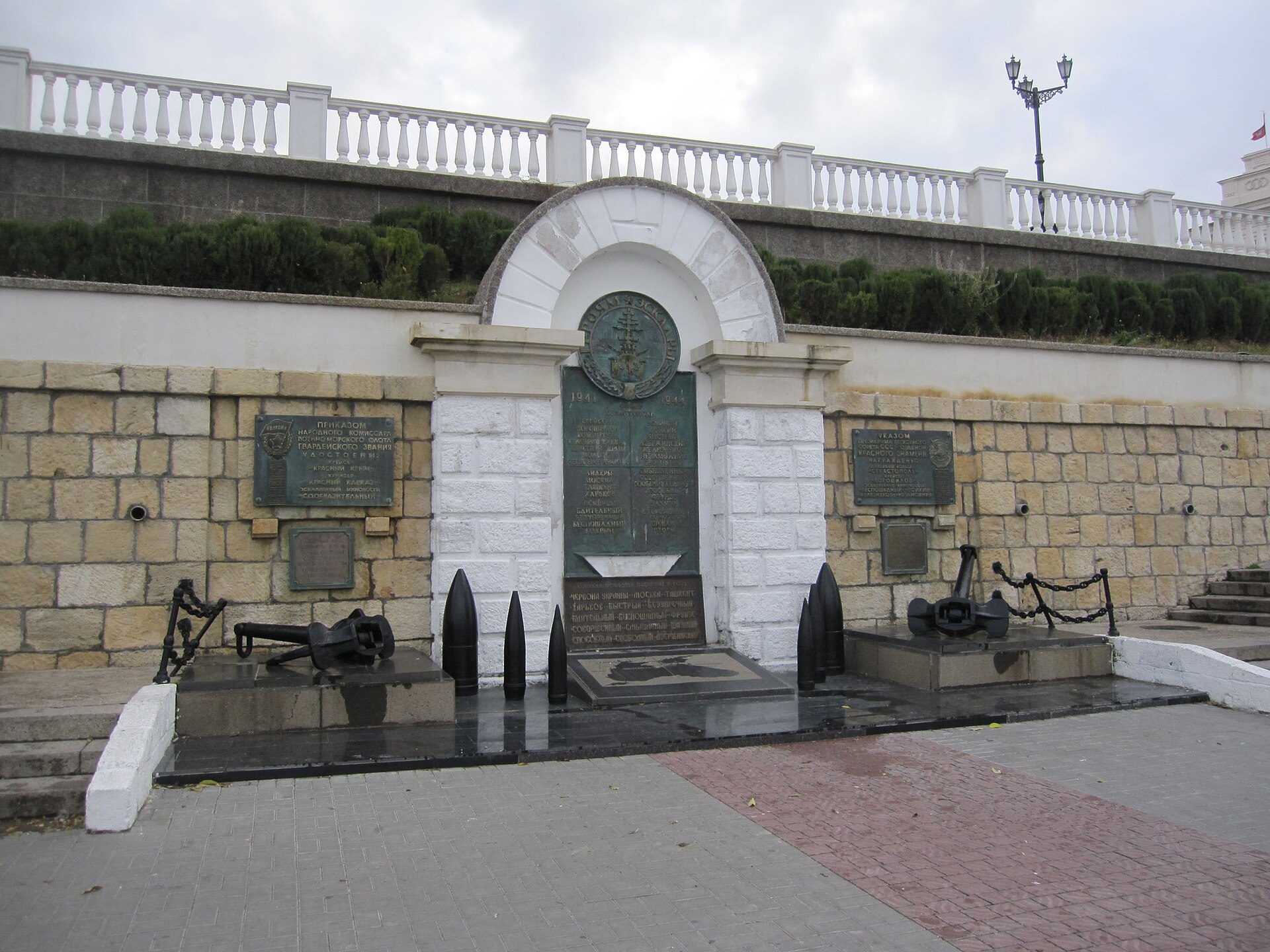
The memorial to the sailors of the Black Sea Fleet stands on a quiet hill in Sevastopol, a place where history feels heavier than the sea air. It marks the spot where, during the Crimean War, Russian ships were deliberately sunk to block the enemy’s advance into the bay. The decision wasn’t just a tactical move—it was a sacrifice that shaped the city’s fate. The fleet, under Admiral Pavel Nakhimov, was scuttled in 1855, turning the waters of the Southern Bay into a barrier that bought time for the defenders of Sevastopol. The wrecks of those ships, now rusted relics visible at low tide, still lie beneath the surface, a silent testament to what was lost.
The monument itself is unassuming—a granite stele with a bronze relief showing sailors in their final moments aboard the doomed vessels. There’s no grandeur in its design, no heroic posturing. Instead, the scene captures something more human: men leaving their ships, knowing they’d never sail them again. The simplicity of the memorial makes it feel honest, as if the weight of what happened here doesn’t need embellishment. Around it, a small stone plaza and a few trees frame the space, creating a place where visitors can stand and look out at the bay, imagining the past.
Sevastopol has always been a city of memory. Founded as a naval stronghold, its streets and harbors carry the echoes of countless battles, but the story of the scuttled fleet holds a particular place in its identity. This wasn’t a victory in the traditional sense—it was a last stand, a refusal to surrender even when the odds were impossible. The memorial doesn’t glorify war; it acknowledges the cost. For locals, it’s a familiar landmark, one that appears in school lessons, in stories passed down through generations, and in the quiet moments when someone leaves flowers at its base.
The Southern Bay today is a different place. Ferries come and go, modern buildings line the shore, and the water reflects the changing sky. Yet beneath the surface, the past lingers. On rare occasions, when the tide is low, the skeletal remains of the sunken ships emerge, their rusted frames a stark contrast to the bustling life above. The memorial bridges that gap, connecting the city’s present to the moment when its survival hung in the balance. It’s not a place for loud declarations or tourist snapshots. Instead, it invites reflection—a pause to consider what it means to fight for a place, even when the outcome is uncertain.
There are no museums here, no gift shops or guided tours. The memorial exists in the everyday, woven into the fabric of the city. Veterans visit to pay their respects. Schoolchildren come on field trips, listening to stories of courage and loss. On Victory Day and the anniversary of Sevastopol’s defense, crowds gather to lay wreaths and flowers, their voices hushed in remembrance. But even on ordinary days, you might find someone standing alone, staring at the bay, lost in thought. The monument doesn’t demand attention; it earns it, quietly.
What happened here wasn’t just a military maneuver—it was a choice that defined the city. Sevastopol has always been more than a port; it’s a symbol of resilience, a place where history isn’t just remembered but lived. The memorial to the sailors of the Black Sea Fleet is one of many markers of that past, but it stands out because it doesn’t focus on generals or grand strategies. It honors the men who carried out the order, who knew the risks, and who, in their final moments aboard those ships, became part of something larger than themselves.
The air around the memorial is still, even when people pass by. There’s a sense of reverence here, not because the place is sacred in a religious sense, but because it represents something real—sacrifice, duty, the quiet strength of ordinary people facing extraordinary circumstances. In an age where history is often reduced to dates and statistics, this small monument does something rare: it makes the past feel immediate. It doesn’t tell you what to think; it lets you stand there, look at the water, and decide for yourself what it all means.
Sevastopol’s story is written in its streets, its hills, and its harbors. The memorial to the scuttled fleet is just one chapter, but it’s an important one. It reminds visitors that behind every great event, there are individuals—sailors, soldiers, civilians—whose lives were forever changed. The city doesn’t forget them, and neither should those who walk its shores. The monument doesn’t need to be loud to be powerful. Sometimes, the most profound stories are the ones told in silence.