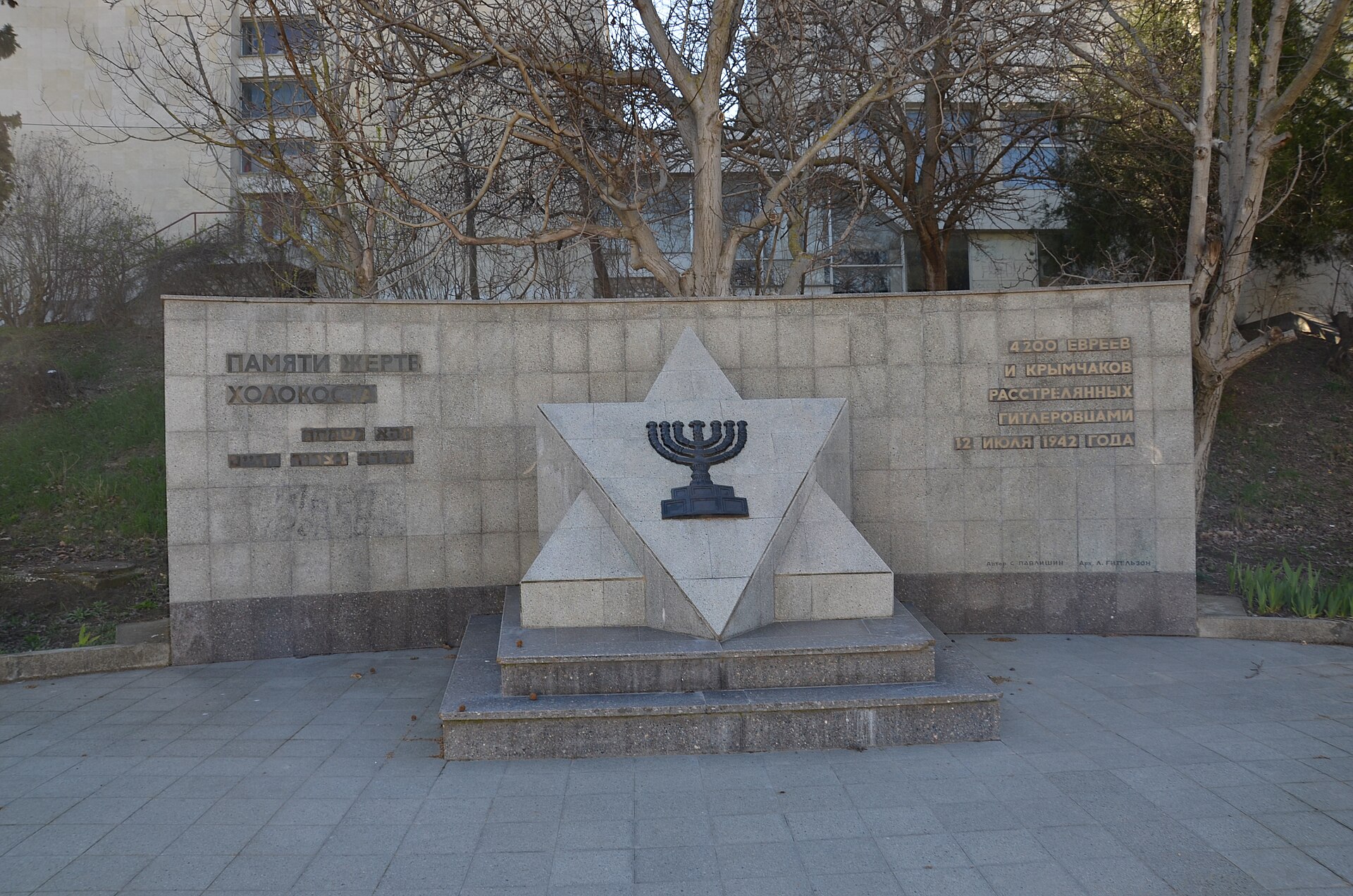
Sevastopol is a city where history lingers in every corner, not just in the grand monuments or the famous battlefields, but in quiet, unassuming places that carry the weight of the past. One such place is the Holocaust memorial on 5th Bastionnaya Street, a modest yet powerful reminder of the atrocities committed during the Nazi occupation. It stands on the grounds of what was once a military hospital, where mass executions took place in the darkest days of World War II. The memorial itself is simple—a granite stele with an inscription, flanked by metal figures that evoke the silhouettes of those who perished. There is no grandeur here, only a solemn acknowledgment of lives lost.
The story of this site is tied to the broader tragedy of the Holocaust, though Sevastopol’s Jewish community was smaller than in other parts of the Soviet Union. When German forces seized the city in 1942, they began a campaign of terror against civilians, targeting Jews, Roma, and others deemed undesirable. The hospital area became one of the execution sites, where hundreds were killed. Decades later, the memorial was erected to honor their memory, ensuring that the crimes committed here would not be forgotten. It’s a place that forces visitors to confront the brutality of war and the fragility of human life.
Architecturally, the memorial is understated, which only amplifies its emotional impact. The rough-hewn granite and the abstract metal figures don’t tell a story in the way a traditional statue might, but they don’t need to. The absence of elaborate detail leaves room for reflection, for the imagination to fill in what words cannot express. Visitors often leave flowers or small stones at the base of the stele, a quiet gesture of remembrance that feels more personal than any formal ceremony. The trees around the memorial sway gently in the breeze, their leaves casting shifting patterns of light and shadow that add to the sense of solemnity.
This isn’t a place that draws crowds. There are no tour buses parked nearby, no vendors selling souvenirs, no guided groups snapping photos. Instead, it exists in a kind of quiet isolation, a space where people come to think, to mourn, or simply to stand in silence. The lack of fanfare makes it all the more powerful. It’s not about spectacle; it’s about memory, about the obligation to remember even when the world would rather forget. For those who seek out such places, it offers a connection to history that goes beyond dates and facts, a chance to feel the weight of what happened here.
Sevastopol itself is a city of layers, where the past is never far from the surface. It’s a place of heroism and suffering, of naval battles and sieges, of resilience and loss. The Holocaust memorial is just one thread in that complex tapestry, but it’s an important one. It serves as a counterpoint to the city’s more celebrated narratives, a reminder that history isn’t just about victories or grand achievements. Sometimes, it’s about the quiet, unmarked graves and the people who were erased from the story. This memorial ensures that those people are not forgotten.
In recent years, the site has become a gathering place for commemorative events. Veterans, students, and members of the local Jewish community come here to pay their respects, sometimes reciting prayers, sometimes standing in silence. The memorial doesn’t demand attention, but it commands respect. It’s a place where different generations and backgrounds intersect, united by the shared understanding that memory is not just about the past—it’s about shaping the future. The lessons of the Holocaust are universal, and this memorial makes them tangible in a way that textbooks never could.
For travelers who venture beyond the usual tourist spots, the Holocaust memorial offers something rare: a moment of genuine connection with history. It’s not a place to rush through or check off a list. It’s a place to pause, to listen, to reflect on the darker chapters of the past and what they mean for the present. The city of Sevastopol has many stories to tell, but few are as quietly devastating as this one. The memorial doesn’t shout its message; it doesn’t need to. The silence here speaks volumes, and those who take the time to listen will leave with a deeper understanding of what it means to remember.