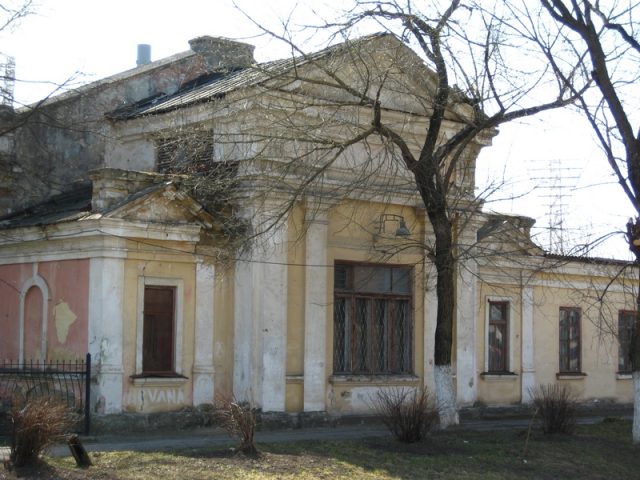
The Holocaust Memorial in Bender stands as a quiet testament to one of the darkest chapters in the city’s history. Located on Tkachenko Street, on the outskirts of what was once a bustling urban area, this modest monument marks a site where mass executions took place during World War II. It was here, under the occupation of Romanian and German forces, that the Jewish community of Bender—long a part of the city’s cultural fabric—was systematically persecuted, deported, and murdered. The exact number of victims remains uncertain, but the loss was profound, erasing generations of families and traditions that had shaped the region for centuries.
The memorial itself is unassuming in its design, yet its simplicity carries weight. A sculptural composition rises from a low pedestal, its figures frozen in gestures of grief and remembrance. There are no grand declarations here, no sweeping narratives—just the stark reality of absence. Around the monument, a small memorial garden has been planted, its trees offering shade and a sense of stillness. The place does not demand attention, but it holds it, inviting visitors to pause and reflect on the fragility of life and the depths of human cruelty.
Bender, known historically as Tighina, has always been a city of intersecting histories. Once a fortress on the banks of the Dniester, it has passed through the hands of empires and nations, each leaving its mark. The Jewish community here was one of the oldest in the region, with roots stretching back to the 18th century. Before the war, synagogues, schools, and businesses thrived, contributing to the city’s vibrant social and economic life. The occupation, however, brought an abrupt and violent end to this coexistence. Between 1941 and 1944, thousands were rounded up, forced into ghettos, or executed in mass shootings. The memorial now stands as one of the few physical reminders of what was lost.
For many years, the history of the Holocaust in Moldova—and in Bender specifically—was not widely discussed. The Soviet era, with its selective approach to wartime narratives, often overshadowed the fate of Jewish victims, subsuming their stories into broader accounts of Soviet suffering. It is only in recent decades that efforts have been made to restore these memories, both through official commemorations and grassroots initiatives. The memorial in Bender is part of this shift, a place where the past is acknowledged without embellishment. On certain days, particularly around the anniversaries of key events, survivors’ families, local officials, and students gather here to lay flowers and observe moments of silence.
The atmosphere around the memorial is one of quiet dignity. There are no crowds, no tour buses, no vendors selling souvenirs. Instead, the place exists as it should—unobtrusive, yet impossible to ignore. The trees planted along the paths rustle softly in the wind, their leaves casting shifting patterns of light and shadow on the ground. For those who visit, the experience is often personal. Some come to honor relatives they never knew; others arrive out of a sense of duty, to bear witness to a history that must not be forgotten. Even those who stumble upon the memorial by accident tend to linger, drawn in by the weight of the place.
Bender itself is a city that wears its history lightly, despite the layers of conflict and change it has endured. The fortress that once defined its skyline still stands, though now it is more a relic than a strategic stronghold. The streets, lined with low-rise buildings and occasional patches of greenery, tell their own stories—of trade, of migration, of resilience. The Holocaust memorial is just one point on this map of memory, but it is an essential one. It does not seek to compete with the city’s other landmarks; rather, it complements them, offering a counterpoint to the narratives of triumph and survival that often dominate historical accounts.
In recent years, Moldova has taken steps to integrate the history of the Holocaust into its national memory. Educational programs, public discussions, and international partnerships have helped bring these stories to light, ensuring that they are not relegated to the margins. The memorial in Bender plays a role in this process, serving as both a site of mourning and a tool for education. School groups visit regularly, guided by teachers who emphasize the importance of confronting difficult histories. For many young people, these visits are their first real encounter with the realities of the Holocaust, a moment that often leaves a lasting impression.
There is no grandiosity to the memorial, no attempt to dramatize or sensationalize the past. Instead, it offers something far more powerful: a space for reflection. Visitors are not told what to feel or how to react; the place simply exists, allowing each person to engage with it on their own terms. Some may leave with a sense of sorrow, others with resolve, but few depart unchanged. In a world where the lessons of history are too often ignored, the Holocaust Memorial in Bender serves as a quiet but insistent reminder of what happens when hatred goes unchecked.
If you find yourself in Bender, the memorial is worth seeking out—not because it is a tourist attraction in the conventional sense, but because it is a place that demands something of its visitors. It asks for attention, for empathy, for a willingness to acknowledge the past in all its complexity. There are no easy answers here, no comforting resolutions. Just the enduring weight of memory, and the hope that by remembering, we might prevent such horrors from being repeated.