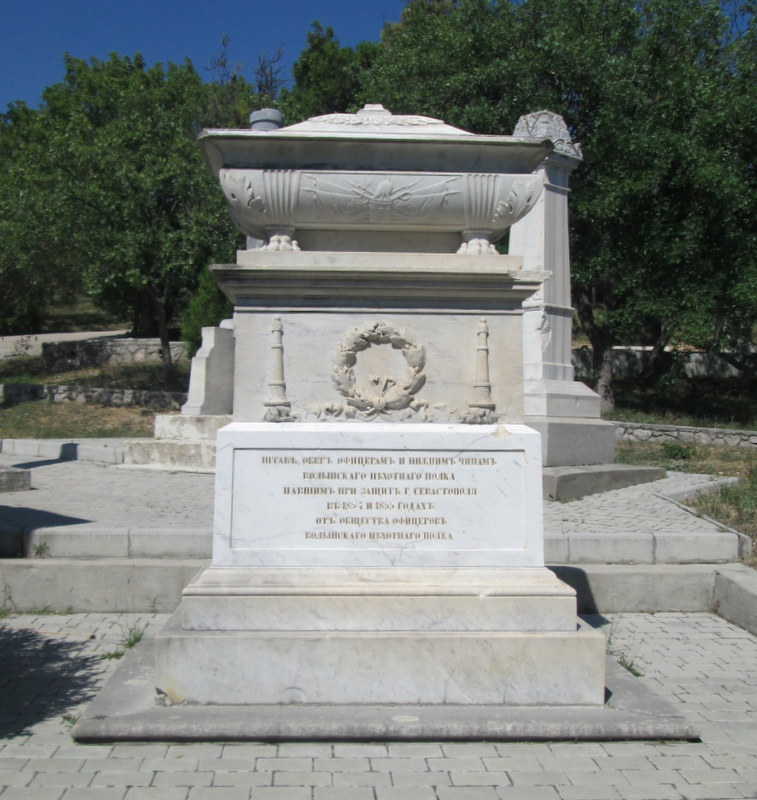
Perched on a quiet hillside in Sevastopol, the monument to the soldiers of the Volynsky Infantry Regiment overlooks the bay and the city below. The location wasn’t chosen by chance—this was where the regiment stood its ground in 1855 during the Crimean War, holding off overwhelming enemy forces. The spot is steeped in history, a place where ordinary soldiers fought under impossible conditions, refusing to retreat even as the odds stacked against them. Today, the monument stands as a quiet testament to their courage, a reminder of the resilience that shaped the city’s past.
The memorial itself is unassuming but powerful. A simple granite obelisk rises from the ground, its surface adorned with a bronze bas-relief depicting soldiers in the heat of battle. The figures are tense, their expressions grim, capturing a moment frozen in time rather than a polished, heroic pose. The inscription on the pedestal speaks of the regiment’s sacrifice, while the small park surrounding the monument offers a place to sit and reflect. There are no crowds here, just the sound of the wind coming off the sea, a constant presence in this part of the city.
The Volynsky Infantry Regiment was one of many units that became legendary during the Siege of Sevastopol. Its soldiers fought in some of the bloodiest engagements, including the battle for Malakhov Kurgan, where the fate of the city hung in the balance. Many never returned, but their defiance became a symbol of resistance. The monument isn’t just stone and metal—it’s a tribute to those who gave everything to defend this land, their names often lost to history but their deeds not forgotten.
Sevastopol is a city where history lingers on every corner, where streets and hills bear the scars of war. Yet this monument feels different. It doesn’t honor generals or admirals but the rank-and-file soldiers, the ones whose stories are rarely told in grand narratives. There’s no pomp here, no grandiosity—just a quiet acknowledgment that history is written not by the powerful, but by those who fight in the trenches.
The design of the monument is straightforward, but that simplicity carries its own weight. The obelisk points skyward, as if echoing the unyielding spirit of the defenders. The bas-relief is starkly realistic, showing soldiers in the midst of chaos, their bodies straining with effort. It’s not a staged portrait but a snapshot of war, raw and unfiltered. The craftsmanship makes the past feel tangible, as if the figures might step out of the bronze at any moment.
The best time to visit is on a quiet day, when the place is empty. Then, it’s easier to imagine what it must have been like here in 1855—the thunder of cannon fire, the cries of the wounded, the acrid smell of gunpowder hanging in the air. The bay below looks peaceful now, but the monument serves as a reminder that this tranquility came at a cost. There’s no need for grand speeches here; the memorial speaks for itself, its presence enough to evoke the weight of history.
Unlike the more tourist-heavy spots in Sevastopol, this monument doesn’t have signs pointing the way or vendors selling souvenirs. It’s a place for those who want to do more than just look—they want to feel. There are no crowds here, no guided tours, just the wind and the distant sound of the sea. That solitude makes it all the more meaningful. You can come early in the morning, when the sun is just rising over the water, and stand in silence, gazing out at the bay. The quiet amplifies the sense of connection to the past.
This monument isn’t just about honoring the dead; it’s a reminder of the human cost of war. Behind every name etched into the stone are stories of lives cut short, of dreams left unfulfilled. Sevastopol carries that memory in its streets, and this memorial is one of the threads that weave it together. It doesn’t glorify war but acknowledges the sacrifice of those who endured it.
If you find yourself in Sevastopol, don’t rush straight to the main attractions. Take the time to climb this hill, to stand where those soldiers once stood. Maybe here, more than in any museum, you’ll feel the weight of history—not as a collection of dates and facts, but as something lived, something human. The past isn’t just something to read about; it’s something to experience, to carry with you long after you’ve left.