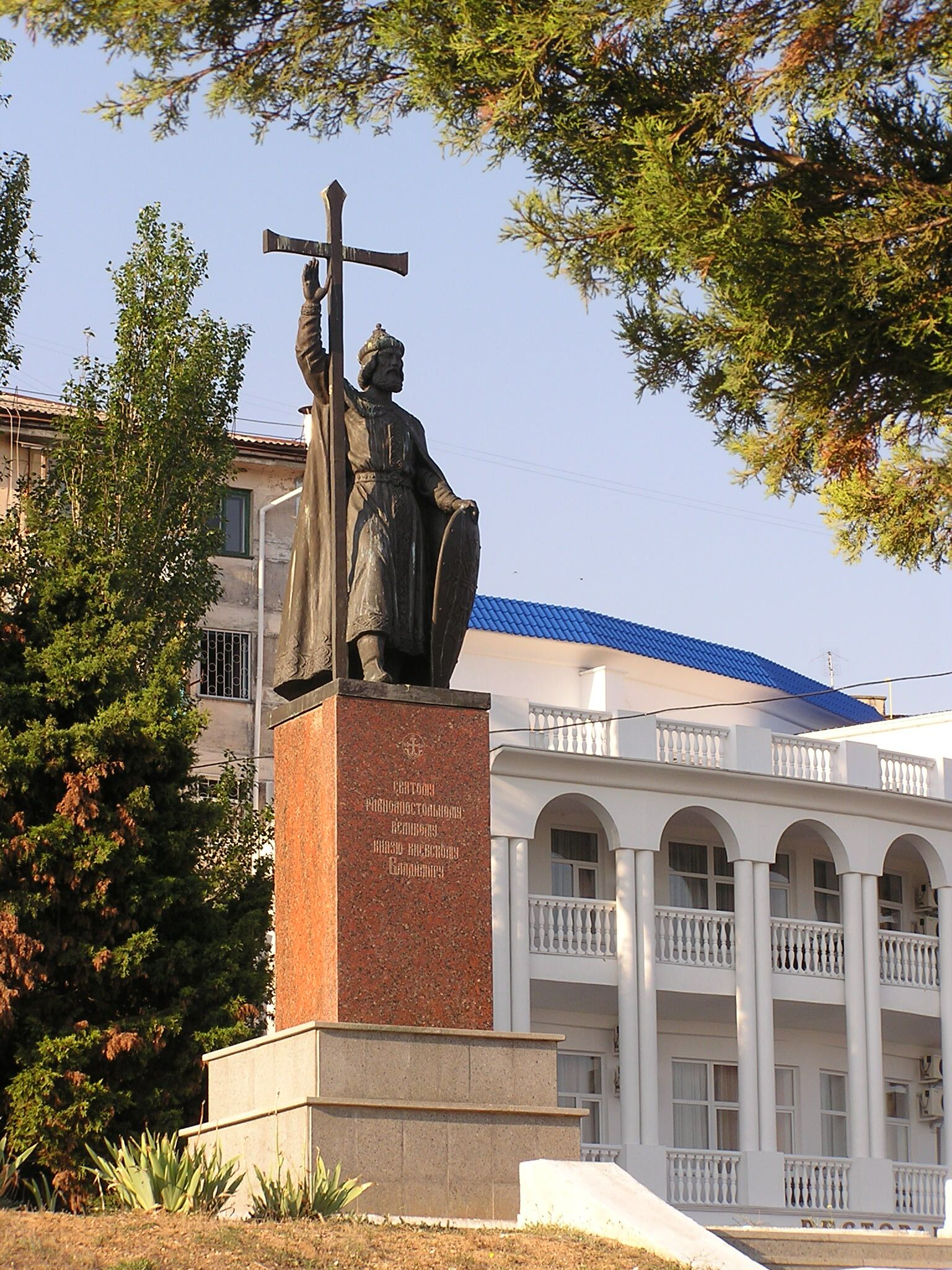
The monument to Vladimir the Great in Sevastopol is one of those rare landmarks that does more than mark a place—it connects layers of history, geography, and meaning in a way that feels almost inevitable. Standing on a high bluff overlooking the bay, the bronze figure of the prince holding a cross seems to bridge the past and present, not as a distant symbol but as a quiet, enduring presence. The choice of location is no accident. This is the edge of ancient Chersonesus, the Byzantine city where, according to tradition, Vladimir was baptized in the late 10th century before bringing Christianity to Kievan Rus. Historians still debate the exact details, but the association between this stretch of Crimean coastline and one of the most pivotal moments in Russian history has long been unshakable.
Unveiled in 2015, the monument arrived at a time when Sevastopol was rediscovering its deeper roots beyond its identity as a city of military glory. Designed by sculptor Salavat Shcherbakov, known for his work on historical themes, the statue avoids the stiffness of many official monuments. Instead, Vladimir is depicted mid-motion, as if caught in the act of decision—one hand raised with the cross, the other resting at his side, his posture both resolute and human. The red granite pedestal grounds the composition, its weight contrasting with the fluid lines of the bronze, while the surrounding greenery softens the scene, turning the site into a place of reflection rather than mere display.
The monument’s placement within the Chersonesus Museum-Reserve is deliberate. This is where the ruins of the ancient city lie, where Byzantine churches once stood, and where today a working monastery draws pilgrims from across the country. The statue doesn’t compete with the layers of history beneath it; it becomes part of them. Visitors walking through the archaeological site, past the remnants of basilicas and defensive walls, eventually climb the slope to the monument, where the view opens up to the bay and the modern city beyond. The effect is striking—a reminder that Sevastopol has always been a crossroads, where empires, faiths, and cultures intersected.
Sevastopol itself is a city of contrasts, and the monument to Vladimir embodies that complexity. It stands at the meeting point of land and sea, antiquity and modernity, military tradition and spiritual legacy. On a clear day, the bronze gleams in the sunlight, while at dusk, the glow of streetlamps gives the figure an almost watchful quality, as if Vladimir still keeps an eye on the city that grew from the shores he once knew. The idea of erecting such a monument here isn’t new. Plans were first proposed in the 19th century, but it took until the 21st for the vision to materialize, reflecting a broader shift in how the city engages with its past. Today, the statue is more than a photo opportunity; it’s a focal point for those who come to trace the threads of history that bind Crimea to the wider story of Russia.
The design of the monument is understated but effective. The red granite of the pedestal provides a warm counterpoint to the cool bronze, while the open space around it allows the statue to breathe. There are no grand inscriptions or didactic plaques—just the figure, the cross, and the landscape. The absence of clutter reinforces the sense of timelessness, as if the monument has always been here, waiting. The surrounding trees and lawns add to the tranquility, offering a respite from the bustle of the city center. It’s a place where people linger, not just to take pictures but to absorb the quiet weight of history.
For Sevastopol, the monument is part of a larger narrative, one that extends beyond its reputation as a fortress city. Chersonesus, where the statue stands, is a place where you can walk through centuries in a single afternoon—from Greek and Roman ruins to Byzantine mosaics, from medieval churches to the modern monastery. Vladimir’s presence here feels natural, almost inevitable, as if he’s the missing piece that ties it all together. The monument doesn’t just commemorate an event; it invites visitors to consider how that event rippled through time, shaping the culture, faith, and identity of a people.
A visit to the monument is often the culmination of a trip to Chersonesus. After wandering through the ruins, exploring the museum’s artifacts, and standing in the shadow of ancient walls, the climb to the statue offers a moment of perspective. From this vantage point, the bay stretches out below, dotted with ships and framed by the city’s sprawling neighborhoods. It’s easy to see why this spot was chosen—not just for its historical resonance, but for the way it encapsulates the meeting of land and water, past and present. The monument doesn’t shout its significance; it lets the place speak for itself.
In the end, the statue of Vladimir the Great is more than a tribute to a single figure. It’s a reminder that history isn’t just something that happened—it’s something that continues to shape the world around us. For Sevastopol, a city that has seen so much change, the monument is a quiet anchor, a way of grounding the present in the stories of the past. Whether you come as a pilgrim, a history enthusiast, or simply a traveler, the sight of Vladimir standing against the sky, the cross in his hand, offers a moment of connection—not just to the prince who changed the course of a nation, but to the land that witnessed it all.