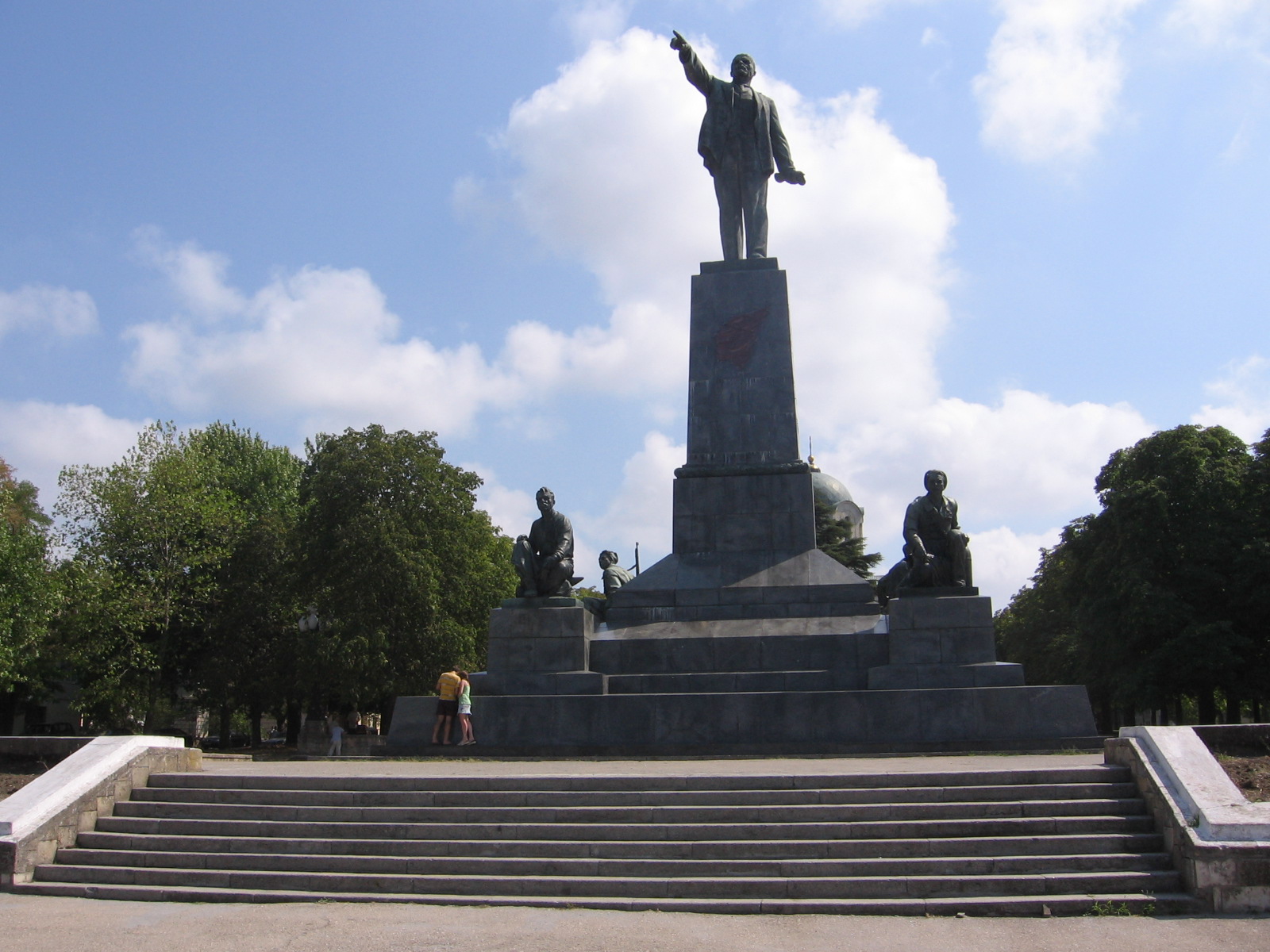
The Lenin Monument on Ushakov Square blends into the city like an old tree. It’s not where tour buses stop, but where locals walk their dogs, where teenagers meet after school, and where the sea breeze carries the sound of ship horns. The statue itself is simple—a bronze figure on a granite pedestal—but its place here tells a story of a city that has seen empires rise and fall.
Sevastopol was built as a fortress, survived the Crimean War, and became the heart of the Black Sea Fleet. When the Soviet Union took hold, the city changed again. Factories opened, schools filled with students, and streets were renamed. The monument went up in 1957, a time when the country was trying to move forward without letting go of its past.
Lenin stands in the usual pose, one arm outstretched, as if mid-speech. The pedestal is red granite, the same material used for monuments across the Soviet Union. Over the years, the square around it has settled into the landscape—trees have grown tall, benches have been added, and the pavement has been worn smooth by footsteps. In summer, the square is alive with voices; in winter, the wind whips across the open space, and the sea feels closer.
This isn’t the only Lenin statue in Sevastopol, but it’s the one people know best. It’s in the center of the city, where trams rattle past and cafes spill onto the sidewalks. Tourists take photos without reading the plaque, while locals barely glance at it. For some, it’s just part of the scenery. For others, it’s a reminder of a time that shaped their parents’ lives.
Sevastopol holds its history in layers. Greek ruins stand near Soviet memorials, and modern buildings rise beside 19th-century forts. The Lenin Monument is one of those layers. In some cities, such statues are debated or removed, but here, it stays. Maybe because Sevastopol is a military city, used to change but not to erasing its past. The monument doesn’t spark arguments, but it doesn’t fade away either.
The bronze has darkened over the decades, and the pedestal shows the marks of rain and salt air. Sometimes, the square hosts concerts or gatherings, and the statue becomes part of the crowd. Most days, though, it stands quietly, watching the city move around it—people rushing to work, couples holding hands by the water, children chasing pigeons.
If you’re curious about how Sevastopol has changed, the monument offers a starting point. The city has lived through wars, revolutions, and the fall of empires. This statue is a small piece of that story, a way to see how the past lingers in the present. It doesn’t demand attention, but if you look, you’ll notice how it fits into the city’s rhythm.
Walk through Ushakov Square. You’ll pass the monument without meaning to. Stop for a minute. Look at the figure, the people around you, the sea beyond. The city has its own pace, and this statue is just one beat in it. It won’t explain Sevastopol, but it might help you feel it—rough, proud, and full of stories.