Skip to content
  • Home
  • Russia
  • Sevastopol
  • Monument to the Participants of the 1905 Revolution: Lieutenant Schmidt and the Sailors of the Cruiser Ochakov
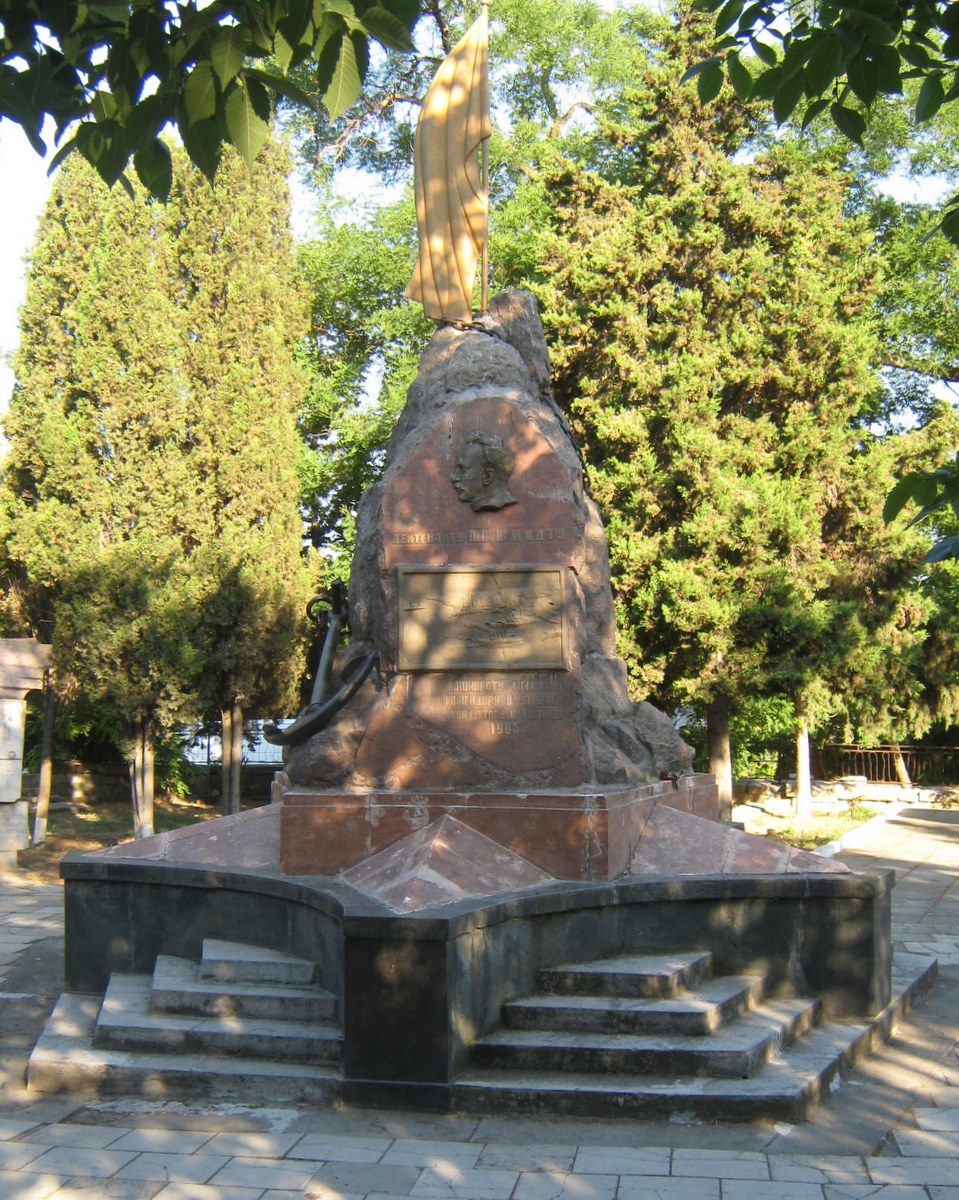
Monument to the Participants of the 1905 Revolution: Lieutenant Schmidt and the Sailors of the Cruiser Ochakov

Photo: Kamelot at Ukrainian Wikipedia, Public domain

Monument to the Participants of the 1905 Revolution: Lieutenant Schmidt and the Sailors of the Cruiser Ochakov

Perched along Sevastopol’s Primorsky Boulevard, where the promenade gently slopes toward the sea, stands a monument that carries far more weight than its modest size suggests. It honors Lieutenant Pyotr Schmidt and the sailors of the cruiser *Ochakov*, whose rebellion in 1905 became one of the most dramatic chapters in the history of the Black Sea Fleet. The location was chosen deliberately—this was the very stretch of water where the uprising unfolded, where the fate of men and the course of a nation hung in the balance for a few tense November days.

Unveiled in 1985 on the 80th anniversary of the revolt, the monument is the work of sculptor Igor Makarovich and architect Georgy Kuzminsky. Their design is restrained yet powerful: three bronze figures stand on a low pedestal of red granite. Schmidt, his arm raised in a gesture of defiance, is flanked by two sailors, their postures taut with resolve. There’s no grandeur here, no theatricality—just the quiet intensity of men on the edge of history. The surrounding square, shaded by trees, invites visitors to sit and reflect on the events that once shook this city to its core.

The *Ochakov* mutiny was the climax of revolutionary unrest that had been simmering across the Black Sea Fleet. The sailors, pushed to breaking point by brutal discipline, meager rations, and the humiliations of naval life, rose up under Schmidt’s leadership. An unlikely revolutionary, Schmidt was an officer who had openly defied the tsarist regime, and his defiance cost him his life. The uprising was swiftly crushed, its leaders executed, but the memory of their stand endured. For decades, Schmidt’s name became a symbol of resistance, a reminder of the fragile line between order and upheaval.

Today, the monument serves as more than a tribute to those specific men. It’s a marker of a turbulent era, a time when old certainties were crumbling and new ideas—dangerous, uncertain—were taking root. Sevastopol has always been a city of sailors, where the history of the fleet and the history of the city are inseparable. The *Ochakov* rebellion was just one episode in a long chain of events, but it was a pivotal one, revealing how quickly loyalty could fracture and how deeply ordinary people could be swept up in forces beyond their control.

The monument’s design reinforces its understated gravity. The figures don’t tower over visitors; they stand at eye level, as if inviting those who come to pay their respects to step into the past. There are no ornate flourishes, no grand inscriptions—just the sea, the promenade, and the rustling of leaves. The simplicity of the setting makes the weight of history feel more immediate, as if the bronze figures might at any moment break their silence and speak of what they witnessed.

For Sevastopol, this monument is part of a larger narrative, one that ties together the city’s many layers of memory. Here, the past isn’t just remembered—it’s lived. Whether it’s the heroes of the Crimean War or the revolutionaries of 1905, the city honors those who shaped its identity. The monument to Schmidt and the *Ochakov* sailors stands at a crossroads of time, a quiet reminder that history is rarely black and white, and that even flawed actions can leave a lasting mark.

Visiting this spot isn’t just about paying homage. It’s a chance to sit on a bench, watch the waves, and imagine the scene over a century ago—when the fate of men who would later become legends was still being decided. Locals, veterans, and tourists often gather here, drawn by something deeper than curiosity. In summer, the square hums with life; in winter, when the crowds thin, the monument feels even more poignant, a silent witness to the past.

Sevastopol is a city where history lingers in the air, and this monument is one of those places where it feels almost tangible. There are no grand speeches here, no sweeping declarations—just the sea, the wind, and three figures frozen in a moment of defiance. Perhaps that’s why it resonates so deeply. It doesn’t preach or glorify; it simply asks you to remember, to think, and to feel the weight of what once was. And in that quiet demand, it finds its power.
Day around this place

Where else to go on the same day

Building the day…

Where it is

44.60006, 33.51396

Nearby in the same city

All places in Sevastopol