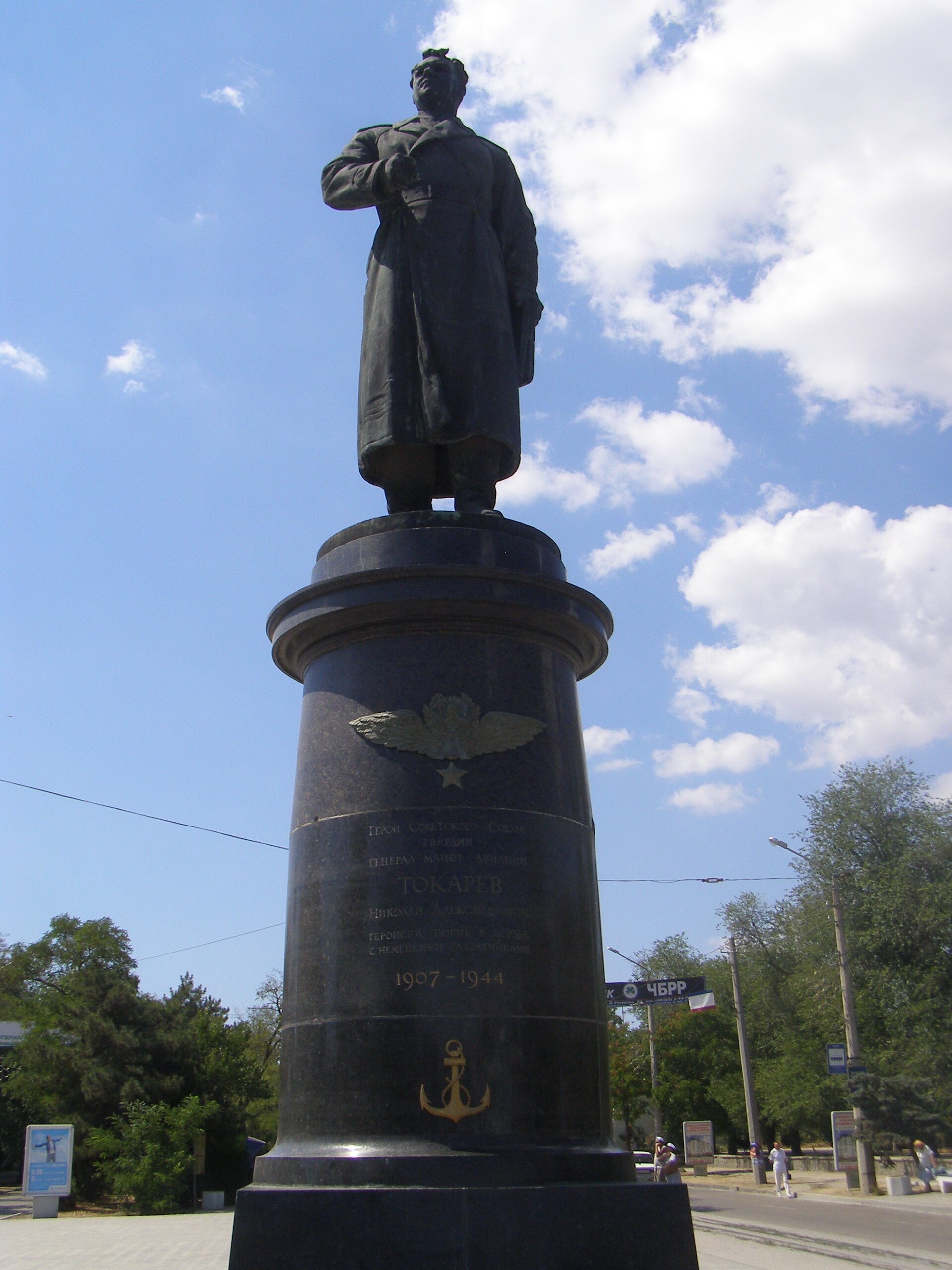
Alexander Tokarev’s monument in Yevpatoria isn’t just a statue—it’s a quiet tribute to a man whose work shaped the city in ways that still matter today. Tokarev was a hydraulic engineer, and in the early 20th century, his projects transformed Yevpatoria’s port from a modest harbor into a vital economic hub for the western Crimea. The monument stands where the docks once bustled with activity, where steamships unloaded cargo and workers shouted over the clatter of machinery. Now, the waterfront is peaceful, but if you listen closely, you can almost hear the echoes of that past life.
The sculpture captures Tokarev in a moment of reflection, dressed in practical work clothes, blueprints in hand, as if he’s just stepped away from his calculations to gaze at the sea. There’s no grandiosity in the figure—just a sense of quiet dedication. The monument is modest in size, but its placement along the promenade makes it hard to miss. It feels like a natural part of the city’s landscape, blending seamlessly with the rhythm of daily life. Locals and visitors often pause here, some to take photos, others simply to watch the waves that once bore witness to his labor.
At the turn of the 20th century, Yevpatoria’s port wasn’t just a place for loading and unloading goods—it was the region’s gateway to the world. Grain, wine, salt, and fish passed through its docks, connecting Crimea’s economy to distant markets. Tokarev didn’t just design piers and breakwaters; he tackled the challenges of a harbor prone to silting and storms that routinely damaged its structures. His work demanded both technical skill and bold decision-making, often under pressure with limited resources. The monument serves as a reminder that behind every seemingly ordinary part of a city lies the effort of people who made it possible.
The promenade where the monument stands is one of Yevpatoria’s most beloved spots. On any given day, you’ll find families strolling with children, couples sharing ice cream on benches, and old men watching gulls dip over the water. The area balances old and new—historic port buildings stand alongside modern cafes, while the sea remains unchanged, just as it was a century ago. Tokarev’s monument fits naturally into this scene, a subtle nod to the fact that the city’s identity is shaped as much by its past as its present.
The monument itself has a story worth telling. It was erected in the early 2000s, part of Yevpatoria’s broader effort to revive and honor its history. Before that, Tokarev’s name was known mostly to historians and engineers, his contributions overshadowed by more prominent figures. Today, the statue isn’t just a tribute to one man—it’s a symbol of how cities are built by countless individuals, many of whose names fade over time. The fact that it was added relatively recently shows how history is constantly being rediscovered and reappraised.
If you look closely, you’ll notice small details that might otherwise go unnoticed. The inscription on the pedestal is understated, not immediately drawing attention, but those who take the time to read it will understand the significance of the figure before them. Sometimes, locals leave flowers at the base, especially on days tied to the port’s history or the city’s milestones. These aren’t formal ceremonies, just personal gestures of remembrance, proof that people still value those who laid the foundations of modern Yevpatoria.
This isn’t the kind of monument tourists seek out specifically, but it’s impossible to miss if you’re walking along the waterfront. It doesn’t demand admiration, nor does it fade into the background. Instead, it becomes part of the journey for anyone exploring Yevpatoria—from ancient mosques and Karaite kenassas to Soviet-era sanatoriums and sunlit beaches. In this city, history isn’t confined to museums; it’s woven into everyday life, and monuments like this one are more than static memorials—they’re living threads in the fabric of the place.
What makes Tokarev’s monument feel approachable is its lack of pretension. It doesn’t tower over passersby or dictate how it should be perceived. Instead, it invites you to pause and consider how many hands—some famous, most forgotten—have shaped the city over the years. Tokarev’s name might not be widely recognized, but his monument serves as a reminder that history is made up of countless small, essential stories. And in Yevpatoria, those stories are still being told.