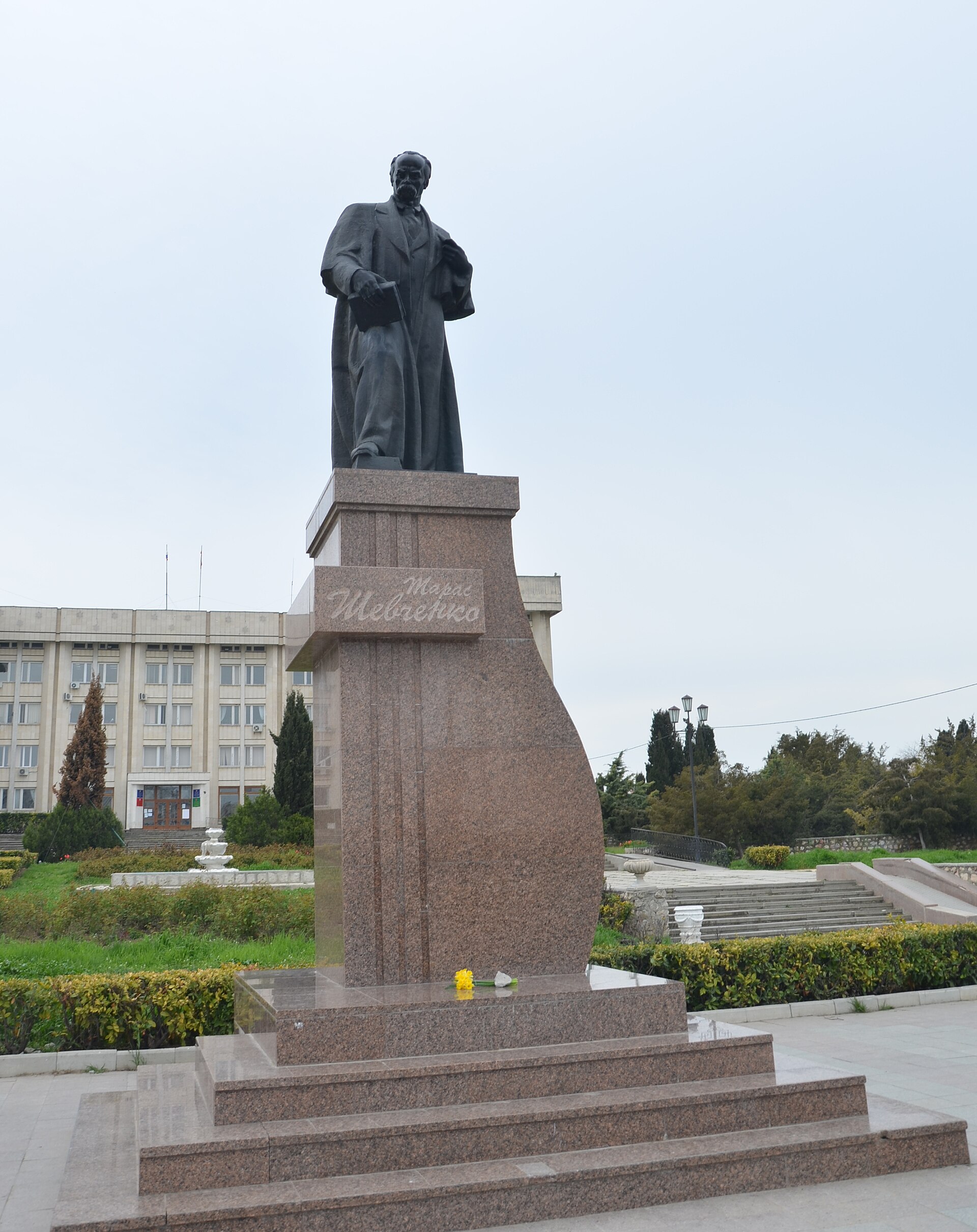
The monument to Taras Shevchenko in Sevastopol is more than just a bronze figure on a pedestal—it’s a quiet intersection of history, culture, and memory. Standing at the entrance to Primorsky Boulevard, it greets those who come to stroll along the sea or take a moment’s rest from the city’s bustle. Shevchenko’s presence here isn’t accidental. As a poet, artist, and thinker whose name became synonymous with the struggle for freedom and human dignity, he resonates with Sevastopol’s own story—a city that has repeatedly found itself at history’s crossroads.
Sevastopol and Ukraine share deep ties, and Shevchenko, as one of Ukrainian culture’s most revered figures, naturally found his place in the city’s landscape. The monument was erected in 1982, during an era when Soviet authorities sought to emphasize the unity of the USSR’s peoples while still acknowledging figures who had become national symbols. Sculptor Igor Makushenko captured not just Shevchenko’s likeness but his quiet strength—a presence both calm and unyielding.
The statue depicts Shevchenko in full height, clad in a long coat, a book in his hand. His face is thoughtful, his gaze directed somewhere beyond the immediate, as if seeing what ordinary passersby cannot. The pedestal, made of red granite, gives the monument a sense of solidity without overwhelming the space. Around it, a small garden with flowers and benches offers a place to sit and reflect on what this man said that still matters centuries later.
For many Ukrainians, Shevchenko is more than a poet—he’s almost a prophet, his words about freedom and justice echoing long before they became urgent for the entire country. In Sevastopol, a city with strong Ukrainian roots, the monument has become a gathering place. People come to lay flowers, pay their respects, or simply stand in silence. School groups, tourists with cameras, and locals for whom this corner of the city is part of daily life all pass by.
Shevchenko’s monument in Sevastopol isn’t the only one in Russia, but it carries a distinct atmosphere. Perhaps it’s the Black Sea breeze, mixing the scent of salt and blooming trees, that makes his verses about homeland and liberty feel especially poignant here. Or maybe it’s Sevastopol itself—a city that stands as a testament to resilience and courage.
Life hums around the monument: Primorsky Boulevard with its constant movement, cafes where you can sip coffee with a sea view, and the promenade where people walk year-round. Yet just a few steps away, the city’s noise fades. Here, at the base of the statue, there’s a stillness that lets you hear echoes of the past. Many come not just for photos but to spend a quiet moment with history.
Sevastopol has always had its own rhythm, distinct from the rest of the country. Its streets hold the stories of different peoples, cultures, and eras, and Shevchenko’s monument is one of many symbols of that layered past. It doesn’t dominate the city’s landmarks but holds its own place in its cultural fabric. For some, it’s just a bronze figure; for others, a reminder of roots; and for a few, a prompt to think about what freedom truly means.
Time moves on, and Sevastopol changes with it. But monuments endure, reminding us of what came before. Shevchenko isn’t a museum piece here—he’s a living part of the city. For over forty years, he has watched over passersby, and in that time, his significance may have only grown. In an age of uncertainty, such places become anchors, helping us navigate the flow of time. That might be why people still come—to feel a connection to the past and find in it something to hold onto for the future.