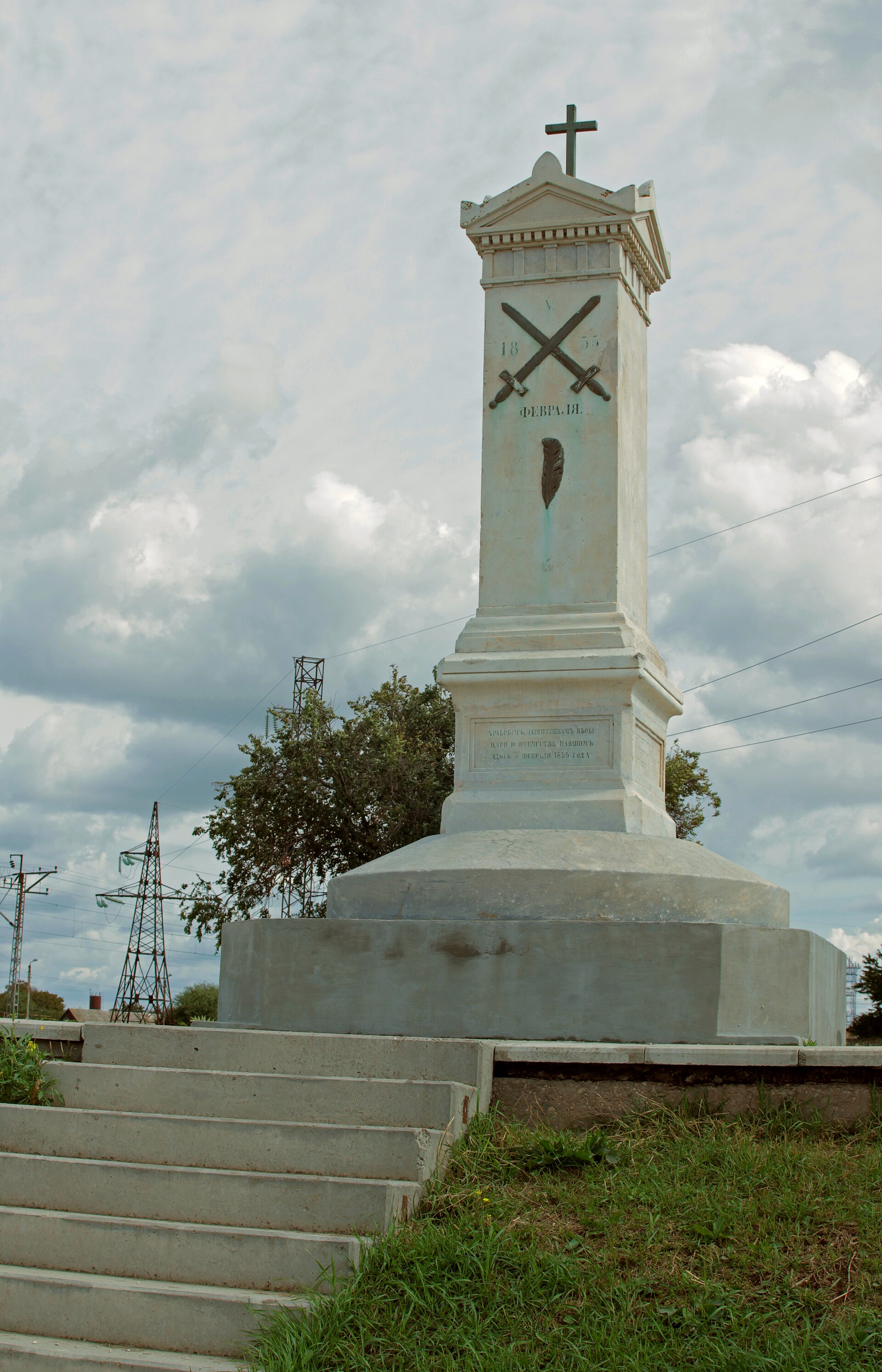
Perched on a gentle rise in the heart of Yevpatoria, the monument to Russian soldiers stands as a quiet witness to a turbulent past. Unlike war memorials in larger cities, this one carries no pomp—just a solemn presence that blends into the city’s everyday life. It honors those who fell during the Crimean War, a conflict that turned this coastal town into a battleground in the mid-19th century. Today, it remains a place where locals and visitors pause beneath the shade of old trees.
The design is simple. A tall stone stele rises from a modest pedestal, crowned by a bronze eagle with wings outstretched. The names of officers and soldiers who died defending or reclaiming Yevpatoria in 1854–1855 are etched into the base, their letters worn but legible. Around it, a small park offers benches where people sit or watch the world go by. The monument doesn’t demand attention.
Yevpatoria’s role in the Crimean War was brief. In August 1854, Anglo-French forces landed here, turning the town into a flashpoint. Russian troops under General Khrulyov attempted to retake the city but were forced to retreat after fierce fighting. The monument wasn’t erected until the 1890s, part of a wave of memorials built across Russia to honor those who had fought in the war.
Over the years, the monument has become part of the city. It sits near the waterfront, close to 19th-century buildings that still stand. The area around it is peaceful, even when tourists stroll by or children play nearby. There are no guided tours here—just the quiet hum of daily life.
Restoration work has kept the monument intact. The stone has darkened with age, but the inscriptions remain clear, and the bronze eagle retains its detail. Local historians sometimes gather small groups here to recount the events of the Crimean War or share stories of the individuals whose names are carved into the pedestal.
What makes this monument different is its lack of pretension. There are no dramatic sculptures depicting battle scenes. Instead, it offers quiet dignity. Those who visit Yevpatoria for more than its beaches often linger here, trying to imagine the chaos and courage of 1854. The past isn’t dramatized—it’s simply there, in the weathered stone and the names that refuse to be forgotten.
The monument changes with the seasons. In summer, the shade of the surrounding trees offers respite from the heat. In winter, snow dusts the stone. Artists sometimes set up easels nearby, capturing the way light plays across the eagle’s wings or how the silhouette shifts at dusk.
When evening falls and the streetlights flicker on, the monument takes on a solemn air.
Yevpatoria is a city layered with history. The monument to Russian soldiers is one thread in that story. It doesn’t tell the whole story of the Crimean War. Instead, it serves as a reminder of how much history is shaped by individual lives—by the soldiers who fought here, by the families who mourned them, by the town that carried on. In that sense, it’s less a monument to war and more a monument to people, to the names preserved in this unassuming stone on a quiet hill.