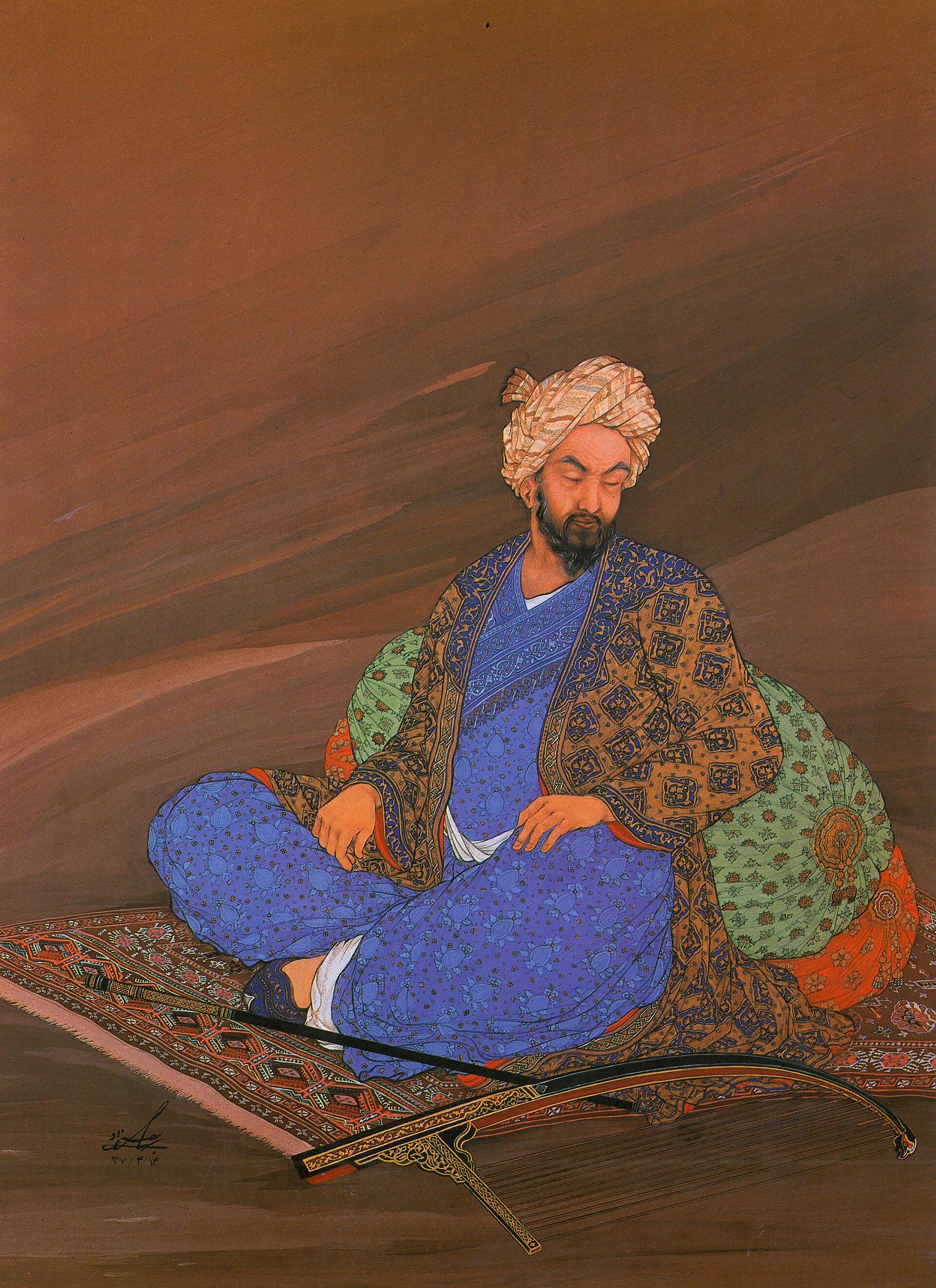
In the heart of Panjakent, a town where the past lingers in the quiet corners of everyday life, stands a modest bronze figure that carries the weight of centuries. This is the monument to Rudaki, the poet often called the father of Persian literature, a man whose words shaped the literary traditions of the entire Eastern world. Born in the nearby village of Panjrud in the 9th or 10th century, Rudaki’s legacy is deeply woven into the cultural fabric of Tajikistan, and this monument is more than just a tribute—it’s a quiet acknowledgment of how history and identity are shaped by the stories we tell.
The statue itself is unassuming, seated in a relaxed pose with a pen in hand and a scroll resting on his lap. There’s no grandeur in its design, no towering pedestal or dramatic flourishes, just the simple, thoughtful representation of a poet lost in thought. It sits in a small square, surrounded by low buildings and trees, a place where locals often gather—not for any grand occasion, but for the ordinary moments of life. Children play nearby, students linger after classes, and elderly men sit on benches, chatting as if the poet were just another neighbor. The monument doesn’t demand attention; it earns it through its understated presence, inviting passersby to pause and reflect.
Panjakent is a town that wears its history lightly, though its past is anything but ordinary. Once a thriving center of the ancient Sogdian civilization, it sat at the crossroads of trade routes that connected the East and West, a place where ideas, goods, and cultures flowed freely. The ruins of old Panjakent, just a short distance from the modern town, offer a glimpse into that era—frescoes depicting scenes of daily life, the remnants of temples and homes, all slowly being uncovered by archaeologists. Rudaki lived during the height of Sogdian influence, and his poetry captured the spirit of a time when knowledge, art, and commerce flourished. The monument to him feels like a natural part of this landscape, a bridge between the city’s ancient roots and its present-day rhythm.
What makes this place special is how seamlessly it fits into the life of the town. Unlike monuments in larger cities, which often feel like relics preserved behind glass, Rudaki’s statue is alive in the way that only something truly cherished can be. There are no crowds of tourists here, no vendors selling trinkets, just the quiet hum of a community that has claimed this space as its own. In the evenings, when the streetlights cast long shadows across the square, the bronze figure seems almost animated, as if the poet might look up at any moment and recite a verse. It’s a place where history doesn’t feel distant or abstract—it’s right there, in the way people interact with the monument and with each other.
Rudaki’s poetry, written in Persian, transcends language and time. His verses explore universal themes—love, nature, the fleeting nature of life—and though he lived over a thousand years ago, his words still resonate. In Tajikistan, his name is familiar to everyone, from schoolchildren memorizing his poems to scholars studying his influence on later generations of writers. The monument in Panjakent isn’t just a tribute to a literary giant; it’s a reminder of how art can connect people across centuries. There’s no pomp or ceremony here, just a quiet recognition that some ideas are timeless, passed down not through grand gestures but through the quiet act of remembering.
For visitors, the monument can be a starting point for exploring Panjakent, a town that rewards those who take the time to wander. From here, it’s a short walk to the ancient ruins, where the layers of history are still being uncovered, or to the local museums, where artifacts from Sogdian times are displayed. The streets around the square are lined with small shops and cafes, where the pace of life slows to match the unhurried rhythm of the town. There’s no rush here, no sense of urgency—just the quiet understanding that some places are meant to be savored, not hurried through.
What strikes you most about this monument is how unassuming it is. It doesn’t try to impress or overwhelm; it simply exists, a silent witness to the passage of time. In a world where so much is designed to grab attention, Rudaki’s statue does the opposite—it invites contemplation. It’s a place where you can sit on a bench, watch the world go by, and think about the words of a poet who lived a thousand years ago but still speaks to those who listen. In that sense, the monument is more than just a piece of art; it’s a living part of Panjakent, a town where the past and present coexist in quiet harmony.