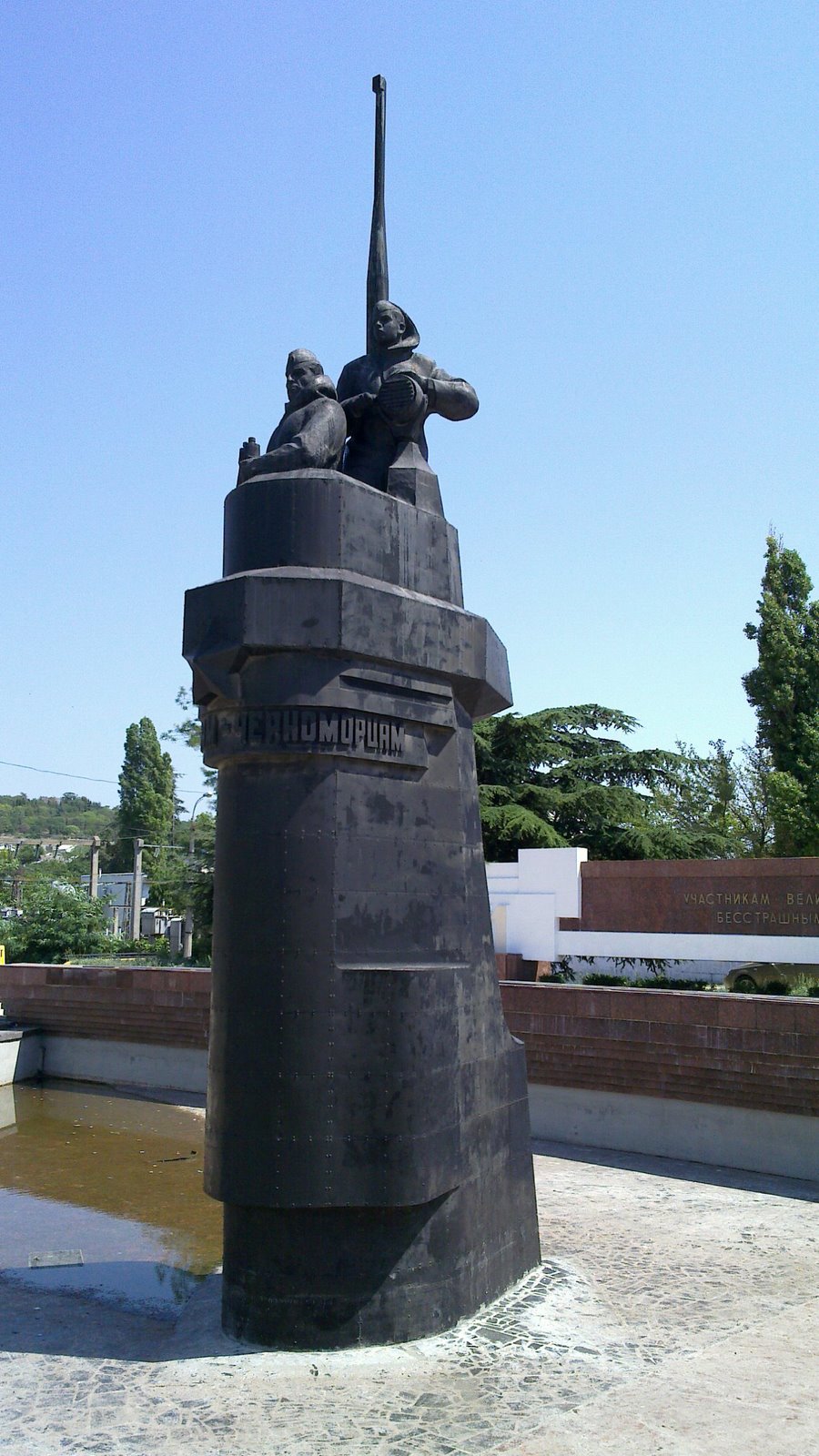
Standing where the sea meets the city, the Monument to the Black Sea Submariners is a quiet sentinel on Sevastopol’s waterfront. This stretch of coastline has long been tied to Russia’s naval identity, and the monument is more than just a memorial—it’s a place where history lingers in the salt air and the distant hum of ships leaving port. Sevastopol has always been a home for submariners, and even now, the Black Sea Fleet remains a cornerstone of the country’s maritime strength. The monument doesn’t demand attention; it simply exists, as much a part of the landscape as the waves breaking against the shore.
The sculpture captures two sailors on the conning tower of a submarine, one scanning the horizon, the other gripping the helm. There’s no grand gesture here, no exaggerated heroism—just the quiet resolve of men who knew the weight of their duty. The bronze has weathered over time, taking on the patina of the sea, and now the figures seem almost organic to the scene, as if they’ve always been here, watching over the bay. The submarine’s tower is life-sized, giving the impression that the vessel has just surfaced, ready to slip back beneath the waves at any moment.
Sevastopol’s connection to submarines dates back to the late 19th century, when the first experimental vessels were tested in these waters. But it was during the Second World War that the city’s submariners truly made their mark. Operating under blockade, they carried out daring missions—smuggling supplies into the besieged city, disrupting enemy supply lines, and striking at enemy ships. Many never returned, and their names are etched into the memorial plaques nearby. Their stories became legend, taught in naval academies to this day, a testament to both skill and sacrifice.
The monument’s design is understated but effective. The granite base grounds it firmly in the earth, while the surrounding flowerbeds add a touch of color to the otherwise austere setting. The location was chosen with care—visible from both the sea and the promenade, it serves as a silent greeting to ships entering the bay and a reminder to those passing by. There’s no pomp or ceremony in its presence, just a steady, unshakable acknowledgment of service.
In Sevastopol, military history isn’t confined to museums or textbooks; it’s woven into the fabric of daily life. The Monument to the Black Sea Submariners is no exception. Veterans visit to pay their respects, naval cadets come to reflect, and tourists pause to take in the view. On Navy Day, the area comes alive with parades, speeches, and fireworks lighting up the bay. But even on ordinary days, the monument holds its own quiet significance. Locals walk their dogs nearby, children play along the waterfront, and fishermen cast their lines into the waves. For some, it’s just another landmark; for others, it’s a place to remember.
What’s striking is how naturally the monument fits into the rhythm of the city. It doesn’t feel like a relic of the past but a living part of Sevastopol’s identity. When modern submarines dock in the bay, their crews often visit the memorial, posing for photos or simply standing in silence. There’s no forced reverence here—just a sense of continuity, a recognition that the sea still demands the same dedication it always has. The monument doesn’t need to shout its importance; the sailors who come here understand it without words.
Sevastopol has always had a complicated relationship with the sea. It has brought prosperity and power, but also loss and hardship. The city’s history is written in the tides—victories celebrated, defeats endured, and lives given in defense of its shores. The monument on the waterfront is a tribute to those who accepted that duality, who served knowing the risks but never wavering in their duty. It’s not about glorifying war; it’s about acknowledging the people who faced its realities with courage.
As the sun dips below the horizon, the bronze figures cast long shadows across the promenade, and the water darkens to a deep blue. In these moments, the monument feels especially poignant. There’s no fanfare, no dramatic declaration—just the steady presence of two sailors, forever on watch. If you listen closely, past the sound of the waves, you might catch the faint echo of engines rumbling beneath the surface, a reminder that some stories never truly end. They simply wait, beneath the water and in the hearts of those who remember.