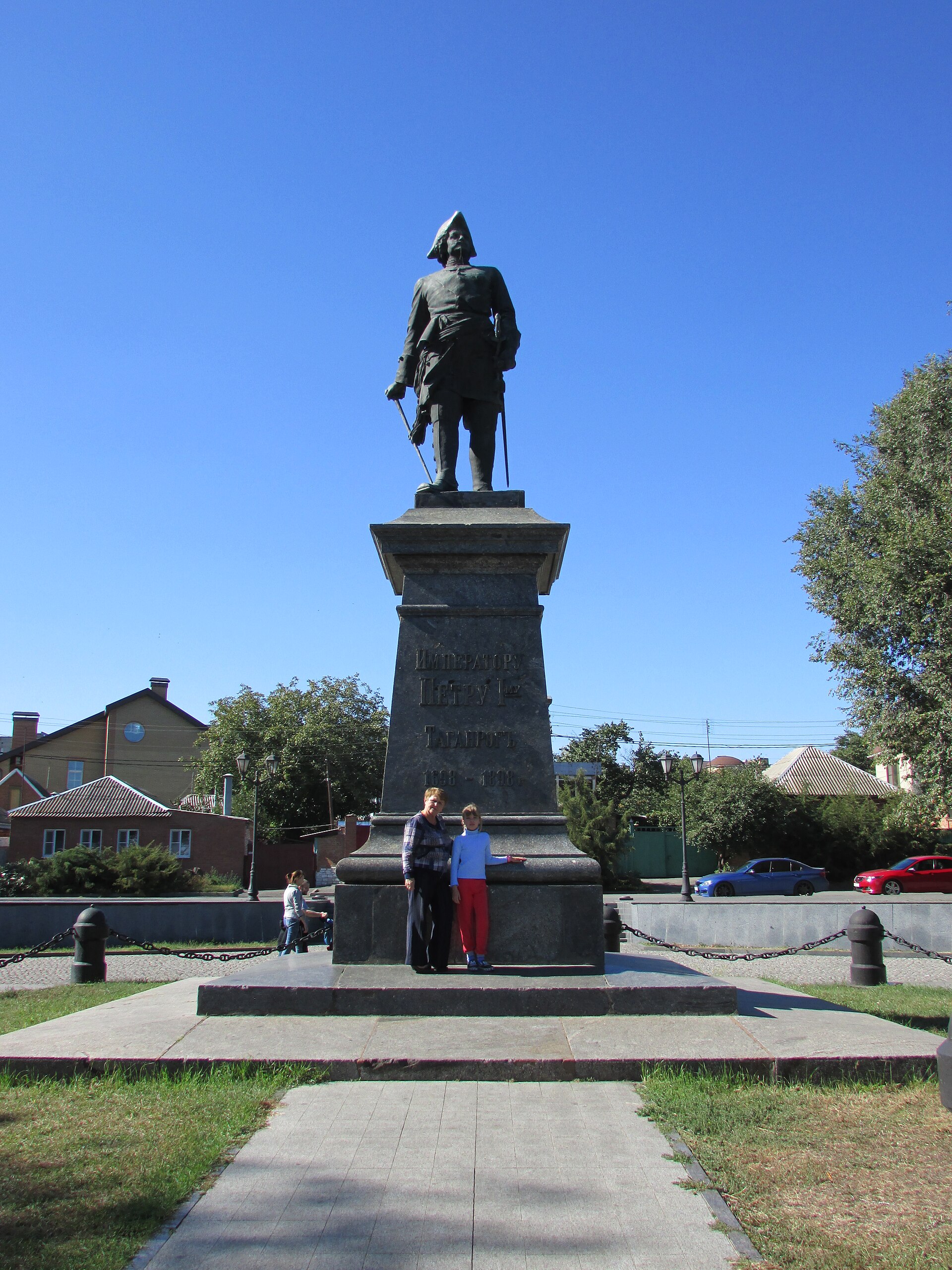
The Peter the Great monument in Taganrog is one of those memorials that doesn’t just decorate a city but carries the weight of its past. Standing on the shore of the Sea of Azov, the bronze figure of the emperor watches over the town he founded. In his hands, he holds what might be a map or calculations for the harbor he once envisioned here. There’s something unassuming about this statue, a quiet dignity that sets it apart from more grandiose monuments.
In 1698, during his second Azov campaign, Peter chose this spot for Russia’s first southern port. It was little more than an empty steppe with a small fortress, but he saw potential in its sheltered bay, its proximity to the Don River, and its position along trade routes. The port didn’t last—political setbacks forced its relocation to Azov, and later, it was abandoned. Yet Taganrog remained Russia’s first attempt to establish itself on the Sea of Azov.
The monument appeared in 1903, on the city’s 200th anniversary. The sculptor, Mark Antokolsky, was one of the most respected artists of his time. He depicted the emperor not in ceremonial regalia but in simple clothing, emphasizing his practical connection to the city. Antokolsky was elderly when he worked on this piece, and it became one of his final major commissions. The statue was cast in Paris before being shipped to Taganrog.
Today, the monument stands on a small square near the water, surrounded by old trees and granite slabs. From here, you can see the bay Peter once planned to transform. The spot is peaceful, the only sounds the lapping of waves and the cries of gulls. In summer, the square is lively with strollers and visitors; in winter, it empties out, leaving the statue alone against the gray sky. Even then, the figure holds the memory of a time when ships filled the harbor.
For Taganrog, this monument is a symbol of the city’s ties to the Petrine era. Though it never became the great port Peter imagined, the city thrived as a commercial and cultural hub in southern Russia. It was home to Anton Chekhov, Nestor Kukolnik, and Faina Ranevskaya. Yet Peter laid the foundation for everything that followed. The statue is a quiet reminder of that legacy.
The red granite pedestal is low, almost blending into the surroundings. Peter stands at full height, his head slightly tilted, as if listening to something beyond the horizon. In his hands, he holds a scroll—perhaps a map or a harbor blueprint. His expression is calm, even weary, unlike the stern portrayals common in other monuments of the time. Antokolsky wanted to show Peter as a man who shaped a nation while remaining human.
The area around the monument has its own character. Nearby stands an old lighthouse, and farther on, the Soviet-era maritime station. Together, they create a sense of a city tied to the sea. In summer, the square hosts festivals and concerts; in winter, it’s a quiet place for walks. Locals sometimes leave flowers at the statue, especially on days tied to the city’s history.
Taganrog isn’t like other cities linked to Peter the Great. There are no grand palaces like in St. Petersburg or imposing fortresses like in Azov. The city moves at its own pace, and the monument fits into that rhythm. It doesn’t demand attention, nor does it fade into the background. It stands by the sea, a reminder that history isn’t just written in victories but in first steps—even those that didn’t go as planned.