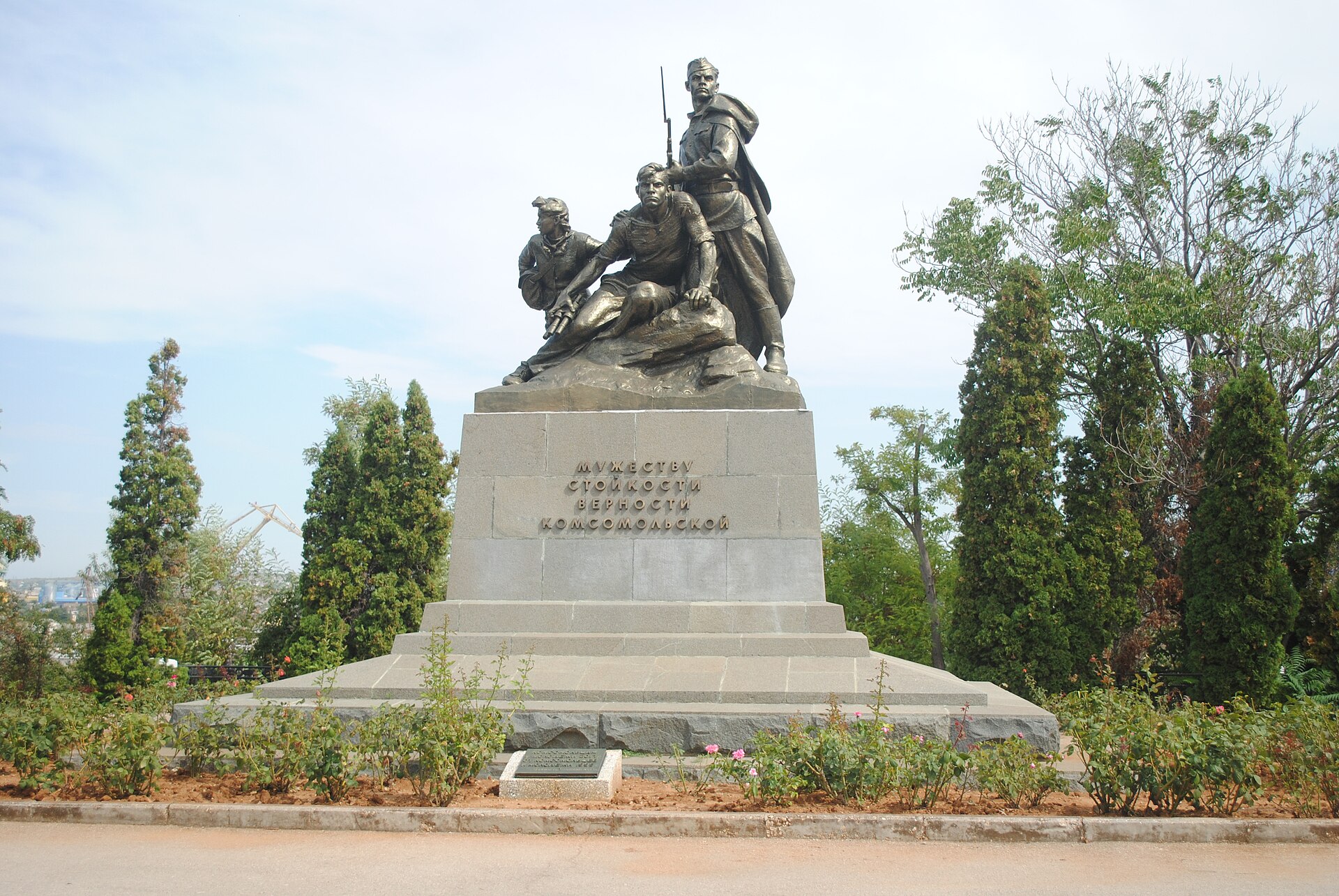
The Komsomol Monument in Sevastopol is one of those quiet places that doesn’t demand attention but quietly earns it over time. Tucked away on Ushakov Square, just steps from the waterfront, it stands where daily life unfolds—where people rush to work, stroll along the sea, or pause to watch the waves. Unlike the grand war memorials that dominate the city’s skyline, this one is unassuming, almost modest in its design. There’s no sweeping drama in its lines, no towering figures demanding reverence. Instead, it feels like a private moment made public, a tribute not to glory but to the quiet courage of ordinary young people who stepped up when their country needed them most.
The monument was unveiled in 1963, nearly two decades after the end of the Second World War, a conflict that turned Sevastopol into a symbol of resilience. During the brutal siege of the city, Komsomol members—young communists in their teens and twenties—played a vital role behind the lines. They worked in factories, fought fires, cared for the wounded, and many eventually joined the front lines. The sculpture captures this duality: a young man and woman stand side by side, their gazes fixed on the horizon, as if waiting for those who never returned. The man holds a book, a nod to the knowledge and ideals they carried; the woman’s forward gaze suggests a determination to carry on their work. The red granite pedestal grounds the scene in solemnity, its simplicity ensuring the focus remains on the figures themselves.
Architecturally, the monument reflects the mid-20th-century Soviet style—functional, restrained, but deliberate in its symbolism. There’s no excess here, no theatrical grief. The figures are contemplative rather than anguished, their postures suggesting resolve rather than despair. The choice of materials—bronze for the figures, granite for the base—was typical of the era, designed to endure both time and the elements. Over the decades, the bronze has darkened, the granite has weathered, and the monument has settled into the cityscape like an old tree, its roots deep in the past but its branches still reaching toward the present.
For locals, the monument is more than just a landmark. It’s a gathering place, especially on Victory Day and Youth Day, when ceremonies and remembrances bring people together. Schoolchildren lay flowers at its base; veterans pause to reflect. In these moments, the monument feels less like stone and metal and more like a living connection to the past. It doesn’t draw the same crowds as the Grafskaya Pier or Malakhov Kurgan, but that’s part of its charm. It exists for those who know its story, who see in it not just a memorial but a reminder of the quiet heroism that often goes unnoticed.
Sevastopol is a city where history is layered into every street and square, and the Komsomol Monument is one of those layers. It speaks to a time when the war wasn’t just fought on battlefields but in the factories, hospitals, and homes of those who remained. The Komsomol, or Communist Youth League, embodied the idealism of a generation that believed in rebuilding, in progress, in a future they were determined to shape. Today, that idealism can feel distant, even naive, but the monument preserves a kernel of truth: in the darkest moments, it’s often the young who step forward, not because they’re fearless, but because they haven’t yet learned to be afraid.
The square where the monument stands has its own history. Nearby, the former Palace of Pioneers—once a hub for children dreaming of becoming engineers, pilots, or sailors—still stands, though its purpose has changed. The building’s walls hold echoes of laughter and ambition, a counterpoint to the solemnity of the monument. Around the square, flowerbeds bloom in summer, and in winter, strings of lights add a touch of warmth. The contrast between the monument’s somber theme and the everyday life that surrounds it is striking. It’s as if the city is saying that memory and living must coexist, that the past isn’t something to be locked away but something to be carried forward.
For visitors, the monument might blend into the background at first, just another statue in a city full of them. But those who take the time to look closer will find a story not just about war, but about what comes after. The Komsomol members weren’t just symbols of sacrifice; they were part of the city’s rebirth. They cleared rubble, rebuilt factories, planted trees, and laid the foundations for the Sevastopol that exists today. Theirs was the kind of heroism that doesn’t make headlines but makes history—small, persistent acts that add up to something greater.
Time has left its mark on the monument. The bronze has darkened, the granite has worn smooth in places, and the once-sharp edges of the figures have softened. But perhaps that’s what makes it feel real. It doesn’t pretend to be timeless or untouched; it’s a part of the city, as much a product of its past as its present. In a place where history is everywhere, monuments like this one serve as quiet bridges between eras. They don’t demand attention, but for those who pause, they offer a glimpse into the lives of people who once stood where we stand now—working, hoping, and believing in something greater than themselves.