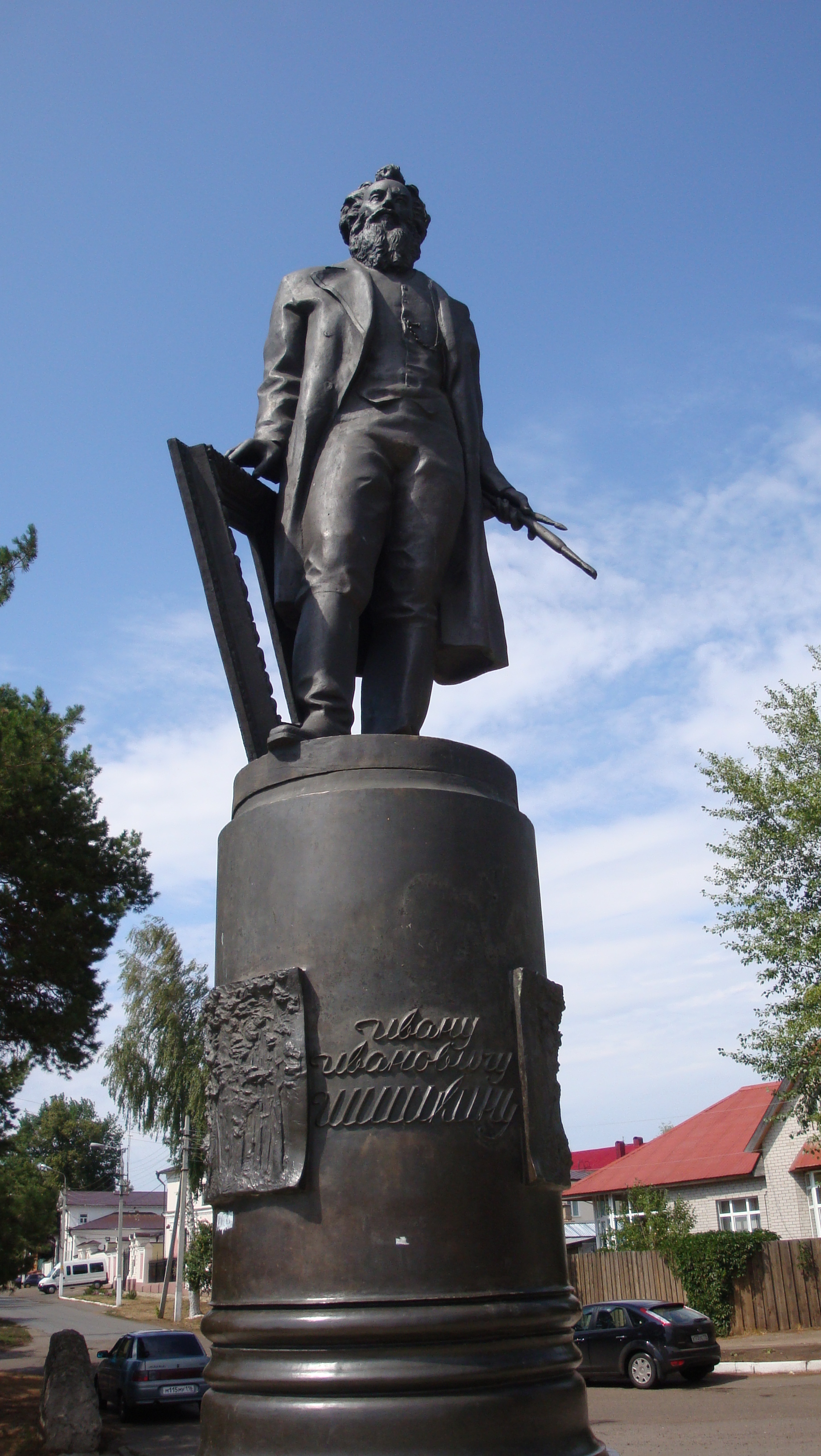
Ivan Shishkin’s monument in Yelabuga isn’t just a statue—it’s a quiet tribute to a man who captured the beauty of his homeland in a way that still resonates with millions. Born in this small town on the banks of the Kama River, Shishkin spent much of his life in St. Petersburg, yet the landscapes of his childhood became the foundation of his art. The forests, fields, and rivers he knew as a boy later filled his canvases, turning into some of the most beloved works of Russian painting. The monument stands where the young artist once walked, and that alone gives it a deeper meaning. It doesn’t just honor his name; it invites visitors to step into the world that shaped his vision.
The idea of commemorating Shishkin in Yelabuga wasn’t new. The town had long taken pride in its famous son, and discussions about a monument began decades ago. But it wasn’t until the early 2000s, when the city started to embrace cultural tourism more actively, that the project finally came to life. A local sculptor brought the statue to fruition, infusing it with both skill and personal connection to Shishkin’s legacy. The figure is life-sized, the artist depicted with a sketchbook in hand, as if he’s just paused to capture another scene. His gaze is fixed on the distance, toward the very landscapes he once painted, creating a sense of continuity between past and present.
The monument’s design is understated but effective. It rests on a low pedestal of red granite, blending seamlessly with the surrounding architecture—old merchant houses and the greenery of the nearby park. Shishkin isn’t portrayed in a grand, heroic pose; instead, he stands naturally, almost casually, without pomp or ceremony. This isn’t a formal portrait but a snapshot of the artist at work, reflecting his character: thoughtful, observant, yet open to the world. Visitors often gather around, some with cameras, others simply sitting on benches, making the spot a casual meeting place for locals and travelers alike.
Yelabuga is deeply tied to Shishkin’s story. The house where he spent his childhood still stands, now a museum, and the town itself feels like a living echo of his paintings. Walking along the Kama River embankment or through the old streets, it’s easy to imagine these very hills and pines inspiring his masterpieces. The monument serves as a kind of bridge, reminding us that great art often grows from simple, everyday experiences—and that genius can begin with a love for one’s hometown.
Shishkin was never one for the spotlight. He avoided high society, preferring solitude in his studio or the quiet of nature. That might be why the monument feels so unassuming. It doesn’t demand attention; it simply invites you to pause and reflect. There are no elaborate flowerbeds or grand pathways around it, just trees, benches, and the soft rustle of leaves. This isn’t a place for ceremonies; it’s a space for quiet contemplation, a reminder of how art can preserve a person’s memory and the spirit of their time.
For Yelabuga, the monument is more than a cultural landmark—it’s part of the town’s identity. Residents take pride in the fact that the artist who painted some of Russia’s most iconic landscapes was born here. On Shishkin’s birthday, small gatherings often take place near the statue: exhibitions, poetry readings, or talks with art historians. But even on ordinary days, people come to stand beside their famous neighbor, to feel a connection to history. This isn’t a museum piece; it’s a living part of the town, evolving alongside Yelabuga itself.
The monument also serves as a reminder that Shishkin’s art hasn’t aged. His landscapes, painted over a century ago, still captivate with their precision and depth. They don’t just depict nature; they capture its essence, its mood. That might explain why visitors are drawn to photograph themselves here—it’s as if the statue encourages them to compare the real Yelabuga with the scenes Shishkin immortalized. Sometimes, it almost feels like the artist is still here, among these trees and hills, working on new paintings.
In recent years, Yelabuga has become a destination for art lovers, though it doesn’t try to compete with larger tourist hubs. That modesty is part of its charm. The monument to Shishkin embodies this approach: it doesn’t shout for attention but simply exists, woven into the fabric of the town. There are no crowds rushing for selfies, just the chance to truly soak in the atmosphere of a place that inspired one of Russia’s greatest painters. Here, beauty isn’t forced or staged—it’s found in the quiet, everyday moments that shaped a master’s vision.