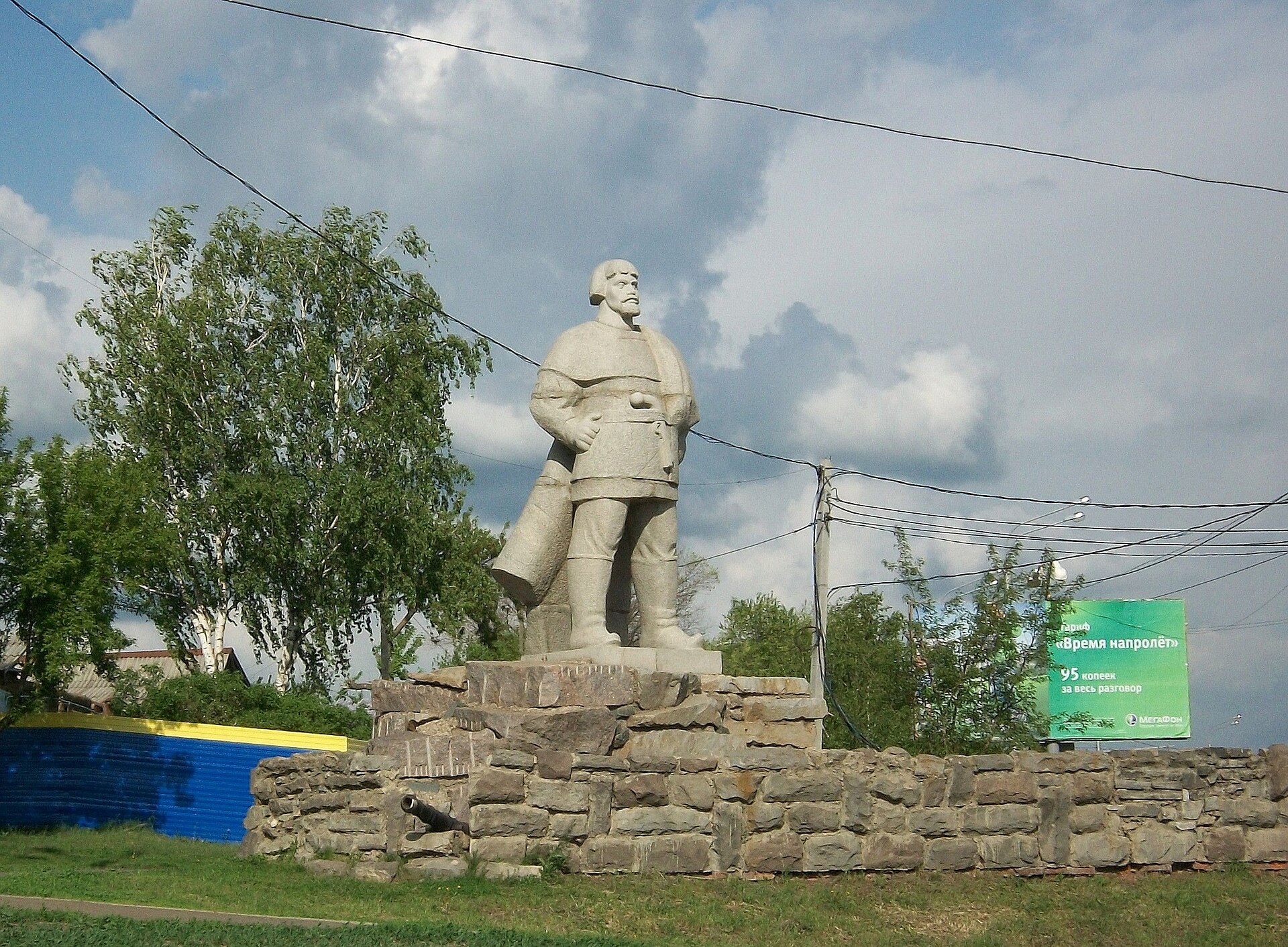
The monument to Yemelyan Pugachev in Saransk is more than just a statue—it’s a quiet tribute to one of Russia’s most complex historical figures. Pugachev, the leader of the 18th-century peasant uprising, remains a polarizing symbol of rebellion, his name evoking both admiration and unease. Though Saransk was never the heart of the revolt, the city’s connection to those turbulent times runs deep. The surrounding lands of Mordovia saw key moments in the uprising, and the region became a gathering point for Pugachev’s forces as they moved through the Volga basin.
The statue was unveiled in 1985, marking the 250th anniversary of Pugachev’s birth. Its creator, the renowned Soviet sculptor Nikolai Tomsky, chose not to portray Pugachev as a straightforward hero or villain. Instead, the figure captures the weariness and resolve of a man shaped by his era—a leader whose face betrays both strength and sorrow. Mounted on a horse with an outstretched arm, Pugachev appears frozen in a moment of decision, the tension of the gesture lending the monument a sense of motion. The bronze contrasts with the red granite pedestal, grounding the composition in solemnity rather than spectacle.
The location was carefully chosen. The monument stands on a slight rise at the intersection of Pugachev Street and Kommunisticheskaya Street, overlooking the older part of Saransk. From here, the city’s past feels tangible—the low-rise buildings and quiet streets still echo with the rhythms of pre-revolutionary life. Around the statue, a small park offers a place to sit, the trees providing shade for those who pause to study the details or simply gather their thoughts.
Pugachev’s rebellion, which swept across the Volga region and the Urals, remains a subject of debate. To some, it was a desperate uprising of serfs and Cossacks against oppression; to others, a chaotic and violent disruption that nearly tore the empire apart. Saransk played its part in this drama. Rebel detachments passed through the area, recruiting supporters, while the local population, like so many others, found themselves divided—some joining the revolt, others remaining loyal to Catherine the Great. The monument doesn’t take sides; it simply stands as a reminder of a time when ordinary people faced impossible choices.
Tomsky’s design is understated yet powerful. There’s no grand theatrics, no crown to signify Pugachev’s claim to the throne as the "miraculously saved" Peter III. Instead, the focus is on the man himself—his posture, the set of his shoulders, the way the horse beneath him seems poised between stillness and movement. The simplicity of the composition invites reflection rather than reverence, leaving room for interpretation.
Over the years, the monument has become a familiar landmark in Saransk. It’s a place where locals meet, where school groups come to learn about the past, and where visitors pause to take photographs. The park around it is rarely crowded, offering a quiet space to contemplate the figure against the backdrop of the city. Unlike the towering monuments of Moscow or St. Petersburg, this one doesn’t demand attention—it waits to be discovered.
The way Saransk remembers Pugachev has shifted with time. During the Soviet era, his image was often used to symbolize the struggle against tyranny, but later interpretations grew more nuanced. The statue, however, has remained unchanged, a silent witness to the evolving perceptions of history. It doesn’t glorify or condemn; it simply presents Pugachev as he was—a man of his time, flawed and determined, whose actions still resonate centuries later.
Saransk may not be a major tourist destination, but it holds its share of places where the past feels alive. The monument to Pugachev is one of them. There are no crowds here, no guided tours rushing through—just the quiet hum of the city and the occasional visitor lingering in the park. For those who take the time to look, it offers a glimpse into a chapter of history that refuses to be neatly categorized. It’s a reminder that the stories we tell about the past are rarely simple, and that even in a small city like Saransk, the echoes of those stories can still be heard.