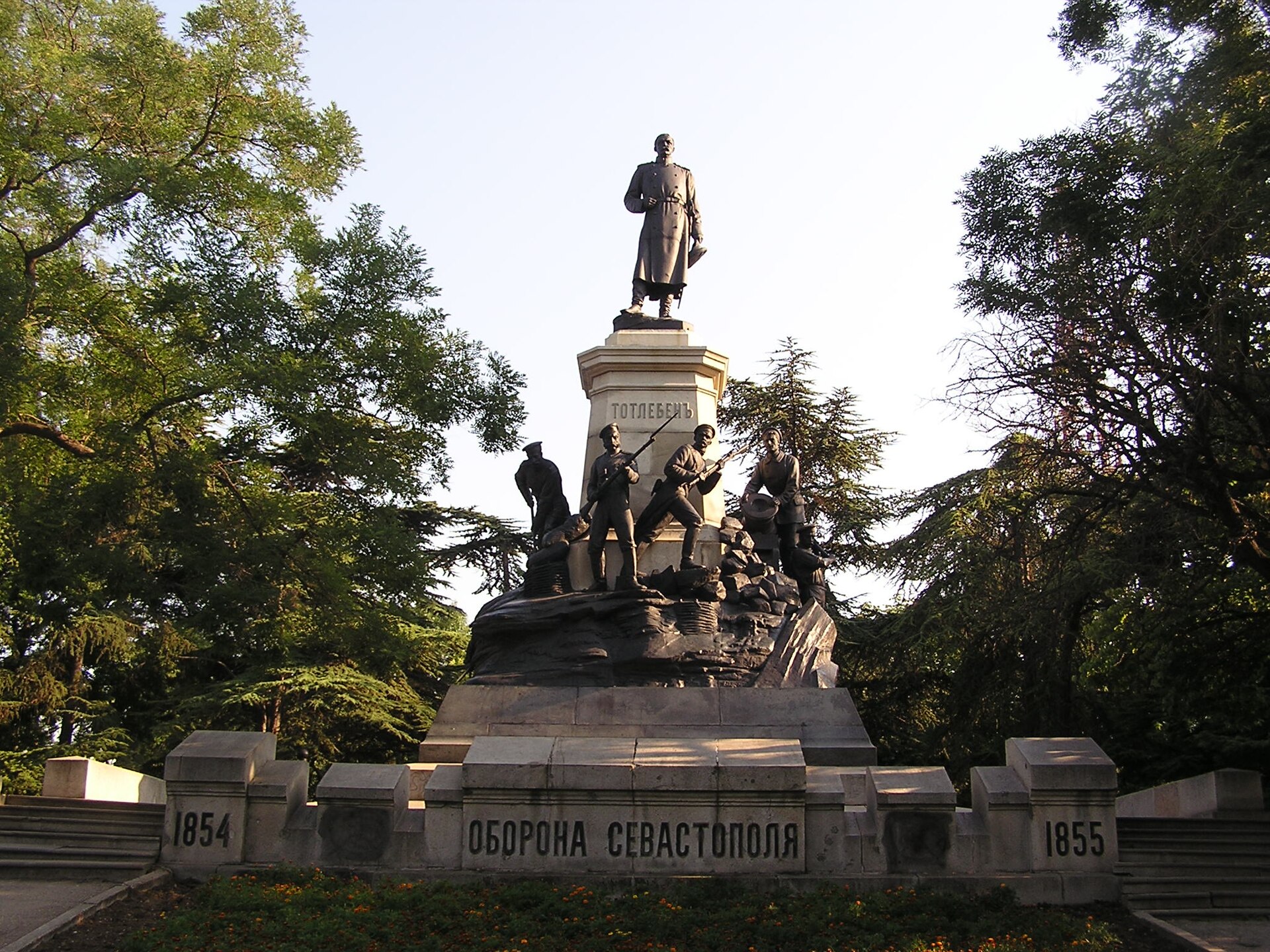
Standing on a quiet square in Sevastopol, the monument to Eduard Totleben is more than just a bronze figure on a pedestal. It honors a man whose name became synonymous with the city’s legendary defense during the Crimean War. A military engineer and general, Totleben played a pivotal role in transforming Sevastopol into a fortress that withstood nearly a year of siege, despite overwhelming odds. The monument, unveiled in 1909, serves as a reminder of how strategy and ingenuity can shape history, even in its darkest moments.
The sculpture captures Totleben in mid-19th-century military attire, standing tall with a map in hand, as if surveying the battlefield or issuing orders. His gaze is fixed on the distance, his posture radiating determination. The bronze figure rests on a sturdy granite pedestal, emphasizing the weight of his contributions. The surrounding trees and the stillness of the square create a space for reflection, where the past feels almost tangible.
The idea for the monument came from those who remembered the Crimean War firsthand—veterans, military officers, and ordinary citizens who wanted to preserve Totleben’s legacy. The sculptor, Iosif Shreder, was known for his monumental works, and this project became one of his most significant. When the monument was unveiled, it wasn’t just a tribute to an individual but a symbol of resilience, a nod to the people who had defended the city against impossible odds.
Sevastopol is a place where history lingers in the air, and the Totleben monument is one of those spots where it feels particularly close. Located near the city center, in an area that once saw some of the fiercest fighting, the square is peaceful now. Yet if you listen, you can almost hear the echoes of commands, the distant thunder of artillery, and the hurried footsteps of soldiers reinforcing the defenses. The monument blends seamlessly into the urban landscape, becoming part of the city’s identity.
Though Totleben wasn’t born in Sevastopol, it was here that his genius as an engineer truly shone. He arrived during the height of the siege and immediately set to work, designing and overseeing the construction of batteries, redoubts, and trenches that would become the backbone of the city’s defenses. His innovations were so effective that even the enemy acknowledged their brilliance. The monument isn’t just a tribute to one man but a recognition of the role engineering played in shaping the outcome of the war.
Today, the monument draws both locals and visitors. Some leave flowers, others pause for a moment of quiet contemplation. School groups often gather here, as the defense of Sevastopol is a key part of the city’s history curriculum. For many residents, the monument is more than a landmark—it’s a personal connection to the past, a reminder of the courage that has defined their city time and again.
The design of the monument is understated yet powerful. The bronze figure of Totleben contrasts with the solid granite base, creating a sense of permanence. The pedestal bears his years of life and an inscription commemorating his achievements. Seasonal flowers bloom around the base in summer, while winter snow lends the scene a quiet dignity. It’s a place that invites you to slow down, even if just for a moment.
Unlike a museum exhibit, the Totleben monument is woven into the fabric of the city. It doesn’t demand a special visit—it’s simply there, part of the daily rhythm of Sevastopol. You might walk past it without a second thought, or you might stop and consider the countless lives tied to this spot. In a city where past and present intertwine so closely, the monument serves as a quiet guidepost, helping to navigate the layers of history that make Sevastopol what it is.