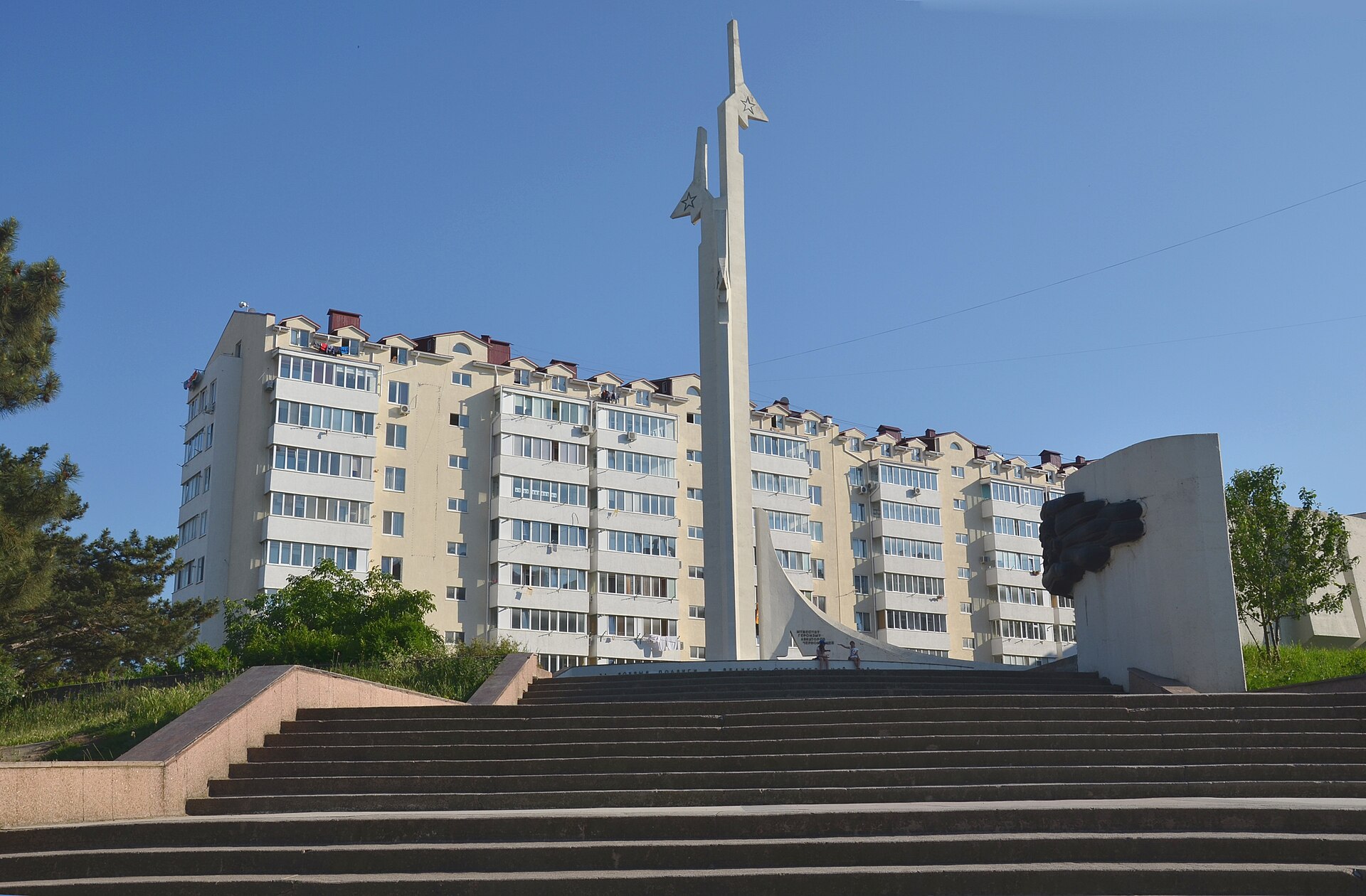
On the high bluffs above Sevastopol Bay, the Monument to the Black Sea Fleet Aviators marks the spot where pilots once took off during the Second World War. Their planes skimmed the waves as they headed into battle. The monument remembers those who never returned.
The sculpture shows a pilot in flight gear, his gaze fixed on the horizon. Behind him, a stylized wing rises from the pedestal, its curve mirroring the bay below. Dark bronze and red granite were chosen for how they change with the light—gleaming in the morning, darkening by evening.
During the war, Black Sea Fleet aviators defended Sevastopol. They flew reconnaissance missions, shielded ships from air raids, and struck enemy positions. Many were shot down or lost over the water. The monument was unveiled in 1981, forty years after the city’s 250-day siege began. Sevastopol was liberated in 1944.
The design is simple. The granite base anchors the figure, while the wing behind the pilot seems to lift him toward the sky. The open space around it draws the eye to the bay, where ships still pass as they did decades ago. On clear days, the opposite shore is visible—a faint line that once marked the front.
This spot offers one of Sevastopol’s best views. The bay’s deep blue contrasts with the city’s white stone buildings. In the evening, the waterfront lights flicker to life. The wind and gulls break the silence, making it easy to imagine the roar of engines that once filled this sky.
People gather here on Victory Day and the anniversary of Sevastopol’s liberation. Veterans lay flowers at the statue’s base. School groups hear stories of pilots who flew into danger to protect their city. For locals, it’s a place to pause.
The monument has become part of Sevastopol’s identity. It doesn’t demand attention, but its presence lingers. The wind from the sea carries echoes of the past, reminding visitors that history isn’t just in books—it’s in the land, the water, and the sky.
This isn’t a place for crowds. People come to be alone with their thoughts, to remember, or to watch the ships glide by. Sometimes, an old man in a military jacket stands quietly in front of the statue. Other times, a couple pauses on their way to the waterfront, glancing at the pilot’s face before moving on. The monument doesn’t ask for reverence. It simply stands.