Yangmingshan Lake is one of those quiet corners near Taipei where nature seems to have arranged everything just to remind you how small a place humans really hold in the world. Tucked into the northern slopes of the Yangmingshan park area, on the flanks of a long-dormant volcano, the lake itself isn’t large, but its surroundings give it a sense of quiet grandeur. There are no crowds here, no tour buses, no chatter—just the rustle of bamboo, the calls of birds, and the occasional ripple of water. It’s not a place for hurried sightseeing, but rather for slow walks, for sitting by the shore watching light play on the surface, or for wandering along paths that wind through dense greenery.
The history of the lake is woven into the broader story of Yangmingshan. Long before it became a park, these lands belonged to Indigenous communities. Later, during the Japanese colonial period, the area was transformed—roads were built, gardens planted, and the wild slopes tamed into a retreat for city dwellers. The lake wasn’t a natural formation; it was created to manage water flow in the region. Over time, though, it took on a life of its own, becoming part of local folklore. Some say its waters reflect more than just the sky—that they hold echoes of those who once lived here. It’s a poetic idea, not a literal one, but it adds to the sense of timelessness that lingers in the air.
There’s no grand architecture here, no ornate pavilions or towering structures. The lake is framed by nature, not buildings. The few wooden bridges, stone-lined paths, and scattered pavilions feel like they’ve always been part of the landscape. They don’t demand attention; they simply exist, blending into the scenery and letting visitors focus on what really matters—the stillness, the fresh air, the way the light shifts across the water.
Yangmingshan is famous for its hot springs and sulfurous fumaroles, but the lake offers something entirely different. There’s no scent of sulfur here, no steaming vents—just cool, clean water that mirrors the sky, the trees, and the mountains. On hot summer days, the shade along the shore is a relief, a quiet escape from the city’s heat. The water isn’t crystal clear, but that only adds to its charm, giving it a depth that makes the reflections seem almost alive. Locals sometimes fish here, though it’s less about catching dinner and more about the simple act of sitting by the water, rod in hand, lost in thought.
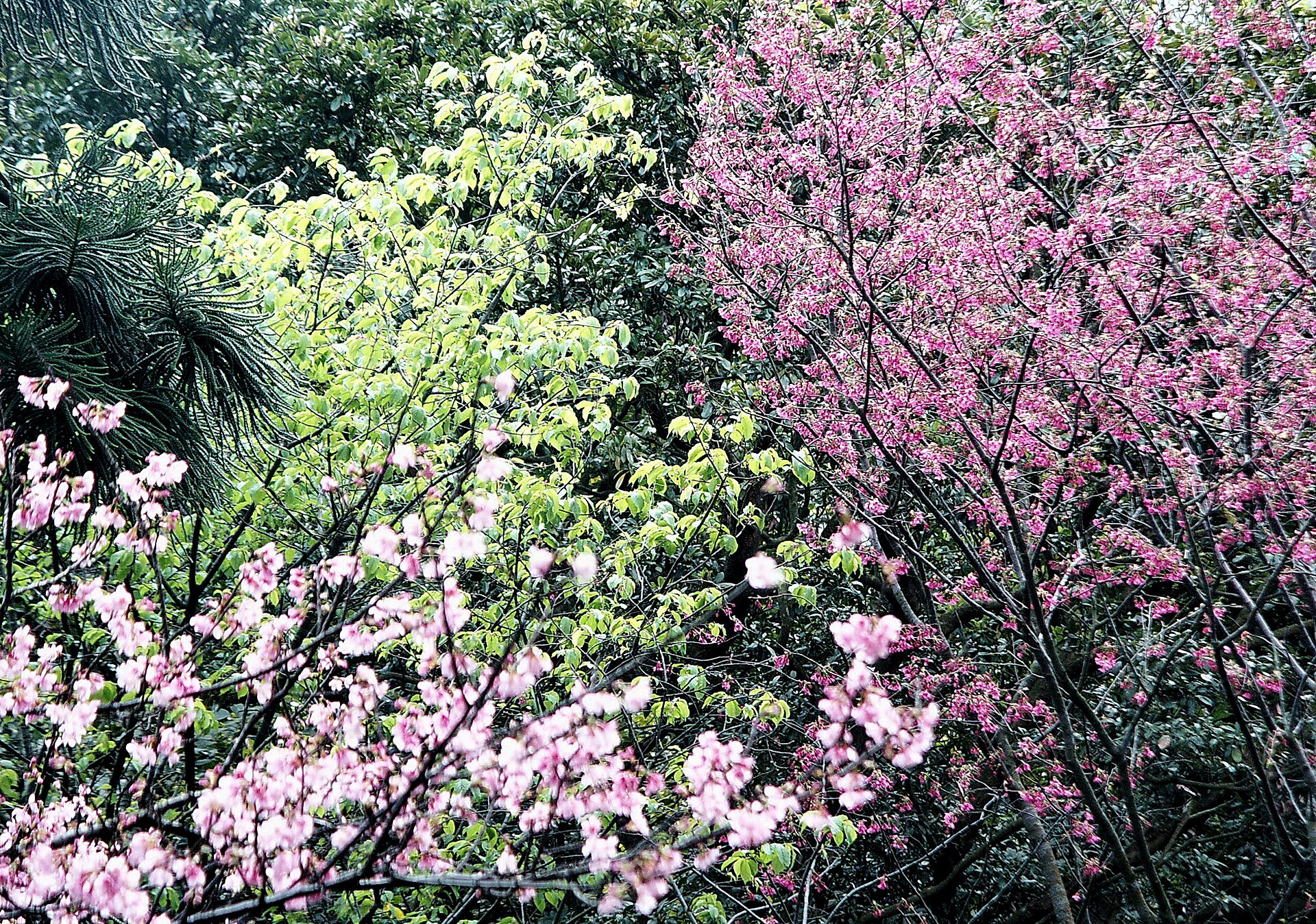
The lake is at its most vibrant in spring, when azaleas and cherry blossoms burst into bloom across Yangmingshan. The park becomes a sea of pink and white, and the lake is no exception—petals drift onto the water, creating fleeting patterns that dissolve with the current. Summer brings cooler temperatures, a welcome respite from Taipei’s humidity. In autumn, the foliage turns gold and crimson, painting the water in warm hues. Winter is quieter, the lake’s surface often shrouded in mist, the surrounding slopes dusted with frost. Each season gives the place a different mood, but the sense of calm remains constant.
For those who enjoy walking, the lake is a perfect starting point. From here, trails lead upward to viewpoints overlooking Taipei and the Taiwan Strait, or downward into valleys where small temples and tea plantations hide among the hills. The paths aren’t overly difficult, but they’re not entirely easy either—roots and rocks demand attention, especially after rain. That’s part of the appeal, though. Walking here isn’t just about covering distance; it’s about noticing the small things—the way the light filters through the leaves, the sound of a stream rushing over stones, the way your body adjusts to the rhythm of the land.
The lake isn’t Yangmingshan’s most famous attraction, and that’s precisely what makes it special. There are no crowds, no selfie sticks, no pressure to follow a set route or pose in front of a landmark. It’s a place for those who value atmosphere over spectacle, where you can spend an hour or a whole day and still find something new—a hidden bend in the path, a heron standing motionless at the water’s edge, a reflection that shifts with the clouds. It doesn’t dazzle at first glance, but that’s why it lingers in memory.
In recent years, Taiwan has placed greater emphasis on preserving its natural spaces, and Yangmingshan is no exception. Efforts to maintain the trails, restore vegetation, and protect local wildlife are ongoing, though human intervention is kept to a minimum. The lake isn’t a manicured exhibit; it’s a living ecosystem where every element, from the tiniest insects to the towering trees, plays a role. The balance is delicate, and the park’s caretakers seem to understand that.
If you come here expecting thrills or exotic entertainment, you’ll leave disappointed. Yangmingshan Lake isn’t about spectacle—it’s about slowing down, about stepping away from the noise of the city and letting the quiet sink in. You can sit by the water and listen to the wind in the leaves, or walk the paths and breathe in the scent of damp earth and pine. It’s not a place that grabs you immediately, but that’s why it stays with you—a quiet corner where time moves differently, where you’re reminded that you’re part of something much larger.