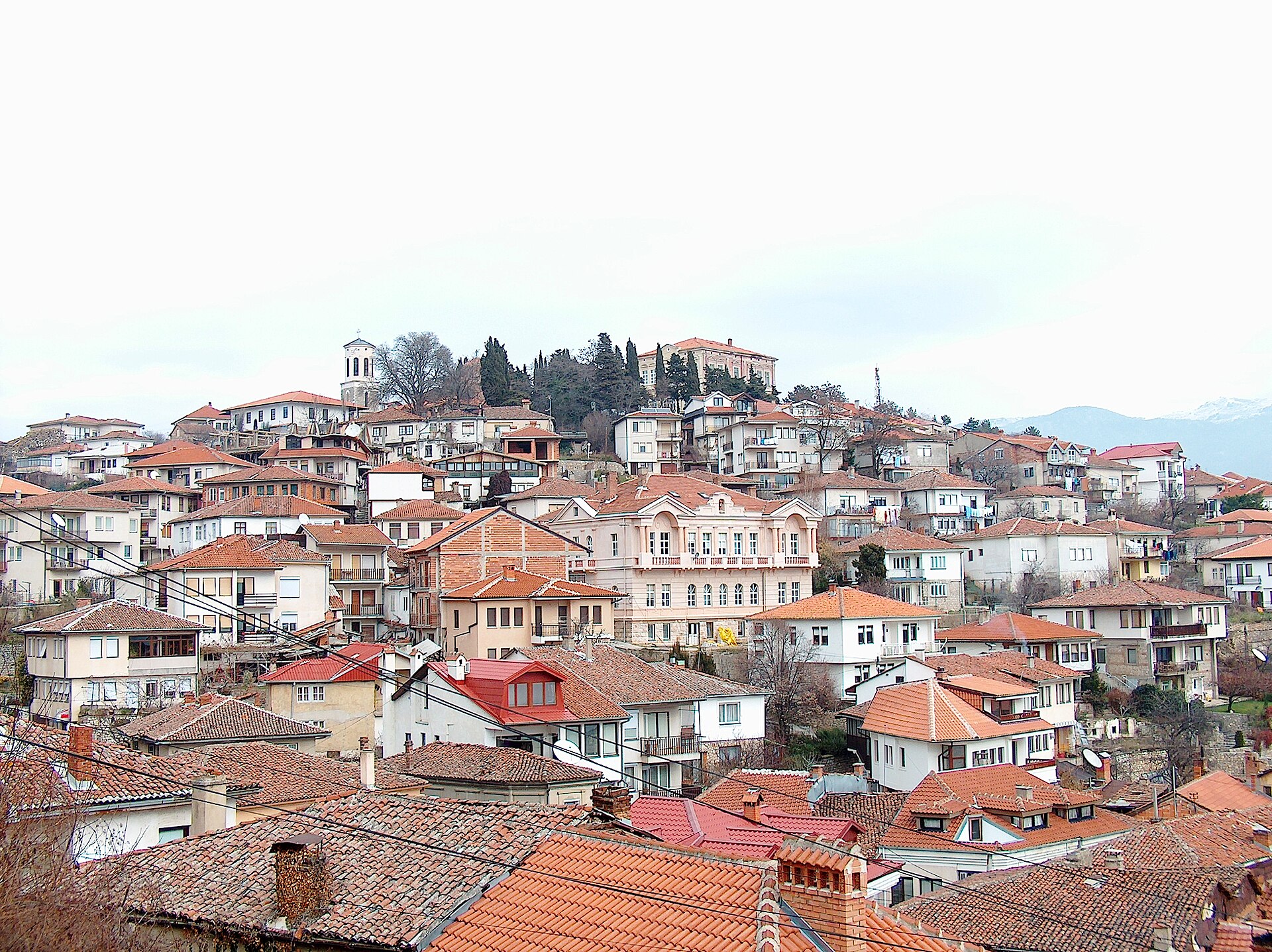
Ohrid’s old town is one of those rare places where history doesn’t just linger in museums or plaques—it lives in the stones underfoot, the slope of the streets, and the way the light catches the lake at dusk. Tucked between the water and the hills, this maze of cobbled lanes and Ottoman-era houses has been shaped by centuries of trade, faith, and quiet daily life. It’s not a relic frozen in time, but a neighborhood that still breathes, where the past and present overlap without fuss.
The town’s origins stretch back to antiquity, though its most visible layers belong to the medieval period. Ohrid was once the capital of the First Bulgarian Empire and later a key religious center under Byzantine rule. Dozens of churches were built here between the 9th and 14th centuries, many of them still standing, their frescoes darkened by time but no less striking. The most famous, St. Sophia, was originally a cathedral and later converted into a mosque during Ottoman times, a quiet testament to the shifting tides of power. Its interior is a world of gold and deep blues, where saints gaze down from the walls with an almost unsettling directness.
Walking through the old town, you notice how the architecture adapts to the terrain. The houses climb the hillside in uneven tiers, their upper floors often jutting out over the streets below. Many were built in the 18th and 19th centuries, when Ohrid was a prosperous trading post on the route between the Adriatic and the Aegean. The wealth of that era is still visible in the carved wooden balconies, the heavy stone foundations, and the occasional courtyard hidden behind a plain wooden door. Some of these houses have been restored and turned into museums or guesthouses, but just as many remain private homes, their shutters weathered, their gardens overgrown with basil and geraniums.
The Ottoman influence is subtle but persistent. You see it in the arched doorways, the occasional minaret rising above the rooftops, and the small, unassuming mosques that blend into the streetscape. The most notable is the Ali Pasha Mosque, built in the 16th century and named after a local governor. Its courtyard is shaded by a massive plane tree, said to be as old as the mosque itself, and the prayer hall inside is simple, almost austere, with a low wooden ceiling and a mihrab pointing toward Mecca. Unlike the grand imperial mosques of Istanbul or Cairo, this one feels intimate, as if it were built for a community rather than an empire.
What makes Ohrid’s old town different from other historic centers is how unselfconsciously it wears its age. There are no grand boulevards or carefully curated facades here. The streets are narrow and uneven, worn smooth by generations of footsteps. Some are so steep they’re more like staircases, with houses clinging to either side. In the quieter corners, you might stumble upon a tiny chapel with peeling frescoes, or a crumbling stone fountain where women once gathered to wash clothes. The town doesn’t perform for visitors—it simply exists, as it has for centuries.
The lake itself is never far away. Even in the heart of the old town, you catch glimpses of its deep blue surface between the buildings, and the air carries the scent of water and pine. The waterfront is lined with cafes and small restaurants, their tables spilling onto the promenade. In the evenings, locals and visitors alike gather here, sipping coffee or rakija as the sun sets behind the mountains. The lake has always been Ohrid’s lifeblood, shaping its economy, its culture, and even its myths. According to legend, there are as many churches in Ohrid as there are days in the year, though no one has ever managed to count them all.
One of the town’s most enduring traditions is the summer festival of classical music and theater, held in the ancient Roman theater just below the old town. The theater, carved into the hillside in the 2nd century BC, was rediscovered in the 1980s and partially restored. Today, its stone seats are filled with audiences watching performances under the stars, the lake shimmering in the distance. It’s a strange and wonderful contrast—the ancient and the modern, the sacred and the secular, all coexisting in the same space.
Despite its UNESCO status and the steady trickle of tourists, Ohrid’s old town doesn’t feel like a stage set. The bakeries still sell fresh borek in the mornings, old men play backgammon in the squares, and the churches hold services as they have for centuries. There’s a rhythm to life here that’s hard to define but easy to feel. It’s in the way the light slants across the cobblestones in the late afternoon, or the sound of church bells mingling with the call to prayer. The town has seen empires rise and fall, but it endures, not as a monument to the past, but as a place where people still live, work, and dream.