- Home
- Bolivia
- Salar de Uyuni
- Luna Salada Hotel
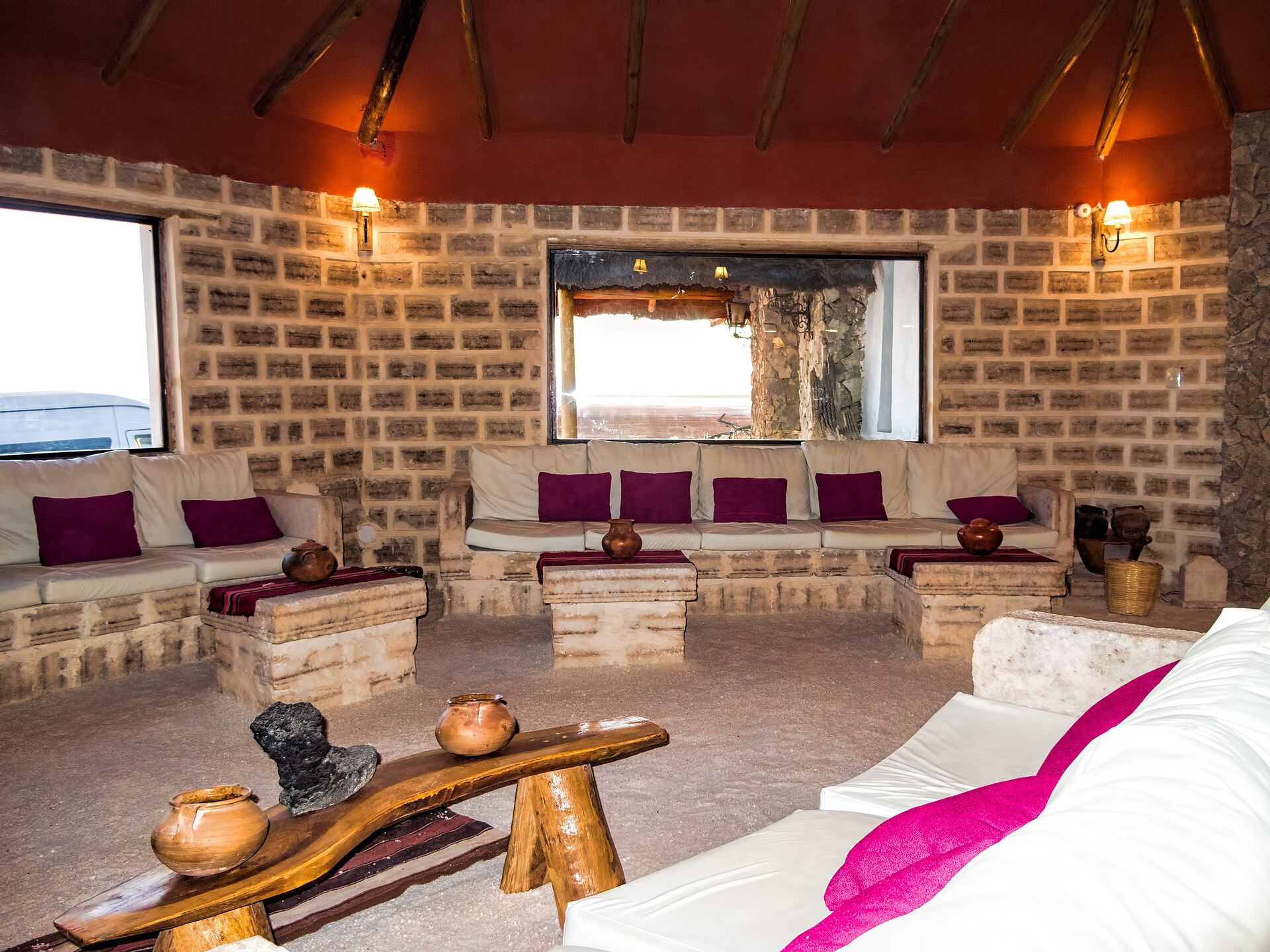
Photo: Dan Lundberg, CC BY-SA 2.0
Luna Salada Hotel
out of 5 0 ratingsPerched at the edge of the world’s largest salt flat, Luna Salada Hotel feels like a mirage that refuses to fade. The Salar de Uyuni stretches endlessly in every direction, a vast white expanse where the horizon blurs into the sky, and after rain, the ground becomes a perfect mirror reflecting nothing but clouds. The hotel itself is carved from this very landscape—its walls, floors, and even the furniture are made from blocks of salt harvested from the flats. There are no bricks or concrete here, just the raw, glistening material of the earth, shaped into something resembling shelter. It’s less a building and more an extension of the salt flat, a place where human presence feels both bold and humbling against the scale of nature.
The idea of a salt hotel wasn’t born from luxury but from necessity. In the late 1990s, when tourism in Bolivia was still finding its footing, the Salar de Uyuni was little more than a pit stop for travelers heading deeper into the Andes or toward Chile. The region was known for its salt extraction and lithium reserves, not for hospitality. Building a hotel from salt seemed absurd—salt erodes, cracks under pressure, and melts when wet. The climate here is unforgiving: scorching days, freezing nights, and humidity that seeps into everything during the rainy season. Yet in 1998, the first version of Luna Salada opened, and over the years, it has been rebuilt, reinforced, and expanded, each iteration a little sturdier than the last. The goal was never perfection but persistence, a way to prove that even in such a harsh place, people could carve out a space for themselves.
From the outside, the hotel looks like a fortress of ice, its jagged salt blocks stacked unevenly, catching the light in ways that make them shimmer. Inside, the walls are rough to the touch, their texture shifting with the time of day—pink in the morning, blinding white at noon, and golden as the sun sets. The floors are also salt, though woven mats cover them to prevent slipping. There are no air conditioners; instead, the thick walls and small windows keep the interior cool. The effect is disorienting, as if you’ve stepped inside a geode rather than a hotel. The furniture, too, is made from salt—chairs, tables, even the reception desk—each piece hand-carved, their edges softened by time and use.
The hotel’s location was chosen with care. It sits on a slight rise at the edge of the salt flat, where the land drops away into the endless white. On clear days, the view is hypnotic, especially after rain when a thin layer of water turns the flats into a giant mirror. Photographers flock here between December and March, when the effect is most dramatic, though the rest of the year offers its own stark beauty. Without the water, the salt flat becomes a desert of blinding whiteness, broken only by the occasional hill or outcrop of rock. From here, it’s easy to explore the surrounding wonders: the cactus-covered Incahuasi Island, the rusting trains of the Uyuni train cemetery, or the volcanic peaks that ring the horizon.
Life at Luna Salada moves to the rhythm of the salt flat. Mornings begin early, with the first light turning the walls a soft gold. Breakfast is served in a small dining room with a view of the flats, where even simple food—eggs, bread, coffee—feels like a luxury. Most guests spend their days on excursions, but those who stay behind can wander the immediate surroundings or simply sit on the terrace, watching the play of light on the salt. Evenings are quieter, the air turning crisp as the sun dips below the horizon. A fire crackles in the common area, and sometimes local musicians play traditional instruments, their melodies blending with the sound of the wind. At night, the silence is profound, broken only by the occasional creak of the salt walls settling.
Despite its remoteness, the hotel doesn’t feel cut off from the world. The town of Uyuni, about forty kilometers away, has a handful of cafes, markets, and even a small salt museum where visitors can learn about the region’s mining history. Many of the hotel’s staff are locals, and they’re quick to share stories about life on the salt flat—how salt is still harvested by hand, how the rainy season turns the roads to mud, and how people adapt to the extremes of heat and cold. Travelers often pass through on their way to Chile’s Atacama Desert or deeper into the Bolivian Andes, and conversations in the common room can stretch late into the night, fueled by shared curiosity and the quiet magic of the place.
This isn’t a hotel for those seeking familiar comforts. There are no televisions in the rooms, the internet is unreliable, and hot water can be sporadic. But these limitations are part of the experience. Luna Salada isn’t about luxury; it’s about immersion, a chance to step outside the usual rhythms of travel. The salt walls are slowly eroded by wind and moisture, requiring constant maintenance, a reminder that nothing here is permanent. Even the ground beneath your feet is in flux, shifting with the seasons. That impermanence is part of the hotel’s appeal—it forces you to slow down, to pay attention to the details, to accept that some things can’t be controlled.
For many, a stay at Luna Salada becomes one of the most vivid memories of Bolivia. It’s a place where you can wake before dawn, step onto the terrace, and watch the sun rise over a landscape so vast and empty it feels like the edge of the world. There are no trees, no roads, no signs of civilization—just salt, sky, and the quiet hum of existence. Time seems to stretch and bend here, and it’s easy to lose track of the hours, of the outside world, of everything except the present moment. That’s why people return, not for the amenities, but for the feeling of having touched something raw and real, if only for a little while.
Day around this place
Where else to go on the same day
Building the day…
Where it is
-20.28065, -66.98186