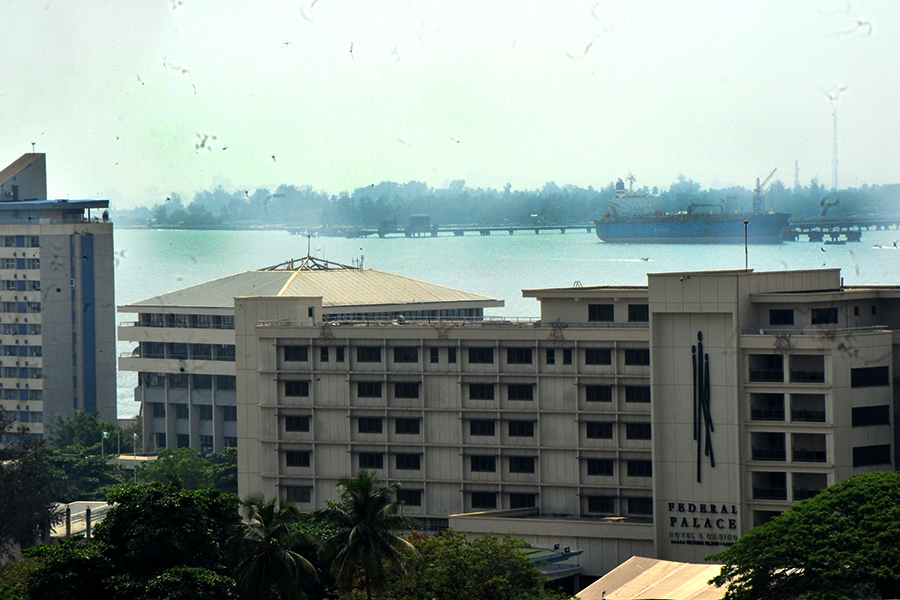
Photo: Godmyhelper, CC BY-SA 4.0
Federal Palace Hotel
out of 5 0 ratingsFederal Palace Hotel in Ikoyi
Federal Palace Hotel stands on Awolowo Road, Ikoyi, where it has been since 1952. The building was designed by British architect Kenneth Scott, who also planned Lagos’s first modern hospital. Inside, the original terrazzo floors and brass door handles remain unchanged.
The hotel opened when Nigeria was still a British colony. The first guests included colonial administrators and foreign journalists covering the country’s push for independence. Later, during the civil war, it became a meeting point for diplomats and aid workers.
Walk through the lobby and you’ll see photographs of past visitors: Queen Elizabeth II in 1956, Nelson Mandela in 1993, and countless Nigerian leaders. The hotel’s archives hold guest books signed by these figures, along with menus from state dinners held in the ballroom.
The architecture mixes two styles. The exterior uses red brick and white columns, common in British colonial buildings. Inside, carved wooden panels and woven Aso Oke fabric cover the walls of the bar. These details were added in the 1970s, when the hotel was renovated to reflect Nigeria’s post-independence identity.
Ikoyi has changed. The quiet residential district of the 1950s is now home to banks, embassies, and luxury apartments. Yet the hotel’s block still feels like a different era. Across the street, a 1920s villa houses a private club; next door, a modern glass tower holds law offices.
The hotel has hosted events that shaped Nigeria. In 1960, the independence celebrations included a reception here. In 1977, FESTAC ’77 delegates gathered in the ballroom. More recently, the hotel has been used for press conferences announcing new government policies.
Today, people come for different reasons. Some book the same rooms their grandparents stayed in. Others stop by the bar after work because it’s one of the few places in Lagos where you can still see original colonial-era interiors. The restaurant serves Jollof rice and grilled fish, but the menu also includes dishes from the 1960s, like chicken Kiev and prawn cocktail.
Lagos keeps growing. New hotels open every year, but Federal Palace remains. It’s not the tallest or the newest, but it’s the only one that has been part of the city’s story from the beginning.
You don’t need to stay here to understand its place in Lagos. Sit in the lobby for an hour and watch the mix of guests: businesspeople, tourists, and locals meeting friends. The building doesn’t try to compete with the city’s energy—it simply holds its ground, offering a quiet counterpoint to the streets outside.
Day around this place
Where else to go on the same day
Building the day…
Where it is
6.43056, 3.40737