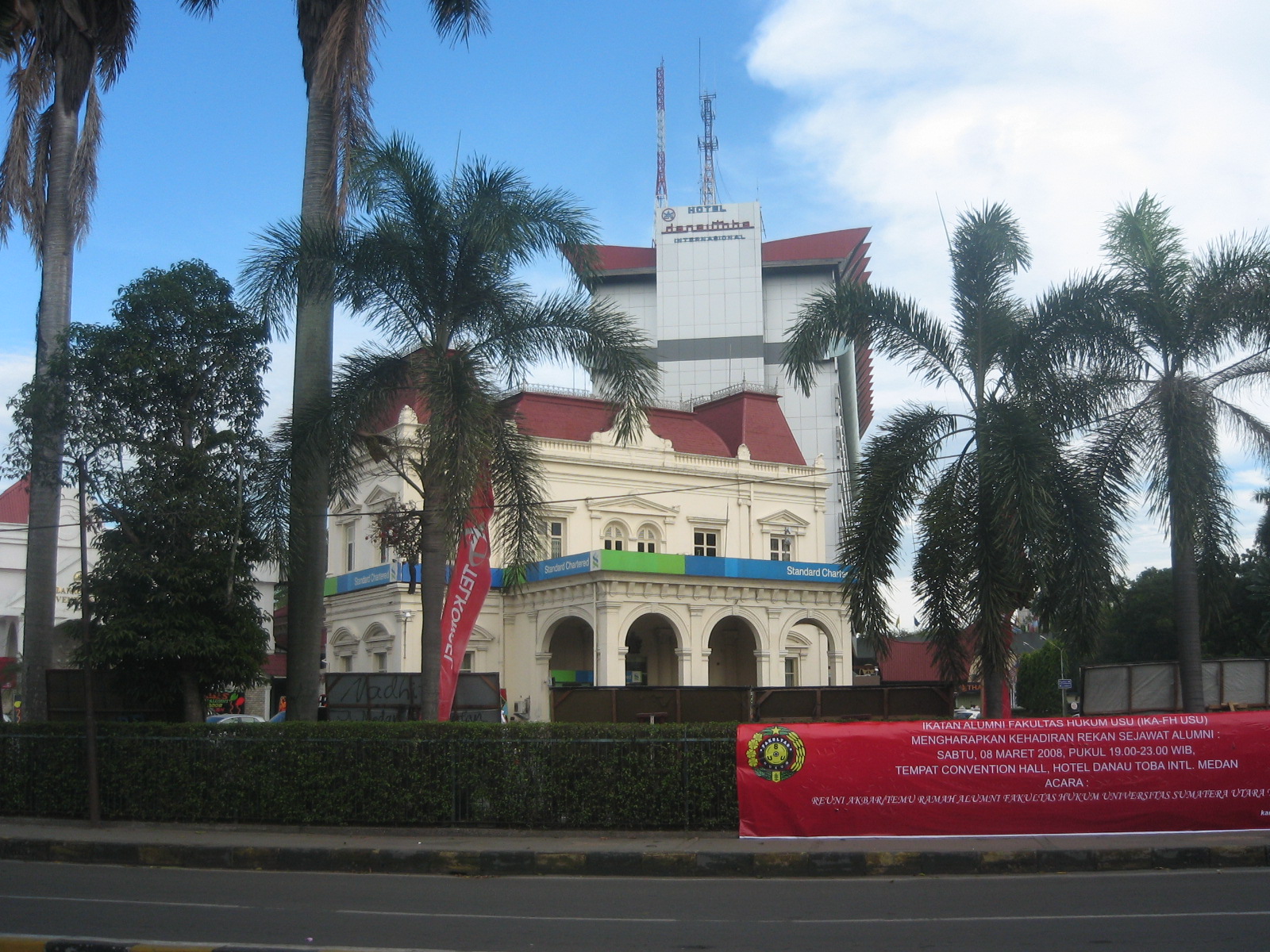
Photo: alhafis, CC BY 3.0
Hotel Danau Toba International
out of 5 0 ratingsLake Toba is one of those rare places that feels suspended outside of time. Formed over seventy thousand years ago by one of the most violent volcanic eruptions in history, its vast waters stretch across northern Sumatra, framed by rolling green hills and the quiet slopes of long-dormant volcanoes. The lake’s surface is deceptively calm, hiding the massive caldera beneath—a reminder of the raw power that once reshaped the planet. Around its shores, the Batak people have lived for centuries, preserving their traditions, music, and distinctive architecture, with houses crowned by sweeping, boat-shaped roofs. Nestled among palm trees and flowering shrubs along the water’s edge, the Danau Toba International hotel offers more than just a place to stay; it’s a quiet invitation to step into the rhythm of this land.
The hotel wasn’t built by accident. In the mid-20th century, as Indonesia began to open itself to the world, Lake Toba emerged as one of the country’s first true travel destinations. Visitors from Europe and America came seeking something different—not luxury, but a sense of escape, a chance to witness a way of life untouched by modern haste. Danau Toba International was designed with these travelers in mind: not a grand resort, but a comfortable, welcoming retreat where guests could rest after long journeys across Sumatra. Its architecture is simple and practical, with low-rise buildings, large windows framing the lake, and wide verandas where people gather in the evenings with coffee or a glass of iced tea.
Today, the hotel still carries the spirit of an earlier era of travel, when the journey itself was part of the adventure. There are no crowds here, no loud bars or packed tour schedules. Instead, the days unfold slowly, filled with the sounds of nature—the lapping of water against the shore, the rustle of leaves, the calls of birds. Mornings begin with mist rising over the lake, and evenings often end with guests sitting by the water, watching the sky turn shades of pink and gold. Local fishermen sometimes dock near the hotel, selling their fresh catch, while in the lobby, conversations flow easily between visitors and staff, who are always ready to share stories or suggest the best spots to explore nearby.
The rooms at Danau Toba International aren’t luxurious, but they don’t need to be. They’re clean, comfortable, and well-kept, with everything a traveler might need—good beds, hot water, and, in some cases, a view that makes it feel as though you’ve woken up on a boat drifting across the lake. The hotel’s restaurant serves straightforward, satisfying meals: grilled fish, spicy Sumatran dishes, and fresh fruit. There’s no pretense of fine dining, but the food is reliably good, made from local ingredients, and the coffee is strong, prepared the way the Batak people have always drunk it—with just a pinch of salt.
Beyond the hotel, the lake and its surroundings offer plenty to explore. A short trip away lies the village of Tomok, where artisans still weave the traditional *ulos* cloth, their intricate patterns telling stories passed down through generations. For those willing to climb, the hills of Silalahi provide a breathtaking panorama of the lake and the island of Samosir, which sits like a jewel in the center of Toba. Samosir itself is worth a visit, with its ancient Batak tombs, stone statues, and wooden houses adorned with carved motifs. Ferries to the island depart regularly from a dock not far from the hotel, making it an easy excursion for anyone staying at Danau Toba International.
This isn’t a place for shopping sprees or nightlife. The pace here is different—slow, deliberate, in tune with the lake’s own unhurried currents. It’s a retreat for those who need a break from the noise of modern life, a chance to be alone with nature or simply to exist for a while without the pressure of schedules and obligations. Time seems to move differently here, as if the lake itself sets the rhythm, allowing moments to stretch and breathe.
In recent years, tourism on Sumatra has begun to change. New roads cut through the landscape, modern hotels rise in the cities, and cafes and restaurants cater to a growing number of visitors. But Lake Toba remains much as it always has—mysterious, majestic, a little wild. And Danau Toba International still stands on its shore, offering not just a place to sleep, but a way to connect with something real, something unspoiled. Perhaps that’s why people return, years after their first visit—to recapture that quiet, almost forgotten sense of peace.
Day around this place
Where else to go on the same day
Building the day…
Where it is
3.58314, 98.67646