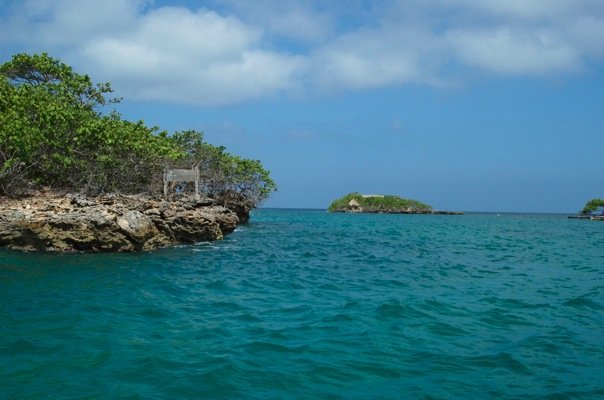
The Rosario Islands are a quiet archipelago scattered across the Caribbean Sea, about forty kilometers southwest of Cartagena. Made up of twenty-seven small islands, the group covers roughly twenty square kilometers of turquoise water and white sand, where the only sounds are the rustle of palm leaves and the gentle lap of waves against the shore. Unlike the crowded resorts of more commercialized destinations, these islands feel almost untouched, their beaches empty and their mangrove forests dense with life. In 1988, the area was declared a national park, ensuring that its fragile ecosystems would remain protected from overdevelopment.
The history of the Rosario Islands is woven into Colombia’s colonial past. Spanish sailors once used the sheltered coves as a refuge for their ships, hiding from storms and pirates alike. Over time, small fishing communities took root, and even today, life here moves at the rhythm of the sea. The locals still depend on fishing and the steady trickle of visitors who come seeking a slower pace. Some islands have wooden houses perched on stilts, their thatched roofs and weathered planks blending seamlessly with the surrounding palms—a reminder of how little has changed over the centuries.
What draws most travelers here, though, is the underwater world. The coral reefs that fringe the islands are among the most vibrant in the Caribbean, teeming with marine life. Divers come from all over to explore the depths, where schools of tropical fish dart between coral formations and sea turtles glide through the clear water. Even those who prefer to stay near the surface can experience the magic of the reef with just a mask and snorkel. The visibility is often so good that the seabed feels almost within reach, revealing starfish, rays, and the occasional curious octopus.
Getting around the islands is part of the experience. There are no roads, no cars—just narrow footpaths winding through the vegetation and boats bobbing at wooden docks. The lack of modern infrastructure lends the place an unhurried, almost timeless feel. Local fishermen often double as guides, offering to take visitors to hidden coves and secluded beaches where the sand is still warm from the sun. Their stories—of storms survived, of fish that got away, of the islands’ quiet rhythms—add another layer to the journey, making it feel less like a tourist stop and more like a glimpse into a way of life that has endured for generations.
Isla Grande is the largest and most developed of the islands, though "developed" is a relative term. Here, you’ll find a handful of small guesthouses and beachfront restaurants serving the day’s catch—lobster, red snapper, or octopus, grilled simply and served with lime and coconut rice. There’s also a modest aquarium where visitors can see some of the reef’s inhabitants up close without getting wet. But even on Isla Grande, the pace remains slow. The power might flicker, the internet might be spotty, and the only nightlife is the sound of waves against the shore.
Reaching the Rosario Islands takes a little effort. From Cartagena, the only way to get there is by boat, a journey that takes about an hour. The ride can be smooth or choppy, depending on the season, and during the rainy months, the sea sometimes turns rough, turning the trip into a minor adventure. But those who make the crossing rarely regret it. The reward is a stretch of coastline where time seems to stand still, where the biggest decision of the day is whether to nap in a hammock or take another dip in the warm, clear water.
Beyond the beaches and reefs, the islands are also a haven for wildlife. Pelicans dive for fish just offshore, while frigatebirds soar overhead, their wingspans casting shadows on the sand. In the mangroves, crabs scuttle between the roots, and if you’re lucky, you might spot a heron standing motionless in the shallows. Local guides lead tours through the protected areas, explaining how the delicate balance of the ecosystem depends on everything from the health of the coral to the tides that shape the shoreline. It’s a reminder that this isn’t just a pretty place—it’s a living, breathing environment that has thrived precisely because it’s been left alone.
There are no luxury resorts here, no all-inclusive buffets or beachfront nightclubs. What the Rosario Islands offer instead is something rarer: the chance to step away from the noise of modern life and simply be. The days unfold slowly, marked by the rise and fall of the sun, the ebb and flow of the tide. For many, that’s the real appeal—not the promise of adventure or entertainment, but the quiet assurance that some places are still allowed to exist just as they are. It’s a reminder of what travel can be when it’s not about checking boxes or collecting photos, but about slowing down enough to notice the details—the way the light filters through the palm trees, the taste of salt on the breeze, the feeling of sand between your toes.