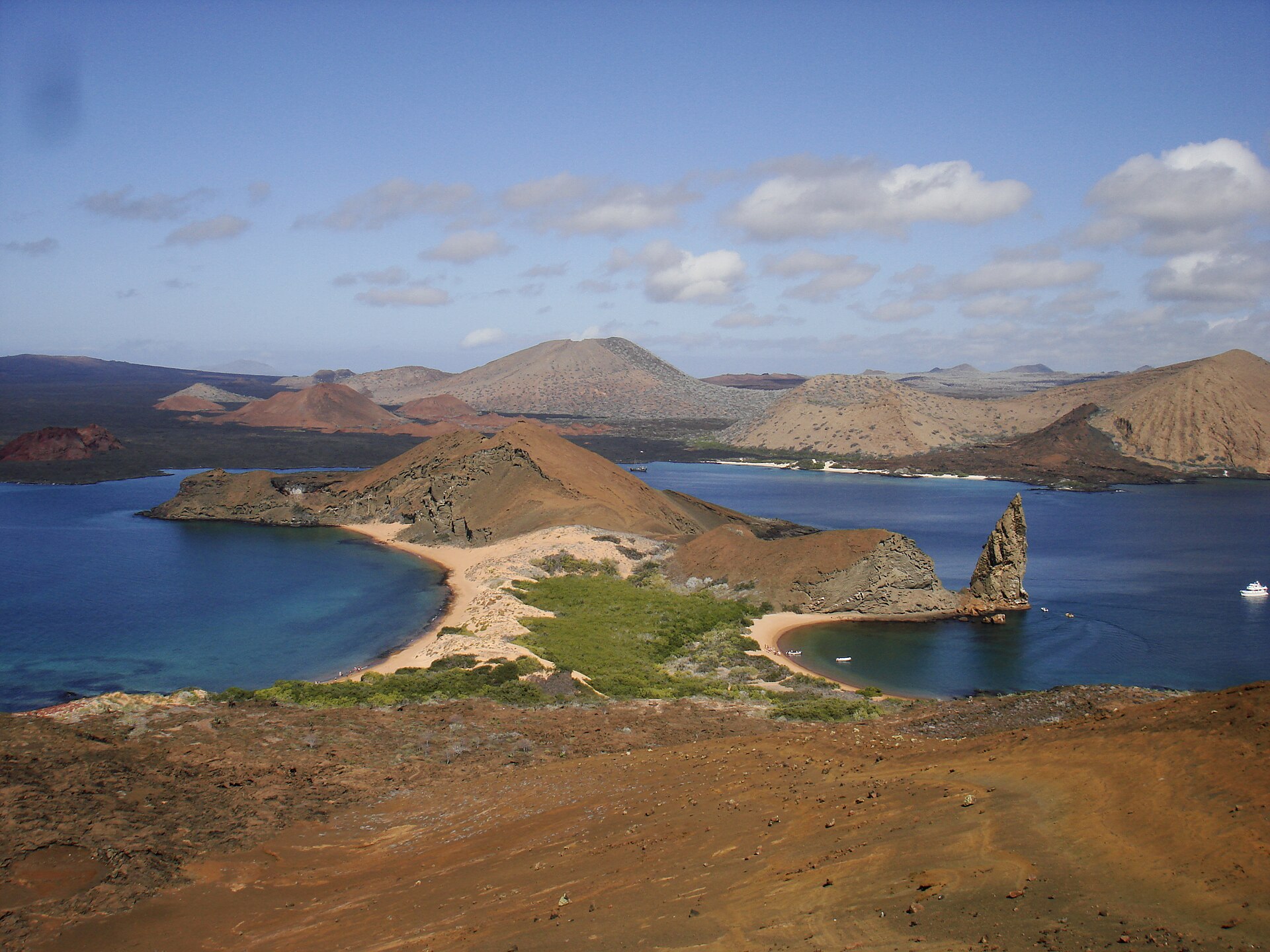
Bartolomé Island feels like a place where nature paused to show off. Part of the Galápagos archipelago, it’s small but unforgettable, a landscape of raw volcanic beauty that stands apart from the more lush islands nearby. There are no resorts or crowds here, just black lava fields, jagged cones, and beaches where the sand shifts color with the light. The island has a quiet, almost timeless quality, as if it’s still in the process of being shaped by the earth itself.
The most striking feature is Pinnacle Rock, a sharp volcanic spire rising from the water. It’s one of the most photographed sights in the Galápagos, but seeing it in person is different—more vivid, more alive. The rock formed when lava cooled into its dramatic shape, then eroded over time into the towering landmark it is today. Around it, the ocean teems with life: sea lions glide through the water, penguins dart beneath the surface, and reef sharks patrol the depths. The view from the top of the island, reached by a short but steep climb up wooden steps, takes in the whole scene—the curve of the bay, the distant islands, and the endless blue of the Pacific.
Bartolomé is essentially a single volcanic cone, its surface covered in hardened lava and sparse vegetation. Unlike other islands in the archipelago, there are no dense forests or rolling meadows here. Instead, the landscape has a stark, almost lunar beauty, broken only by patches of cacti and hardy shrubs that have adapted to the harsh conditions. It’s easy to imagine this is what the earth looked like millions of years ago, when volcanoes were still shaping its surface. The island’s barrenness is part of its appeal—there’s nothing to distract from the raw power of the natural world.
The waters around Bartolomé are just as compelling as the land. The currents here are rich with nutrients, drawing in sea turtles, rays, and even whales during certain seasons. Below the surface, the underwater world is just as vibrant: coral reefs teem with colorful fish, while sea lions playfully investigate snorkelers. For those who prefer to stay above water, the clear, warm ocean offers a chance to swim alongside these creatures, watching as they move through their daily routines.
There are no permanent residents on Bartolomé, no hotels or restaurants, just the untouched landscape and the animals that call it home. Visitors arrive on organized tours from Puerto Ayora or other islands, and access is strictly controlled to protect the fragile ecosystem. You can’t set foot on the island without a guide, and the number of people allowed at any one time is limited. This careful management ensures that the island remains as wild as it was when it first formed.
The history of Bartolomé is tied to that of the Galápagos as a whole. The islands were first spotted by Spanish explorers in the 16th century but remained largely ignored for centuries due to their remoteness and harsh conditions. By the 19th century, they had become a stopover for whalers and seal hunters, who nearly wiped out some of the native species. Fortunately, the creation of the Galápagos National Park in the 20th century helped reverse some of that damage. Today, the islands are one of the most protected places on earth, and Bartolomé plays a key role in preserving the archipelago’s unique environment.
A visit to Bartolomé isn’t just about seeing a beautiful place—it’s about stepping into a world where nature sets the rules. There are no modern comforts here, just the chance to observe animals living as they have for centuries. Sea lions lounge on the shore, marine iguanas bask on the rocks, and penguins dive into the waves. It’s a reminder of how wild and fragile the natural world can be, and how rare it is to find a place so untouched by human hands.
For many travelers, Bartolomé becomes one of the highlights of a Galápagos trip. It doesn’t have the giant tortoises or massive bird colonies found on other islands, but it has something just as special: a sense of solitude and untouched beauty. This is a place for those who appreciate silence, open spaces, and the chance to be alone with nature. Even a few hours here can leave a lasting impression, a quiet moment in a world that often feels too loud.