The Saigon Opera House is one of those rare places in Ho Chi Minh City where time seems to soften, as if the rush of the modern world can’t quite reach its walls. Built in the late 19th century, when the city was still known as Saigon and served as the capital of French Cochinchina, the theater stands as a quiet monument to Europe’s cultural imprint on Southeast Asia. Its facade, with its graceful columns and intricate sculptures, echoes the grandeur of the Palais Garnier in Paris, though scaled down with a certain understated elegance. The architects succeeded in transplanting the spirit of French neoclassicism onto Vietnamese soil, and the building still carries that sense of timelessness—its exterior so well-preserved that it’s easy to imagine it was completed just yesterday, rather than over a century ago.
When the theater opened its doors in 1900, it was a stage for the colonial elite. Operas and ballets performed here were meant for French officials and their guests, while most locals were kept at a distance. But history had other plans for the building. After Vietnam gained independence, the Opera House took on new roles—first as the seat of the South Vietnamese parliament, then as a venue for more accessible performances. Today, it has returned to its original purpose, hosting everything from classical concerts to contemporary fashion shows, though now it welcomes anyone who wishes to step inside.
The interior feels like a step back in time. The ceilings are adorned with delicate plasterwork, crystal chandeliers cast a warm glow over the auditorium, and the seats are upholstered in deep red velvet. The space isn’t vast by European standards, but that only makes it feel more intimate. There’s no overwhelming pomp here—just a sense that art, in all its forms, is the true focus. Even if classical music isn’t your usual preference, the theater’s atmosphere makes it worth a visit. The way French opulence blends with Vietnamese restraint creates something uniquely harmonious.
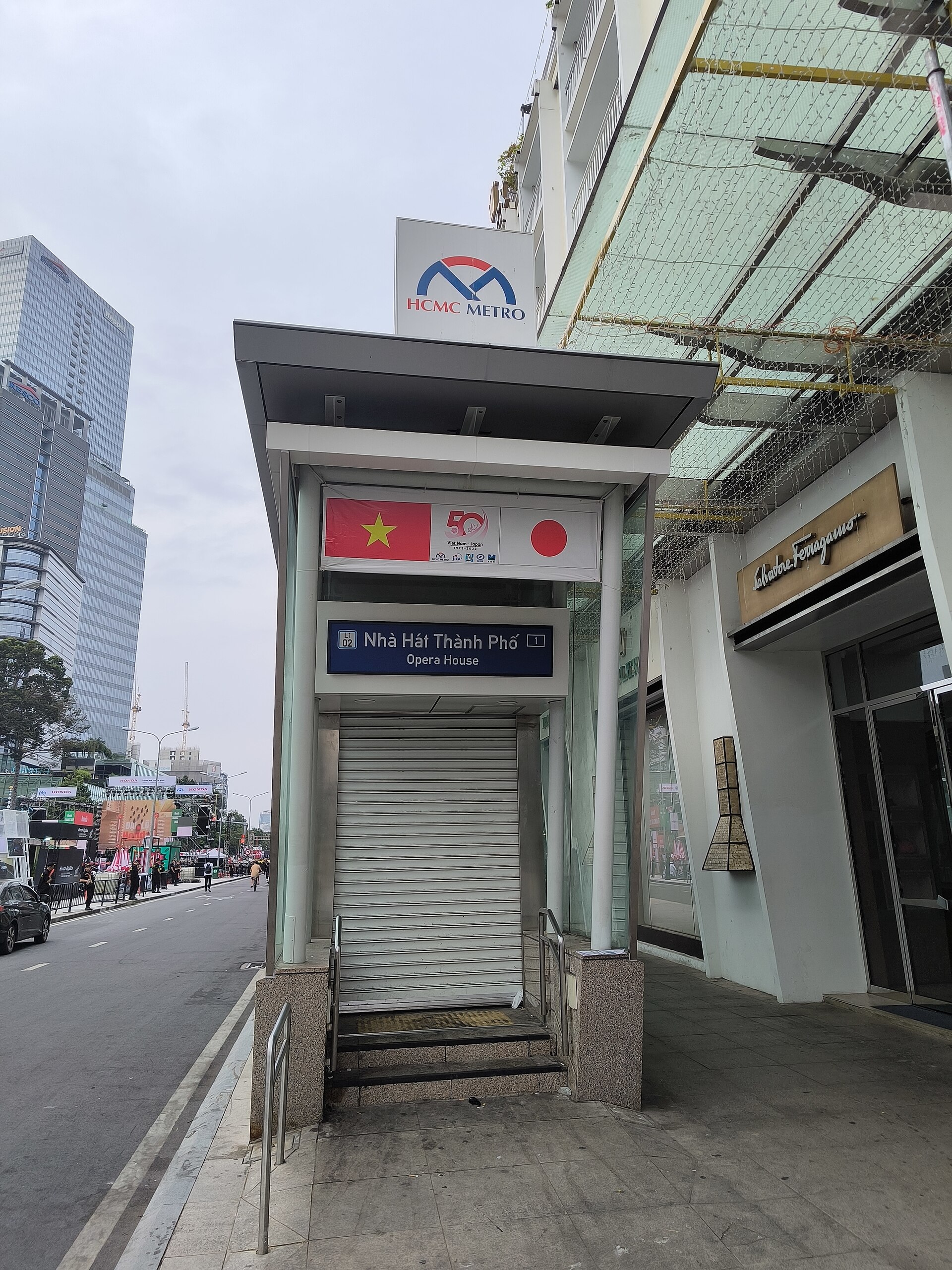
The Opera House sits on Dong Khoi Street, one of Ho Chi Minh City’s busiest thoroughfares, where the energy of the city pulses from dawn until late at night. Around it, cafes spill onto sidewalks, shops display their wares, and the hum of motorbikes fills the air. Yet the theater doesn’t feel out of place—it seems to belong here, standing as a dignified counterpoint to the surrounding chaos. In the evening, when the lights come on, its facade becomes even more striking, and the reflection in the nearby pond gives the illusion that the building is floating just above the water. It’s a perfect spot to sit on the steps, watching the world go by, or to step inside and let the weight of history settle around you.
More than just a landmark, the Saigon Opera House is a living testament to how different cultures can coexist without erasing one another. There’s no tension here between French heritage and Vietnamese identity—only a quiet dialogue, where each element enhances the other. That might be why the theater remains so beloved by both locals and visitors. It doesn’t try to be anything other than what it is, and in that simplicity lies its charm.
If you find yourself in Ho Chi Minh City, take a moment to pause here. You don’t need to attend a performance to appreciate the place. The building itself tells a story—of colonial ambition, of shifting political tides, of art enduring through change. And if you’re lucky enough to catch a concert or a play, the experience will linger long after the final note fades. The Opera House isn’t just a relic of the past; it’s a place where the past and present still speak to each other.