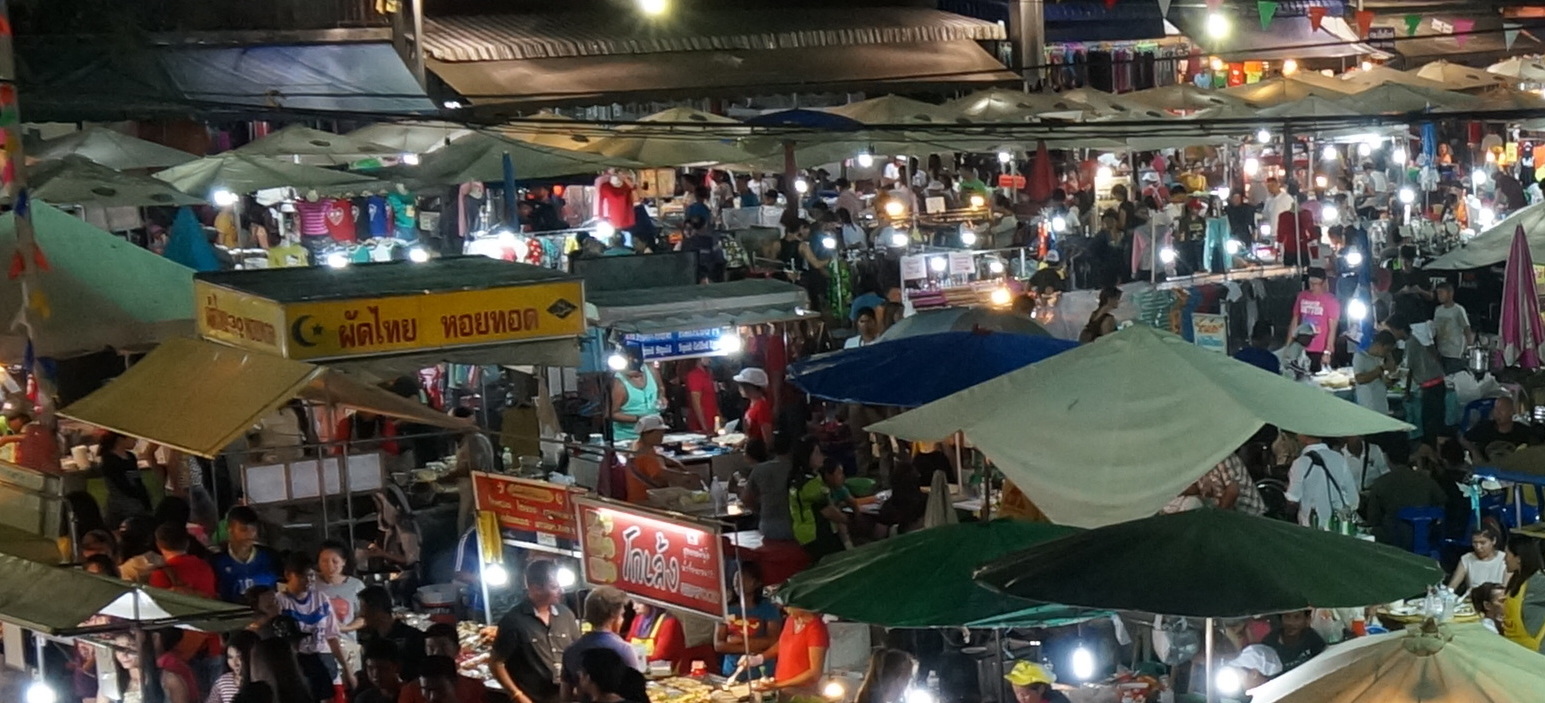
The market wakes when the sun dips below the limestone cliffs. By day, the spot is just a stretch of cracked pavement near the river—a few shuttered shops, a motorcycle stand, a café with plastic chairs. But after dark, the air thickens with the smell of grilled prawns and tamarind, and the low hum of conversation in Thai and Malay spills from the stalls.
This wasn’t built for tourists. It started decades ago as a handful of vendors selling rice soup and fruit to fishermen and rubber tappers. Now, it’s bigger, but the rhythm hasn’t changed. No one rushes you. No one shouts prices. It’s just people eating, selling, and lingering.
The stalls are simple: metal frames draped with fabric, strung with bare bulbs. No neon signs, no flashy banners. At the center, a small clearing where musicians sometimes play *luk thung* or kids kick a soccer ball. Tables and benches fill up fast, but no one minds if you stand, balancing a plate of *satay* in one hand and a coconut in the other.
Food is why most come. The *khao tom*—rice soup with fish and ginger—bubbles in large pots over charcoal. The *satay* skewers drip with coconut milk, turning golden over the flames. You point at the seafood you want—prawns still twitching, squid coiled in a bucket—and five minutes later, it’s on your plate, slathered in garlic-chili sauce. The spices hit first: lemongrass, kaffir lime, the sharp bite of bird’s eye chili. Then the heat, slow and deep.
Beyond food, the market sells things you won’t find in the souvenir shops along Ao Nang. Rattan bags, each one woven differently. Shell necklaces strung by hand. Wooden frogs that croak when you run a stick along their backs. The people who make these sit behind their stalls, often working as they wait for customers. A woman braids palm leaves into a basket. A man carves a piece of driftwood into a turtle. They’ll tell you how long it takes—three hours for a bag, a week for a necklace—but they don’t push you to buy.
What’s strange is how easy it is to forget you’re a visitor. There’s no tourist section, no special menu. The same aisles that locals wander, you do too. A vendor might hand you a sample of *mango sticky rice* without asking, or a child will offer you a seat on a tiny plastic stool. The laughter is the same, whether it’s from a group of teenagers sharing a plate of *pad thai* or a family arguing over which seafood to order next.
It doesn’t open every night. Sometimes it’s closed because of rain, sometimes because the organizers decided to take a break. There’s no schedule posted anywhere. You just show up and hope.
Krabi has changed—more hotels, more boats to the islands, more signs in English—but the night market hasn’t. Prices stay low. Crowds stay small. The only thing that’s different is you, standing there with a plate of food in your hands, watching the lights flicker against the river.