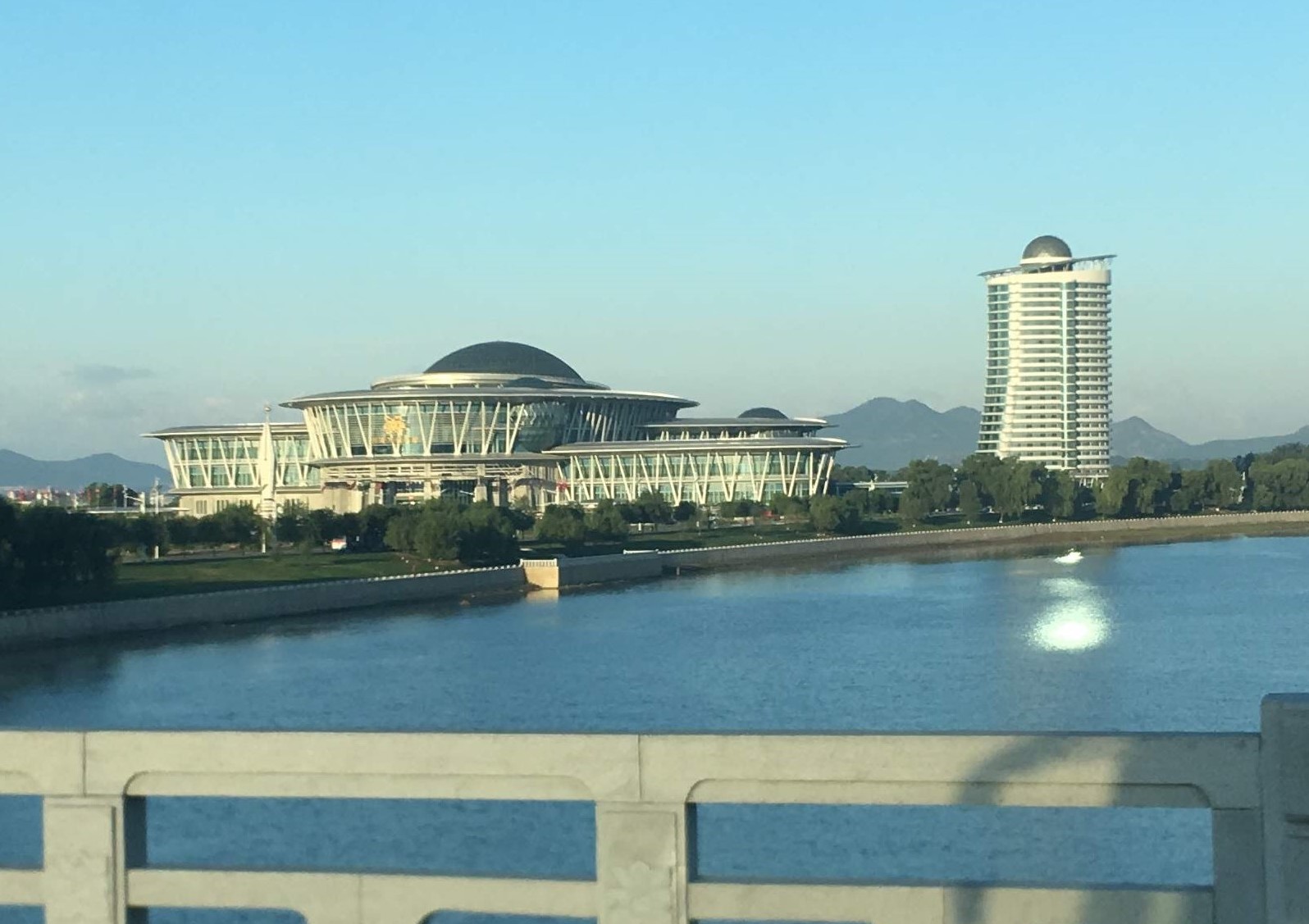
The building rises on the city’s skyline, its glass dome catching the light like a polished lens. Inside, satellites hang from the ceiling, their metal frames gleaming under spotlights. Rockets stand in silent rows, their noses pointed toward the future North Korea claims to be building. The center opened in the early 2000s, part of a push to show the world—and its own people—that the country could compete in science and technology.
Why does it look the way it does? The architects chose curves and angles to suggest both precision and reach. The globe-shaped facade isn’t just decoration; it mirrors the regime’s insistence that its work has global significance. Inside, the halls are wide, the ceilings high, the lighting bright—all designed to make visitors feel small in the face of progress.
The center hosts laboratories, exhibitions, and lecture halls. Here, scientists present their work, though the line between research and state messaging is thin. Displays emphasize collective effort, with phrases like “under the wise leadership” appearing beside every achievement. For North Koreans, this isn’t unusual—it’s how success is always framed.
What do you see when you walk through?
Models of satellites launched in the 2010s, their solar panels spread like wings.
Rocket engines, their nozzles blackened from static tests.
Touchscreens where children press buttons to simulate space missions.
Posters showing workers in white coats, their faces lit with pride.
The center isn’t just for show. School groups file through on weekday mornings, listening to engineers explain physics in simple terms. University students attend seminars on chemistry and engineering, where the message is clear: science is the path to national strength. For many, this is their first real exposure to the idea that their country can lead in technology.
The building itself is a statement. The glass dome reflects the sky, while the interior’s clean lines and open spaces suggest efficiency. Outside, landscaped gardens offer a place to sit, though the benches are rarely used—visitors move quickly, guided by staff in crisp uniforms.
On select days, the public can tour parts of the center. Guides lead groups past exhibits, pointing out achievements in space and military technology. Some areas are off-limits, their doors marked with signs in Korean. The tours don’t hide the ideology, but they don’t dwell on it either. Instead, they focus on the hardware: the rockets, the satellites, the machines that prove North Korea is moving forward.
For foreigners, the experience is jarring. There’s no attempt to align with Western expectations of openness or transparency. The exhibits don’t invite debate—they present facts as the state defines them. Yet the center isn’t just propaganda. The technology on display is real, even if its context is carefully controlled. The rockets exist. The satellites were launched. The question isn’t whether the achievements are genuine, but what they’re meant to represent.
The center’s design reinforces its purpose. Every detail, from the polished floors to the uniformed guides, serves a dual role: to impress and to instruct. The message is consistent: progress comes from unity, and unity comes from leadership. It’s a narrative that shapes how North Koreans see their country and its place in the world.
If you visit, don’t expect a typical museum. There are no interactive exhibits where you can test your own ideas. The displays don’t challenge— they affirm. But that’s the point. The Science and Technology Center isn’t trying to educate outsiders. It’s showing North Koreans what their country can do, and why that matters.