Nairobi War Cemetery
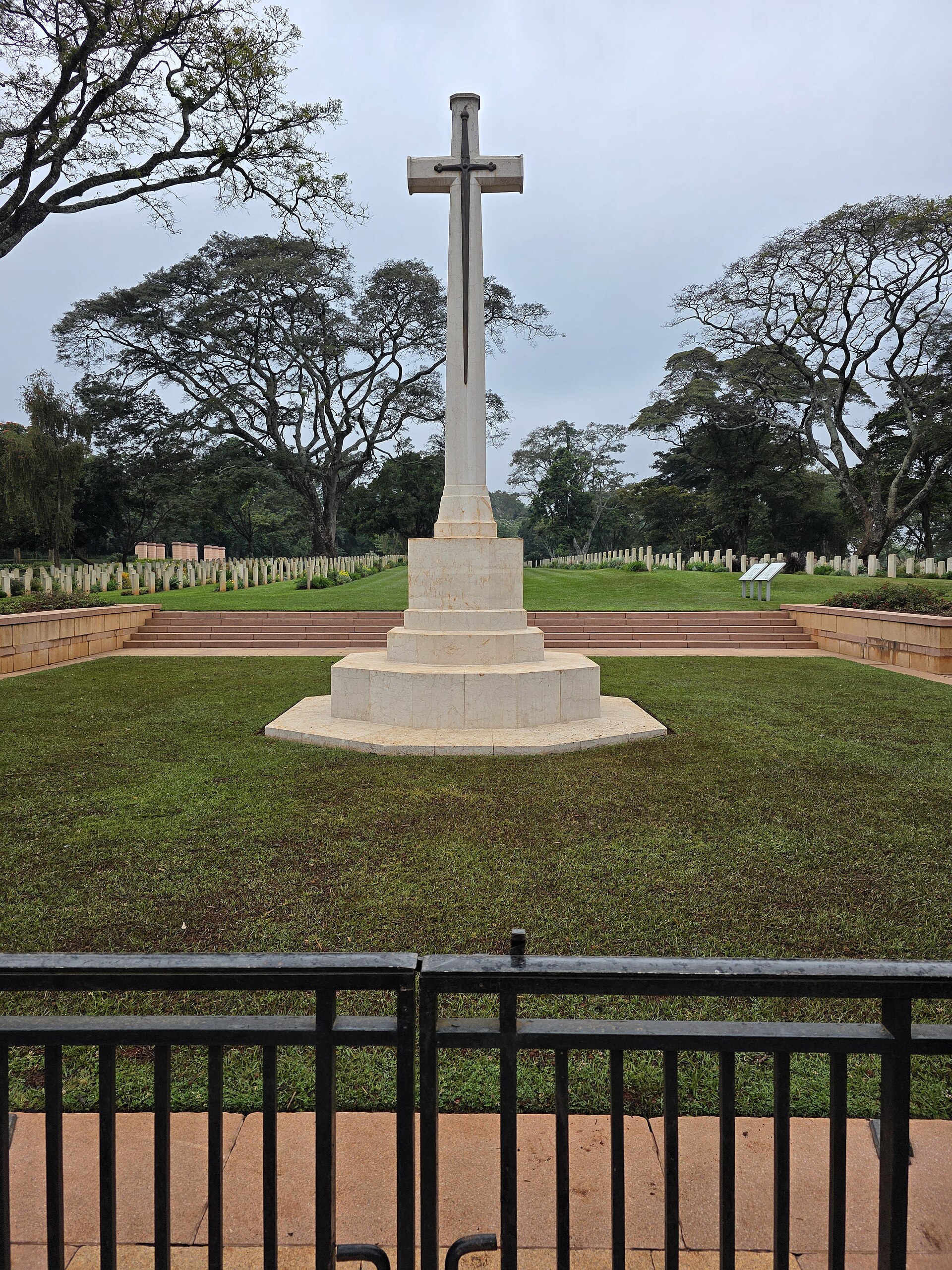
Nairobi War Cemetery is in Kangemi, a district away from the usual tourist routes. The place is quiet, with neat rows of white headstones on manicured lawns. Each marks the resting place of someone who died far from home during the Second World War.
Kenya was a British colony then, and its position in East Africa made it important for Allied operations. The soldiers buried here came from Britain, India, South Africa, and Kenya. Some died in battle; others from disease, accidents, or harsh conditions. The heat, malaria, and dense bush were as much a threat as the enemy.
The cemetery’s design is simple. A stone cross stands at the center, surrounded by flowers and grass. The headstones are uniform, each with a name, rank, and date of death. A few read *A Soldier of the 1939–1945 War. Known to God.* These words appear in war cemeteries worldwide, acknowledging that no life should be forgotten. Even unnamed, each was a person with a family and a story.
Few people visit. Nairobi’s noise fades at the gates, replaced by silence. Occasionally, relatives come, or locals pay respects. In November, on Remembrance Day, small ceremonies are held. Most of the year, the cemetery exists in its own quiet rhythm. It’s not a place for spectacle but for reflection.
Kenya’s history is often told through its struggle for independence and colonial past. This cemetery tells another story—of soldiers who came to Africa not as conquerors but as men following orders. Many were far from home. Not all were British. Not all chose to fight. Yet here they lie together. The headstones record names, dates, the reality of war.
The cemetery doesn’t offer a grand narrative. The stories are in the details: the young ages of the dead, the diversity of regiments, the lives lost not in glory but in suffering. It doesn’t demand emotion, but standing among the graves, you feel it. Each represents a life ended too soon, a family left waiting.
If you’re in Nairobi and want to see a side not on postcards, visit. There are no guides, no souvenirs, just the weight of history. It asks only for respect—for those buried here and the humanity they share. The silence isn’t empty. Listen, and you might hear what remains.