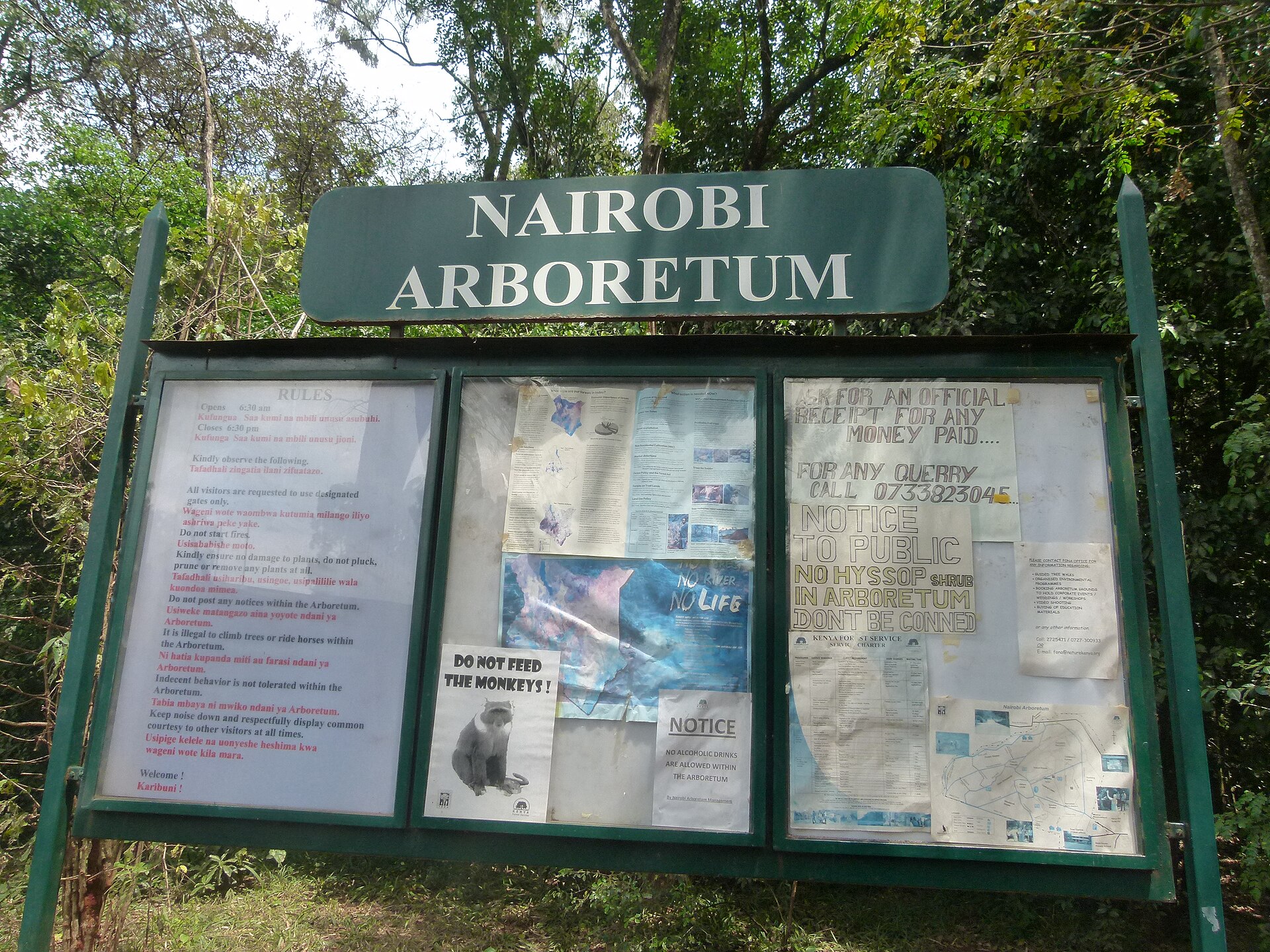
Nairobi Arboretum is one of those rare places where the city’s relentless energy fades into something quieter. Tucked just minutes from the heart of Kenya’s capital, it feels like a world apart—a patch of green where time slows, and the air carries the scent of damp earth and eucalyptus. Unlike the crowded markets or tourist-heavy spots elsewhere in Nairobi, the arboretum offers no grand attractions, no vendors hawking souvenirs, just winding paths, towering trees, and the kind of space that invites you to wander without hurry.
The story of the arboretum begins in the early 1900s, when Nairobi was still finding its footing as a colonial administrative hub. In 1907, British foresters established experimental tree plantations here to test which species would thrive in the region’s climate. Over the decades, the collection expanded, turning what was once a scientific project into a refuge for both wildlife and people. Today, the park holds a mix of native and introduced trees—from the sprawling branches of baobabs to the slender silhouettes of pines—each one a living record of the land’s history.
Walking through the arboretum is like moving between different landscapes. Narrow trails weave through dense thickets before opening onto sunlit clearings, where light filters through the canopy in shifting patterns. In the lower areas, small ponds glisten with water plants, while higher ground offers glimpses of the city skyline, a reminder of the urban world just beyond the trees. The best times to visit are early morning, when mist still clings to the branches, or late afternoon, when the light turns soft and golden, casting long shadows across the paths.
Beyond its beauty, the arboretum plays a vital role in preserving biodiversity. Dozens of bird species nest here, from the vivid flashes of sunbirds to the elusive shrikes hiding in the foliage. Monkeys and squirrels dart between the trees, and in the dry season, when much of Nairobi turns brown, the park becomes a green oasis, drawing not just people but animals seeking shade and water. For many city dwellers, it’s the closest they’ll get to wild nature without leaving Nairobi.
Despite its scientific importance, the arboretum remains accessible to everyone. There are no rigid rules, just a simple request to respect the plants and wildlife. Locals come here to picnic on the grass, read under the trees, or simply sit in silence. On weekends, you might see school groups learning about local flora or yoga enthusiasts stretching on the lawns. The atmosphere is relaxed, more about quiet enjoyment than structured activities.
The park’s design is subtle but intentional. Wooden bridges cross small streams, benches sit at scenic viewpoints, and signs identify rare plants without disrupting the natural flow of the landscape. In recent years, local artists have added small sculptures made from natural materials—unobtrusive pieces that encourage visitors to pause and notice the details. These touches are understated, blending seamlessly into the surroundings rather than demanding attention.
For those curious about the plants, guided walks are sometimes available, though they’re more like casual conversations with park staff than formal tours. Occasionally, there are workshops on gardening or talks on conservation, but these are low-key affairs. The arboretum isn’t a place for loud events or performances; it’s a space for slowing down, for listening to the rustle of leaves or the distant call of a bird.
In a city where development is constantly reshaping the landscape, Nairobi Arboretum stands as a reminder that nature and urban life don’t have to be at odds. It’s a place where the soil beneath your feet connects you to the land Nairobi was built on, where the contrast between the wild and the modern isn’t just visible but tangible. Here, the noise of the city fades into something deeper—a quiet acknowledgment of the balance between growth and preservation.