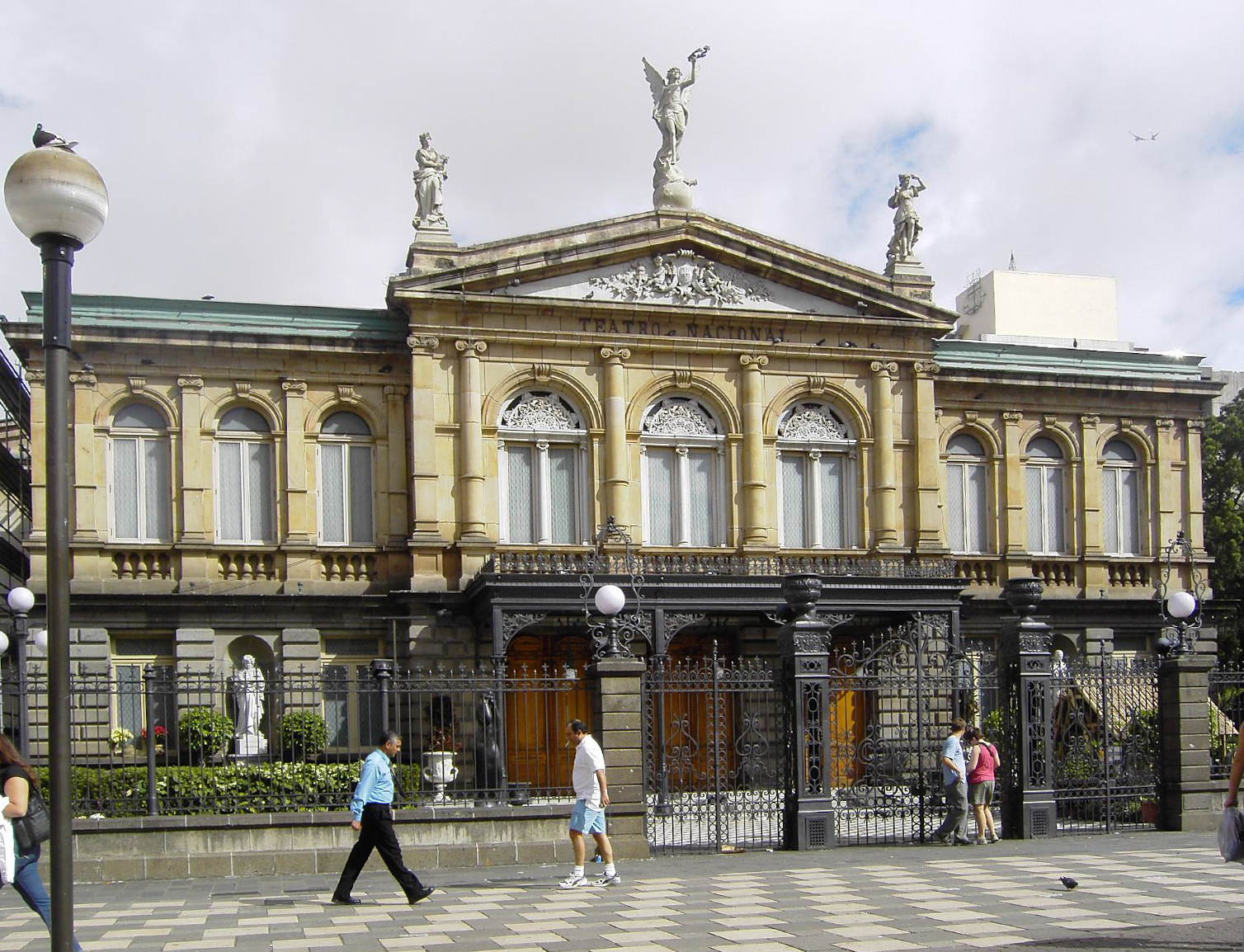
San José’s National Theatre is one of those places where the city’s quiet elegance reveals itself. Built in the late 19th century, it stands as a testament to Costa Rica’s brief but ambitious coffee boom, when the country’s newfound wealth found expression in grand public projects. The theatre was conceived not just as a venue for performances, but as a symbol of cultural aspiration—a way for the young republic to assert its place among the more established nations of the Americas. Its construction was funded by a tax on coffee exports, a detail that speaks to the era’s optimism and the belief that prosperity should serve something greater than commerce alone.
The building itself is a blend of European influences, with a neoclassical façade that wouldn’t look out of place in Paris or Vienna. The exterior is understated, almost restrained, with columns and pediments that suggest dignity rather than ostentation. Inside, however, the theatre opens up into a space of warmth and richness. The auditorium is a jewel box of red velvet, gold leaf, and intricate murals, all bathed in the soft glow of a grand chandelier. The ceiling painting, depicting coffee and banana harvests, is a nod to the country’s agricultural roots, while the allegorical figures around it celebrate art, science, and progress.
Walking into the theatre feels like stepping into another time. The air carries the faint scent of aged wood and polished marble, and the acoustics are so precise that even a whispered word from the stage can be heard in the farthest seats. The main hall has hosted everything from opera and ballet to political speeches and academic lectures, reflecting its role as a true public space. Over the years, it has seen performances by international stars and local artists alike, though its most famous resident might be the ghost of a former actress said to linger in the upper balconies—a story that adds a touch of mystery to the otherwise refined atmosphere.
Beyond the auditorium, the theatre’s corridors and salons are lined with portraits of Costa Rican cultural figures, their faces a reminder of the generations who have passed through these doors. The foyer, with its marble floors and ornate mirrors, was once a place for San José’s elite to see and be seen, though today it welcomes visitors of all kinds. The building has undergone restorations over the years, but care has been taken to preserve its original character. The most striking change came in the 1960s, when the stage was modernized to accommodate larger productions, though even this was done with an eye toward maintaining the theatre’s historic charm.
What makes the National Theatre special is not just its beauty, but its place in the life of the city. San José is often overlooked in favor of Costa Rica’s beaches and rainforests, but this building is one of the reasons the capital feels like more than just a transit hub. It’s a place where people gather for shared experiences—whether for a symphony, a poetry reading, or simply to admire the architecture. The theatre’s schedule is a mix of local and touring performances, with something for nearly every taste. Even if you don’t catch a show, the guided tours offer a chance to explore the building’s history and hidden details, like the original gas lamps that were later converted to electricity.
The theatre’s surroundings have changed over the years, with the once-quiet streets of downtown San José giving way to the bustle of a growing city. Yet the building itself remains a quiet anchor, its presence a counterpoint to the noise and movement outside. The plaza in front, with its fountains and benches, is a popular spot for locals to take a break from the city’s pace. On weekends, street musicians sometimes play nearby, their music drifting into the theatre’s open doors. It’s a reminder that while the National Theatre was built to impress, it was also meant to belong—to the people who walk past it every day, to the artists who perform on its stage, and to the country that still sees it as a source of pride.
For visitors, the theatre offers more than just a glimpse into Costa Rica’s past. It’s a place where the country’s cultural identity is still being shaped, where the line between history and the present feels thin. The building has survived earthquakes, economic shifts, and changing tastes, yet it remains as relevant as ever. Whether you come for a performance or just to wander its halls, the National Theatre invites you to slow down and appreciate the layers of meaning in a place that has been, for over a century, a stage for more than just art.