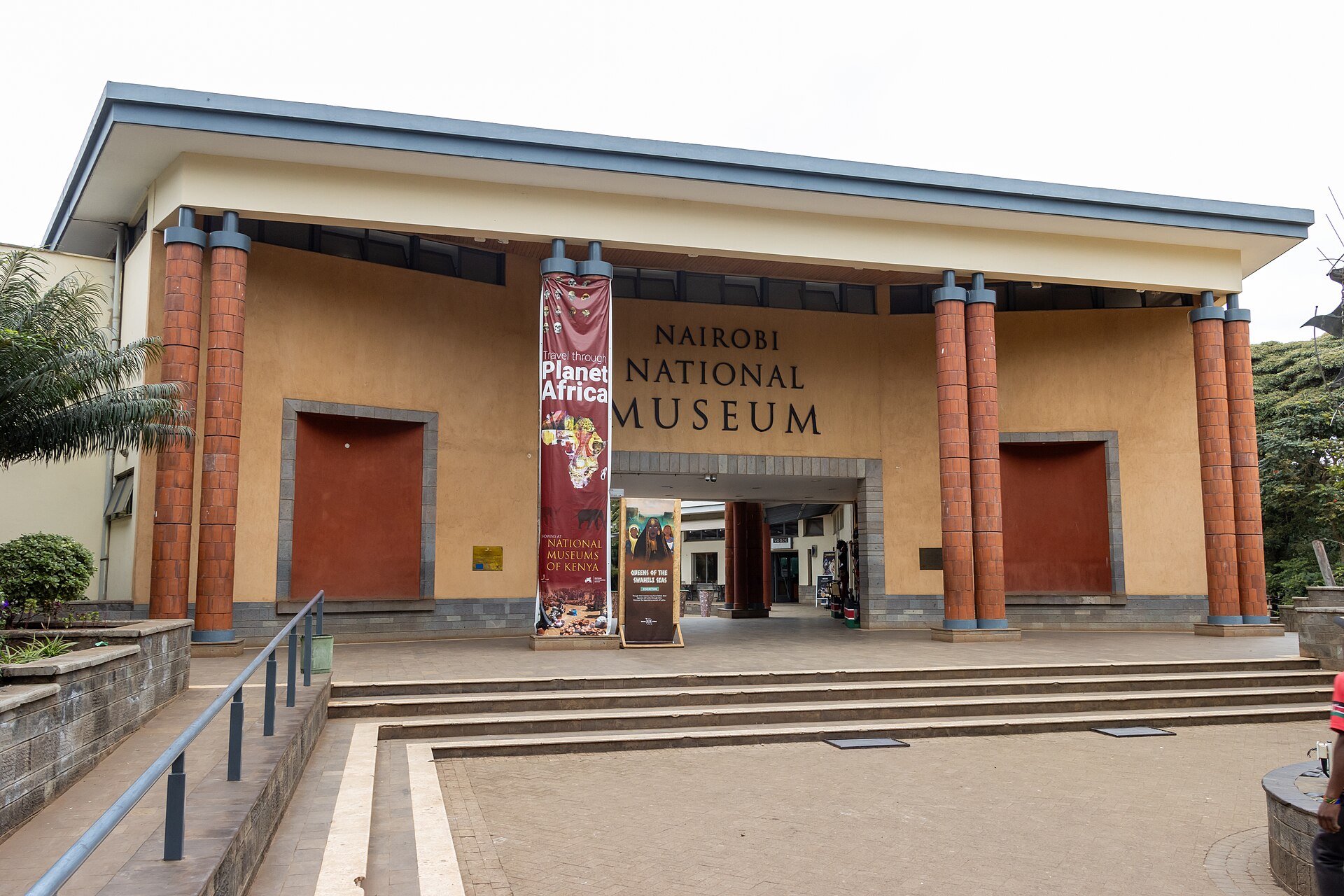
Nairobi’s National Museum isn’t the kind of place where history feels trapped behind glass. Instead, it unfolds like a conversation—one that begins with the earliest traces of human life and carries through to the complexities of modern Kenya. Tucked into the heart of the city, the museum manages to feel both grand and intimate, its galleries offering more than just artifacts: they invite you to consider what it means to belong to this land, how its stories have shaped its people, and why those stories still matter today.
The museum’s origins date back to the early 1900s, when Kenya was still under British rule. What started as a modest collection of natural history specimens gradually expanded into something far richer—a place where archaeology, anthropology, and art converge. The name Louis Leakey is inseparable from its history. His groundbreaking discoveries in the Olduvai Gorge, particularly the fossils that rewrote the narrative of human evolution, turned the museum into a global hub for paleoanthropology. Leakey’s work didn’t just put Kenya on the map; it redefined how we understand our own origins.
The building itself tells a story. Designed in a colonial style, it blends European architectural traditions with subtle local influences. High ceilings and wide corridors create a sense of openness, while large windows allow natural light to soften the edges of the exhibits. The inner courtyard, with its quiet garden, offers a moment of respite—a reminder that the museum isn’t just a repository of the past, but a space for reflection. Visitors often linger here, watching birds flit between the trees or simply gathering their thoughts before moving on.
One of the museum’s most compelling sections is its paleontology collection. Here, the fossils of ancient hominids, unearthed across Kenya, are displayed not as mere relics but as chapters in a much larger narrative. The reconstructed skeleton of *Homo erectus*, found near Lake Turkana, is particularly striking. Nearby, crude stone tools—simple yet ingenious—hint at the ingenuity of early humans. These objects don’t just belong to the distant past; they feel like a bridge between then and now, a reminder of how far we’ve come and how much we still share with those who came before.
The ethnographic exhibits offer another layer of understanding. Traditional clothing, tools, and musical instruments from Kenya’s diverse communities are displayed with care, each piece a testament to the skills and beliefs passed down through generations. The Maasai shields and Kikuyu beadwork aren’t just artifacts; they’re fragments of living cultures, some of which still thrive today. The museum doesn’t shy away from the complexities of these traditions—how they’ve adapted, resisted, or merged with newer influences. It’s a quiet acknowledgment that identity isn’t static, but something constantly being redefined.
Art has its own place here, too. The museum’s gallery showcases contemporary Kenyan artists, whose work reflects the country’s layered identity. Some pieces draw on traditional motifs, while others experiment with modern forms, blending local aesthetics with global trends. Themes of colonialism, independence, and social change recur, often in ways that feel raw and immediate. A painting or sculpture might echo the historical exhibits in the next room, creating a dialogue between past and present. It’s this interplay—between what was and what is—that gives the museum its depth.
For those curious about Kenya’s natural world, the biodiversity hall is a revelation. Taxidermied animals from the savannas, forests, and mountains stand as silent ambassadors of the country’s ecosystems. Lions, elephants, and rare birds are displayed alongside information about Kenya’s national parks, where many of these species still roam. The exhibit serves as a reminder that Kenya’s story isn’t just about people; it’s also about the land itself—the rivers, the grasslands, the vast skies—and the delicate balance that sustains it all.
What makes the National Museum special isn’t its size or grandeur, but its ability to make history feel personal. There’s no single narrative here, no rigid interpretation of the past. Instead, the museum offers fragments—some ancient, some recent—and lets visitors piece them together in their own way. A child’s drawing of a Maasai village might sit near a fossilized skull, or a contemporary photograph of Nairobi’s skyline might hang beside a colonial-era map. These juxtapositions don’t provide easy answers, but they do something more valuable: they make you pause, question, and perhaps see Kenya—and your place in its story—a little differently.