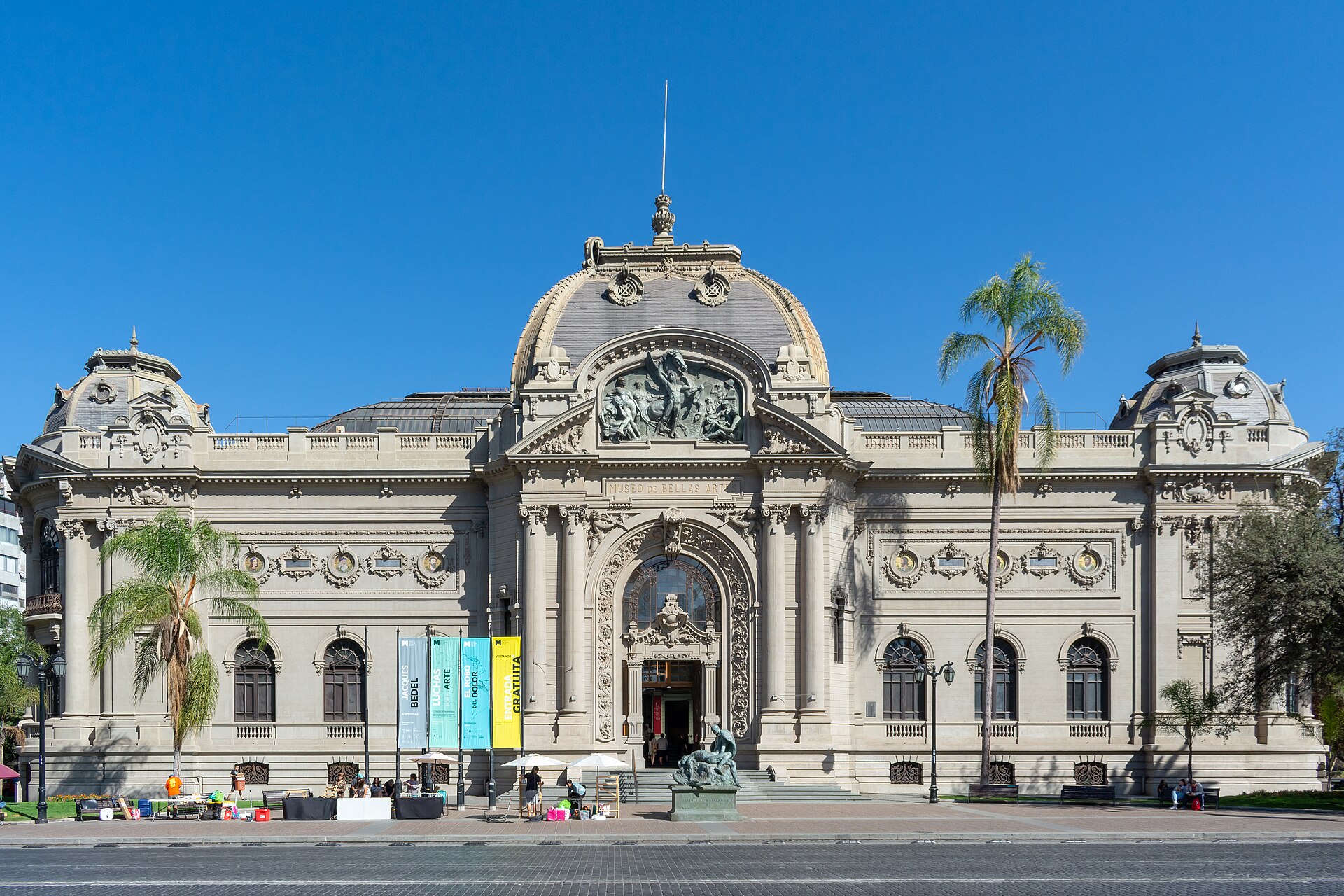
The Chilean National Museum of Fine Arts in Santiago is one of those rare places where art and urban life intersect without pretense. The building itself is a work of significance, constructed in the early 20th century with a blend of neoclassical grandeur and modernist touches. Its facade, with towering columns and expansive windows, opens onto Parque Forestal, a quiet green space in the heart of the city where locals often pause to escape the rush of daily life. Inside, the museum’s walls hold more than just paintings—they tell the story of Chile’s artistic evolution and its search for identity in a changing world.
Founded in the 19th century during a period of cultural flourishing, the museum was conceived as more than a repository for art. At the time, creativity was seen as a way to shape national identity, and the early collections reflected that ambition. Initially, the focus was on European masters, but over time, the museum shifted its attention to Chilean artists. Today, the collection spans from colonial-era works to contemporary pieces, offering a journey through academic traditions, avant-garde experiments, and everything in between. Among the most notable works are those of Pedro Lira, a key figure in Chile’s artistic development, whose paintings capture the romanticism and social contrasts of the 19th century.
The museum’s home, known as the Palace of Fine Arts, was built to commemorate Chile’s centennial of independence. Architect Emilio Jequier drew inspiration from Paris’s Grand Palais but gave the structure its own distinct character. The interior is striking in its spaciousness—high ceilings, airy galleries, and wrought-iron staircases create an atmosphere of elegance without ostentation. Some rooms still retain original decorative details, hinting at a time when the building hosted not just exhibitions but also social gatherings. Now, it remains a place where art engages with the present rather than existing in isolation.
The collection offers a fascinating look at how Chilean artists have interpreted their country over the centuries. In the 19th-century galleries, landscapes dominate—mountains, valleys, and oceans that have become symbols of Chile. Later works introduce urban scenes, portraits, and social themes, reflecting the nation’s shifting concerns. By the 20th century, the art becomes more diverse, encompassing abstraction, surrealism, and politically charged pieces. Some works provoke debate, others quiet admiration, but together they form a narrative of how art has helped Chileans make sense of their history.
Beyond its permanent collection, the museum regularly hosts temporary exhibitions featuring both local and international artists. This keeps the space dynamic, ensuring there’s always something new to discover. Occasionally, the museum also hosts lectures, workshops, and concerts, turning it into a hub for interdisciplinary dialogue. Yet the atmosphere remains unhurried—visitors are free to wander, linger, or simply enjoy the quiet.
For many Santiaguinos, the museum is part of everyday life. Some stop by during lunch breaks to spend a half-hour among the paintings, while others bring their children for educational programs. The surrounding Parque Forestal enhances this sense of accessibility, with its benches, fountains, and nearby cafés. The museum doesn’t aim to be exclusive; instead, it serves as a reminder that art should be part of the fabric of life, even for those who just pass by.
Like many cultural institutions, the museum faces the challenge of staying relevant while preserving its historical role. It continues to seek a balance between tradition and modernity, sometimes succeeding, sometimes struggling. Yet its core mission remains unchanged: to be a place where art isn’t just preserved but lives on. Perhaps that’s its greatest strength—it’s not a museum frozen in time but one that evolves alongside the city and the country it serves.