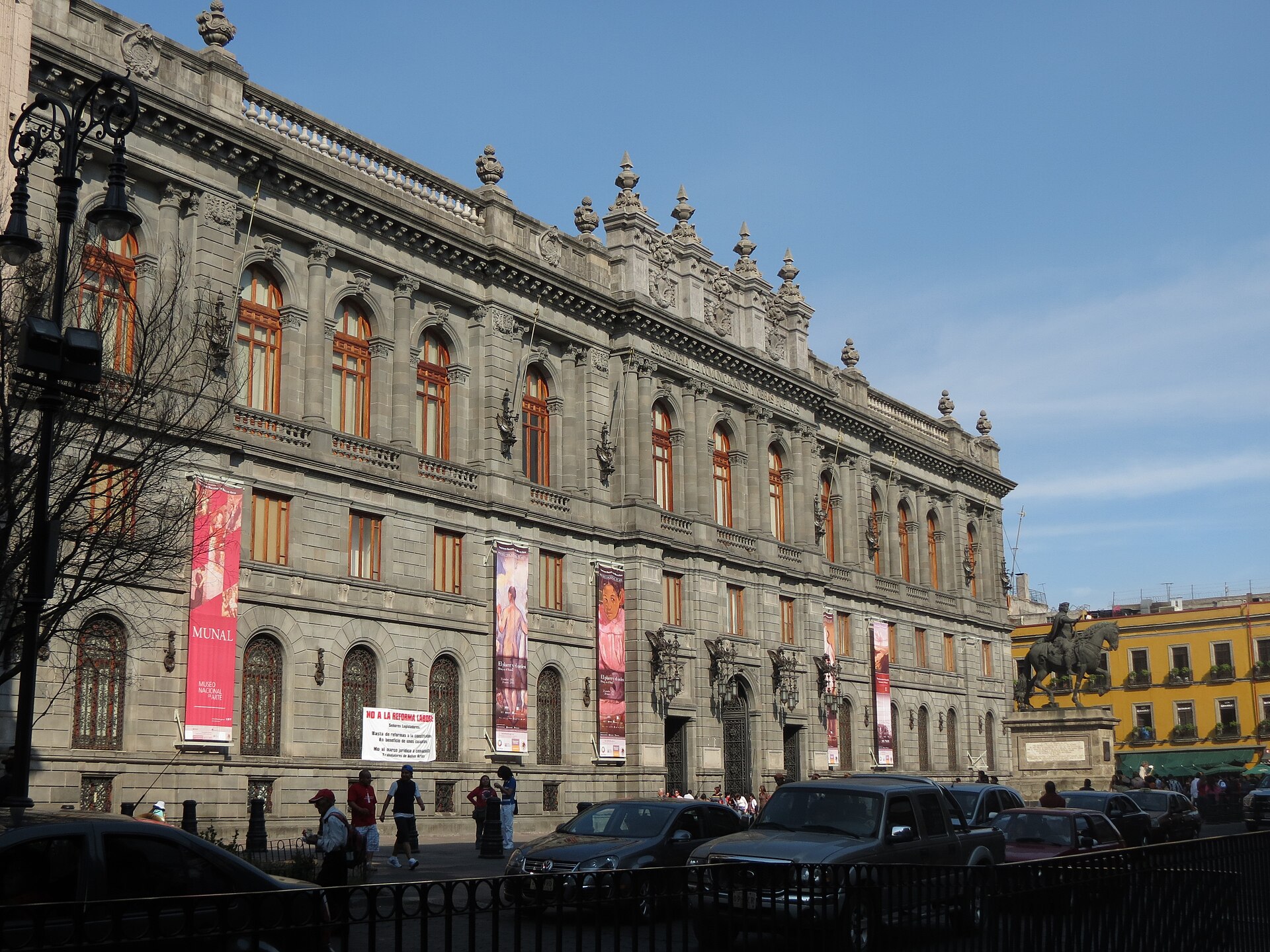
The National Museum of Art in Mexico City is one of those rare places where history isn’t just recounted—it’s felt. The building itself is a story carved in stone and light, a structure from the early 1900s that bridges the grandeur of neoclassicism with the restless energy of modernism. Its facade, lined with columns and sculpted figures, commands attention, but inside, the space unfolds differently—vast halls with soaring ceilings, soft natural light, and a quiet that makes the paintings and sculptures seem almost alive. It’s as if the building itself is holding its breath, letting the art speak first.
The museum’s collection spans Mexican art from the 16th to the 20th century, and walking through its galleries is like flipping through the pages of a nation’s evolving identity. The earliest works are steeped in religious themes, painted under the influence of European masters but already carrying the unmistakable vibrancy of Mexican life—bold colors, local faces, and a sense of devotion that feels both borrowed and deeply personal. By the 19th century, the art shifts, becoming more secular, more introspective. Landscapes, portraits, and scenes of daily life emerge, reflecting a country grappling with independence and the question of what it means to be Mexican.
The most striking section of the museum belongs to the early 20th century, when Mexico was in the throes of revolution and cultural rebirth. The murals and canvases of Diego Rivera, José Clemente Orozco, and David Alfaro Siqueiros aren’t just art—they’re declarations. Their work, part of the Mexican muralism movement, is monumental in every sense: in scale, in ambition, in its fusion of art and politics. Even without knowing the history, you can feel the weight of their messages—the struggle, the hope, the defiance. These aren’t just paintings; they’re battles fought with brushes and pigments.
Yet the museum isn’t solely a monument to revolution. There’s another side to Mexican art here, one that’s quieter, more personal. The works of Rufino Tamayo blend abstraction with folk motifs, creating something both modern and timeless. Then there’s María Izquierdo, one of Mexico’s first prominent female artists, whose paintings radiate a quiet strength, a tenderness that feels almost rebellious in its understatement. These pieces remind you that art doesn’t need to shout to be heard.
The building itself is worth lingering over. Completed in 1904 as the Palace of Communications, it was designed to embody progress and grandeur. The interiors are a symphony of marble, stucco, and stained glass, all bathed in the soft glow of skylights. The central hall, once the heart of Mexico’s telegraph operations, now hosts temporary exhibitions beneath a vast glass dome. Standing there, it’s easy to imagine the hum of activity that once filled this space—clerks sending messages, artists debating in the halls, visitors pausing to take it all in. The building has witnessed generations of lives, each leaving their mark in some small way.
Located in the historic center of Mexico City, the museum sits in a neighborhood where history isn’t just preserved—it’s lived. Nearby, the Palace of Fine Arts, the Metropolitan Cathedral, and the Zócalo square form a backdrop that makes the entire area feel like an open-air museum. After wandering through the galleries, stepping outside feels like entering another kind of exhibit, one where the past and present coexist seamlessly. The streets buzz with life—cafés, bookshops, the murmur of conversations—all of it a reminder that Mexico City is a place where history isn’t just remembered; it’s still being written.
A visit to the National Museum of Art is more than just a chance to see masterpieces; it’s an opportunity to trace the threads of a nation’s identity. The collection doesn’t present history as a series of neat, separate chapters. Instead, it flows, one era bleeding into the next, just as life does. You might spend an hour here or an entire afternoon, revisiting favorite works or simply sitting on a bench, watching how the light shifts across a painting. Museums like this exist to do more than preserve the past—they help us make sense of the present, too. And in a city as layered as Mexico City, that’s no small thing.