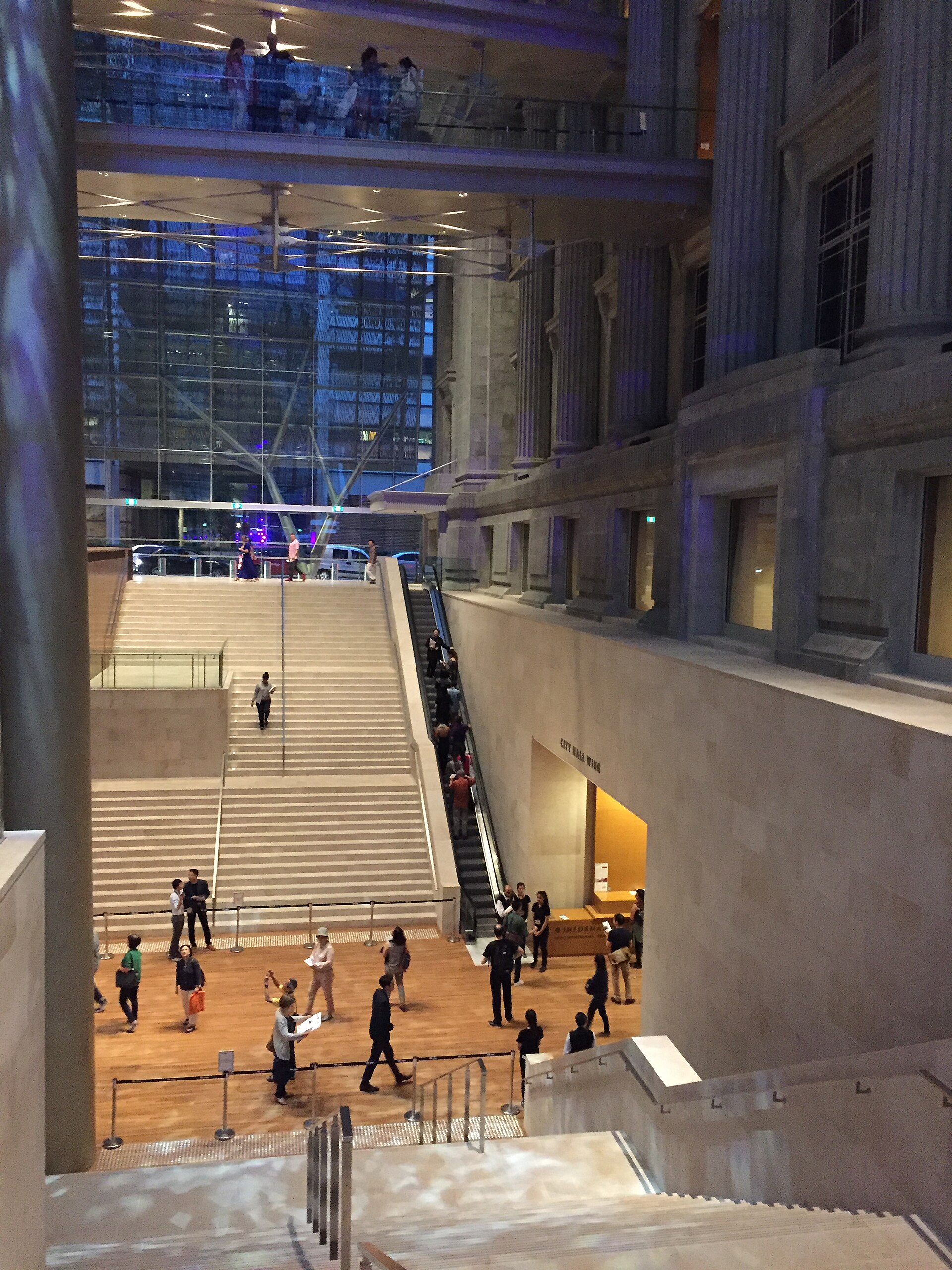
Singapore’s National Gallery is a place where the city’s layered past and its modern ambitions intersect. Housed in two of the most historically significant buildings in the Civic District—the former Supreme Court and City Hall—the gallery occupies a space that has witnessed pivotal moments in Singapore’s history. The Supreme Court, with its neoclassical columns and grand dome, was once the highest judicial authority in the land, while City Hall, where the Japanese surrender was accepted in 1945 and Singapore’s independence was declared in 1965, stands as a silent witness to the nation’s journey from colony to sovereign state. Today, these buildings have been meticulously restored and connected by a striking modern canopy, creating a dialogue between old and new that feels both deliberate and effortless.
The transformation of these colonial-era structures into a contemporary art institution was no small feat. The project, completed in 2015, involved years of careful restoration to preserve the original architectural details—from the intricate plasterwork in the Supreme Court’s rotunda to the marble floors of City Hall—while integrating state-of-the-art exhibition spaces. The result is a seamless blend of heritage and innovation, where visitors can admire the grandeur of the past even as they engage with cutting-edge art. The gallery’s design encourages exploration, with open courtyards, glass bridges, and unexpected sightlines that draw you deeper into the space.
At its core, the National Gallery is dedicated to the art of Singapore and Southeast Asia, offering a perspective that is often overlooked in global art narratives. The permanent collection spans from the 19th century to the present day, tracing the region’s artistic evolution through colonial influences, the search for national identity, and the bold experimentation of contemporary artists. One of the most compelling sections is the DBS Singapore Gallery, which focuses on the nation’s own artistic journey, from early landscapes that captured the changing face of the island to works that grapple with themes of migration, urbanization, and cultural hybridity. The UOB Southeast Asia Gallery, meanwhile, broadens the scope, showcasing works from neighboring countries and highlighting the shared histories and diverse expressions of the region.
What makes the gallery particularly engaging is its commitment to presenting art in a way that feels accessible without being simplistic. The curation is thoughtful, balancing well-known names with lesser-known voices, and often pairing historical pieces with contemporary responses. Temporary exhibitions frequently explore themes that resonate beyond the art world—identity, memory, environmental change—making the gallery a space for reflection as much as appreciation. The works themselves range from traditional paintings and sculptures to immersive installations and digital art, reflecting the dynamic nature of Southeast Asian creativity.
Beyond the exhibitions, the gallery is a place where people gather, not just to see art but to experience the city. The rooftop gardens offer a quiet retreat with views of the Singapore skyline, while the ground-floor courtyards buzz with activity, especially in the evenings when families, students, and tourists mingle over coffee or a meal. The gallery’s location in the heart of the Civic District means it’s often just one stop on a larger exploration of Singapore’s cultural landmarks, from the nearby Asian Civilisations Museum to the historic Padang, where cricket matches and National Day parades have played out for generations.
The National Gallery also plays a role in shaping Singapore’s cultural identity, not just by preserving art but by fostering dialogue. Public programs, artist talks, and workshops invite visitors to engage with the works on a deeper level, while collaborations with regional artists and institutions help position Singapore as a hub for Southeast Asian art. The gallery’s presence in these historic buildings is symbolic—it’s a statement about how the past informs the present, and how art can bridge the two.
Visiting the National Gallery is as much about the experience of the space as it is about the art within it. The buildings themselves tell a story, one of power, transition, and reinvention. Walking through the former Supreme Court’s courtrooms, now repurposed as exhibition halls, you can almost hear the echoes of legal debates and historic verdicts. In City Hall, the grand chambers where leaders once made decisions that shaped the nation now host works that challenge, provoke, and inspire. The contrast between the weight of history and the lightness of contemporary art creates a tension that lingers long after you leave.
For those who take the time to wander, the gallery reveals itself in layers. There’s the immediate impact of the architecture, the quiet beauty of the art, and the subtle details—the way light filters through the glass canopy, the sound of footsteps on marble, the occasional laughter of children in the interactive spaces. It’s a place that rewards both the casual visitor and the dedicated art lover, offering something new with each return. In a city that is often associated with efficiency and modernity, the National Gallery stands as a reminder of the richness of Singapore’s cultural heritage and the enduring power of art to connect us to our past and to each other.