Museum Island is one of Berlin’s most remarkable places, a quiet corner of the city where history feels tangible. It sits on the northern half of Spreeinsel, an island in the River Spree, where five museums were built over a century, from the 1830s to the 1930s. Together, they form a UNESCO World Heritage site, not just for their collections but for the way they tell the story of how museums themselves evolved—from private cabinets of curiosities to public institutions meant to educate and inspire.
The first to open was the Altes Museum, designed by Karl Friedrich Schinkel. Its neoclassical columns and grand rotunda set the tone for what was to come: a place where art and antiquities would be accessible to everyone, not just the elite. The idea was radical at the time, and it shaped the identity of the entire island. Over the decades, the other museums followed—each with its own purpose, yet all part of a larger vision. The Neues Museum, the Alte Nationalgalerie, the Bode-Museum, and the Pergamonmuseum were added one by one, turning the island into a kind of open-air encyclopedia of human culture.
Some of the world’s most famous artifacts are housed here. The Neues Museum holds the bust of Nefertiti, its delicate features still striking after more than three thousand years. The Pergamonmuseum is home to the Pergamon Altar and the Ishtar Gate of Babylon, monumental pieces that transport visitors to ancient civilizations. But the island isn’t just about individual treasures—it’s about the way these objects are displayed, the stories they tell, and the spaces they inhabit. The museums were designed to complement their collections, with architecture that enhances the experience rather than overshadows it.
War left deep scars on Museum Island. Bombing during World War II damaged all five museums, and the Neues Museum was left in ruins for decades. It wasn’t until the 2000s that a careful restoration, led by architect David Chipperfield, brought it back to life. Rather than erasing the damage, the renovation preserved traces of the past—bullet holes, scorched walls, and uneven surfaces—so the building itself became part of the narrative. It’s a reminder that history isn’t just about what’s preserved, but also about what’s lost.
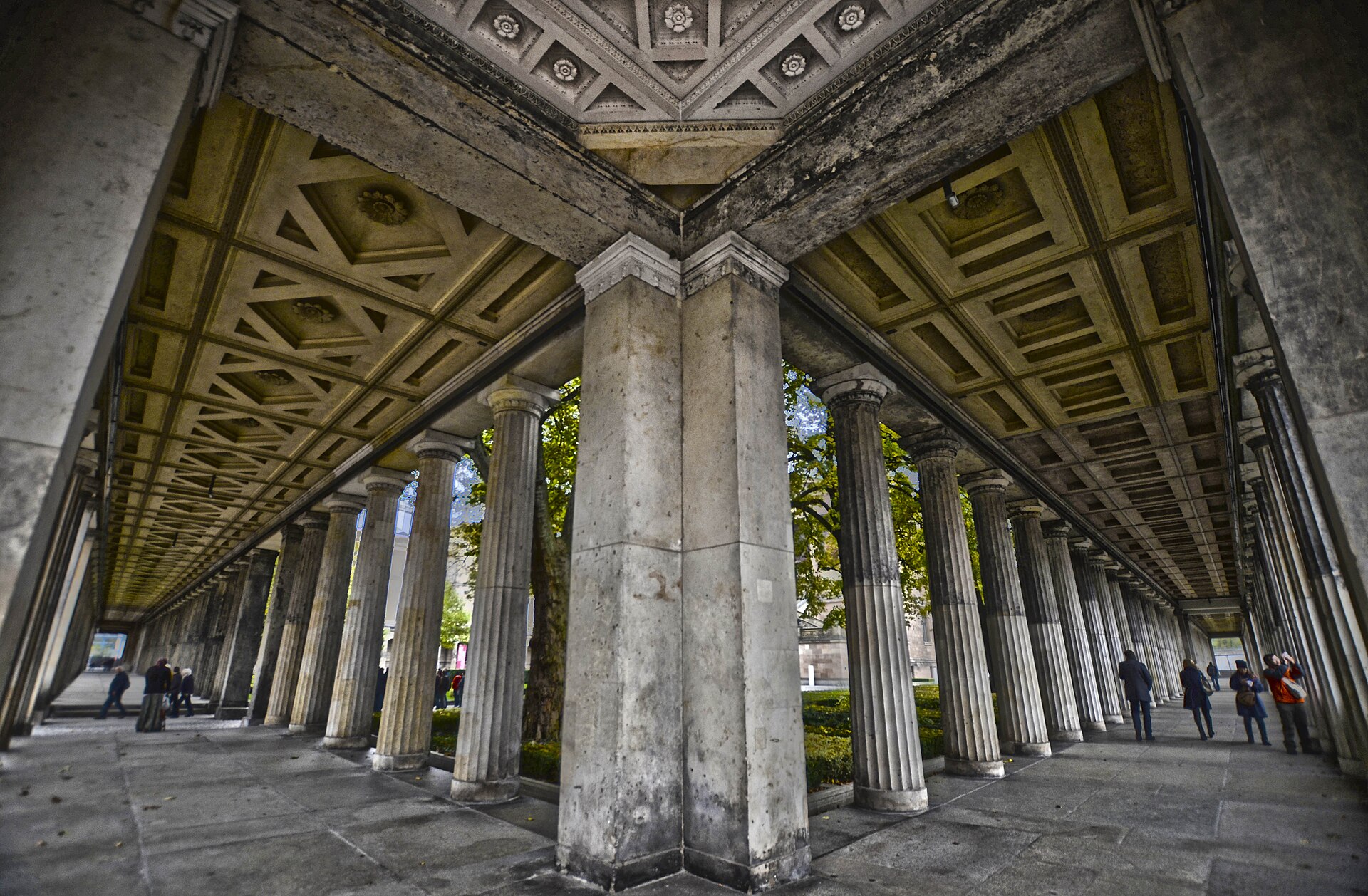
Even without stepping inside, the island is worth exploring. The museums are arranged around courtyards and colonnades, with paths that invite wandering. The riverbank promenade offers a different perspective, especially in the evening when the buildings are lit against the water. Nearby, the Berlin Cathedral and the reconstructed Berlin Palace—now home to the Humboldt Forum—add to the sense of place. The island feels like a bridge between eras, where the grandeur of the 19th century meets the resilience of the 21st.
Visiting all five museums in one day is ambitious, but a combined ticket makes it easier. The collections are vast, and each museum deserves its own time. The Alte Nationalgalerie, for instance, focuses on 19th-century German art, with works by Caspar David Friedrich that capture the era’s romantic spirit. The Bode-Museum, at the island’s tip, is known for its sculpture collection and its striking silhouette when viewed from the river. Meanwhile, the Pergamonmuseum is currently undergoing a lengthy renovation, with parts of its collection temporarily inaccessible. It’s always wise to check ahead, as timelines have shifted before.
The island has a rhythm of its own. Most museums close on Mondays, and during peak seasons, timed-entry tickets are recommended. But there are quieter moments too—early mornings when the light slants across the courtyards, or late afternoons when the crowds thin. Free student-led tours, posted near the entrances, offer a more personal way to explore. And if you’re lucky, you might catch the island from the water, aboard one of the sightseeing boats that glide along the Spree. From there, the museums appear as a unified whole, their domes and facades rising like a city within a city.
Museum Island isn’t just a destination; it’s a place that changes how you see Berlin. The city is known for its energy, its constant reinvention, but here, time moves differently. The artifacts, the architecture, even the scars of war—all of it feels like a conversation between past and present. Whether you spend an hour or a day, the island leaves an impression, not just of what’s on display, but of why these things matter. It’s a reminder that museums aren’t just about looking; they’re about understanding.