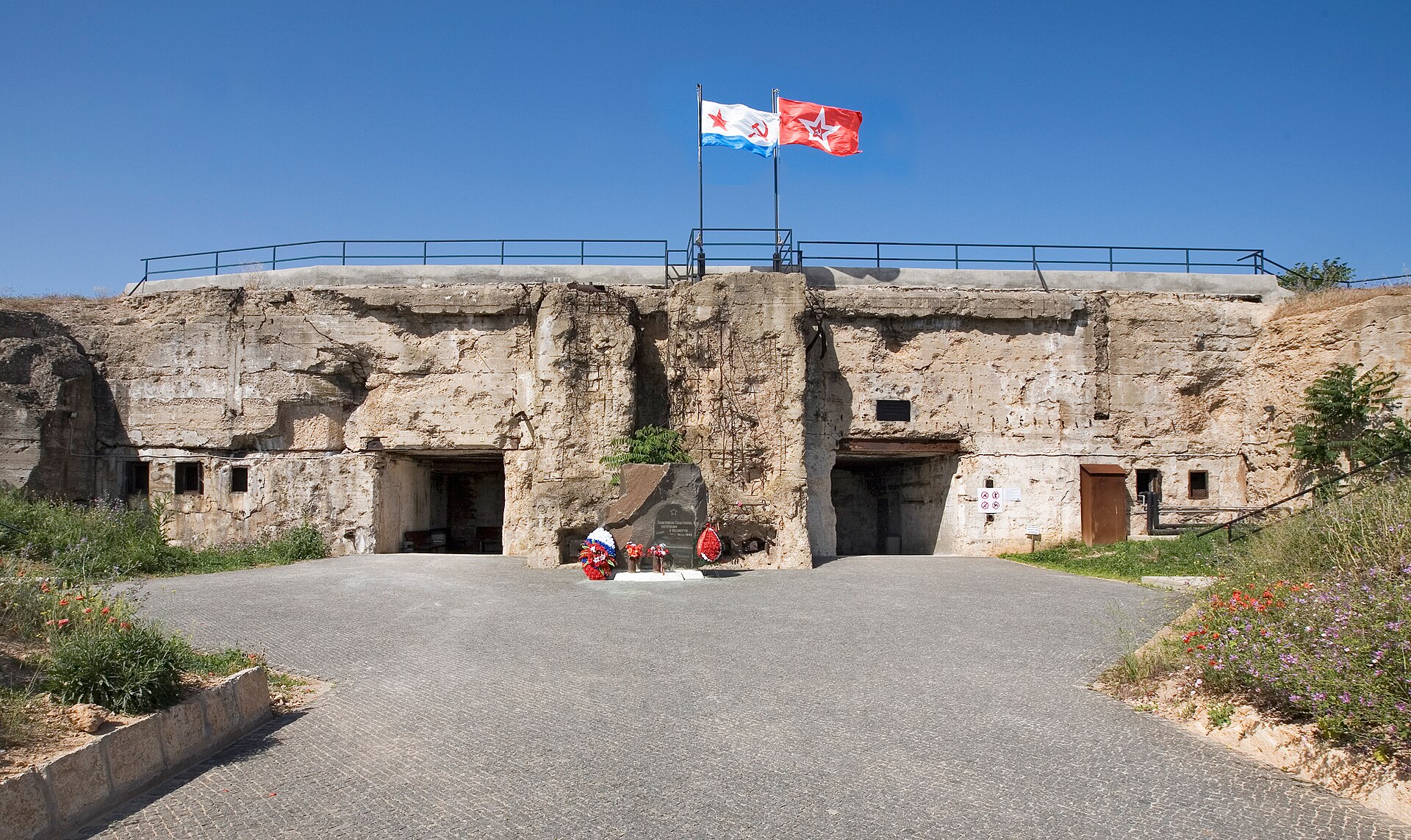
The 35th Coastal Battery is one of those rare places in Sevastopol where history isn’t just remembered—it’s felt. Tucked away on the city’s northern edge, this fortified complex was once a cornerstone of the Soviet Union’s Black Sea defenses, playing a decisive role during the brutal siege of Sevastopol in World War II. Today, it stands as both a museum and a memorial, a quiet but powerful testament to the resilience of those who fought here in 1941 and 1942.
Built in the 1930s as part of the Soviet coastal defense network, the battery was designed to protect Sevastopol from naval and land attacks. Its two massive gun emplacements, each housing a pair of 305mm cannons, could fire shells over vast distances, making it a formidable obstacle for any advancing force. For months, it held back German and Romanian troops, but its defining moment came in the summer of 1942. After nearly eight months of relentless bombardment, the enemy finally breached the city’s defenses and surrounded the battery. Rather than surrender, the garrison—around a thousand soldiers—fought until their ammunition ran out. When defeat became inevitable, they destroyed the guns and fortifications to deny them to the enemy, ensuring their last stand would be remembered.
Walking through the complex today, you step into the preserved remains of that battle. The underground casemates, command posts, and storage rooms still bear the marks of war, their thick concrete walls a reminder of the engineering that once made this place nearly impregnable. Some areas have been restored to show what life was like for the soldiers stationed here: narrow bunks, wooden tables, and personal belongings scattered as if the men had just stepped away. The memorial hall, with its rows of engraved names, is particularly moving. Over seven hundred defenders died here, many still buried within these walls, their sacrifice etched into the stone.
The architecture of the 35th Coastal Battery reflects the military priorities of its time. The reinforced concrete, several meters thick in places, was built to withstand aerial bombardments and artillery fire. Ventilation shafts, water systems, and camouflage were all carefully designed to keep the battery operational under siege. After the war, the site was abandoned for decades, left to decay until restoration efforts began in the early 2000s. Now, visitors can explore not just the physical structures but also exhibits that piece together the story of Sevastopol’s defense, using artifacts recovered from the battlefield.
What makes this place different from other museums is its raw authenticity. There are no polished displays or sterile glass cases here—just the remnants of war: spent shell casings, shrapnel, helmets, and letters home, all left where they were found. A detailed diorama recreates the battery’s final hours, while another room reconstructs the command post where officers made life-and-death decisions. But it’s the personal items that leave the deepest impression—photographs of young soldiers, faded documents, and diary entries that humanize the men who fought here, turning them from historical figures into real people with families, fears, and hopes.
The 35th Coastal Battery is more than a war memorial; it’s a place that forces you to confront the cost of conflict. In recent years, it has become a gathering spot for locals, especially younger generations, who come to pay their respects. Veterans’ meetings, history lessons, and commemorative events are held here regularly, ensuring that the stories of those who fought are passed down. The site doesn’t glorify war or soften its horrors. Instead, it presents history as it was—messy, painful, and ultimately human.
The atmosphere here is one of quiet reflection. The surrounding hills, covered in wild grass and shrubs, stretch toward the sea, the same view the defenders would have seen eighty years ago. On clear days, the panorama of Sevastopol Bay unfolds in the distance, a stark contrast to the darkness of the underground tunnels. This isn’t a place to rush through. It demands time—to wander the corridors, to read the names on the memorial walls, to sit in silence and absorb the weight of what happened here.
For many visitors, the 35th Coastal Battery becomes one of the most memorable stops in Sevastopol. There’s no grandeur or pomp, just the unvarnished truth of war. The complex doesn’t try to make history comfortable or heroic in a simplistic way. It shows the exhaustion, the fear, and the desperation of those who fought, as well as their courage. It’s a reminder that victory often comes at a price that can’t be measured in medals or monuments.
If you visit Sevastopol, don’t limit yourself to the beaches and promenades. The 35th Coastal Battery is a vital part of the city’s identity, a place where the past isn’t just preserved—it’s alive. Every stone, every rusted hinge, every scratch on the walls tells a story. The guns may be silent now, and the only sounds are the wind and the distant waves, but the echoes of what happened here still linger. It’s a place that makes you appreciate the peace we have today, and the sacrifices that made it possible.